
Last updated November 17, 2026
 Tile roofing
 Architectural shingles
 Metal roofing
 GAF
 Owens Corning
 Flat & low-slope
Free roof inspection with deck photos before we talk money - GAF and Owens Corning certified installation
Tile Roofing Maintenance Schedule: What to Do and When
Concrete and clay tile can last 50 years. The underlayment beneath them typically fails in 20 to 25 – and in Winchester’s heat cycles, sometimes sooner. That gap is where most tile roofs quietly go bad. The tiles look fine from the curb while the waterproofing underneath is already brittle, cracked, and letting water through. If your maintenance routine only covers what you can see from the driveway, you’re maintaining the wrong layer. This guide lays out a real schedule built backward from the hidden layer: what to check, when to check it, and how to spot a tile roof that still looks good but is failing underneath.
Quick Answer
In Winchester, a tile roof needs eyes on the underlayment and flashing once a year, typically in early spring after the last freeze and again after the summer monsoon season. Clean gutters and valleys twice a year, check ridge caps and mortar annually without walking the field tiles, and budget for underlayment replacement around the 20 to 25 year mark even if the tiles themselves look new. Most failures we see in Winchester trace back to skipped underlayment and flashing inspections, not broken tile.
Styles & brands we work with
- Architectural shingles
- Metal roofing
- Tile roofing
- GAF
- Owens Corning
- Flat & low-slope
Table of Contents
- Why the Underlayment Is the Real Maintenance Target
- The Winchester Seasonal Maintenance Schedule
- Annual Inspection Checklist: What to Do and When
- Checking Mortar and Ridge Caps Without Cracking Tiles
- What a Roofer Should Actually Do on a Tile Maintenance Visit
- Signs Your Tile Roof Looks Good but Is Quietly Failing
- Repair vs. Replace: When Tile Maintenance Turns Into a Bigger Job
- Common Mistakes to Avoid
Why the Underlayment Is the Real Maintenance Target
Tile is a rain screen, not the waterproof layer. The tile sheds most of the water, but the underlayment underneath – the felt or synthetic membrane nailed to the deck – is what actually keeps your house dry. When that membrane dries out, cracks, and tears, water finds the deck. You won’t see it from the ground because the tile hides everything.
In the high desert around Winchester, the underlayment takes a beating from two directions. Summer surface temperatures on a tile roof can push past 150 degrees, and those heat cycles cook the oils out of asphalt felt. Then winter freeze-thaw works the seams. Twenty years of that and the membrane is done, even though the tile above it looks untouched.
That’s why a real maintenance schedule starts at the deck up, not the ridge down. The tile is the part you replace last. If you’re maintaining a tile roof in Winchester by counting cracked tiles, you’re missing the layer that fails first.
We’ve pulled tile off roofs in Winchester that looked perfect and found underlayment that crumbled in our hands. That’s not a scare tactic. It’s what happens when a roof gets 22 years of sun and nobody ever checked underneath. For homeowners weighing repair against a full re-roof, our Roof Repair in Winchester page walks through what’s fixable and what isn’t.
The Winchester Seasonal Maintenance Schedule
Generic national advice tells you to “inspect your roof twice a year.” That’s not specific enough for Winchester. Our climate runs two hard cycles: a winter that swings below freezing at night and back above during the day, and a summer that bakes the roof for months. Each cycle stresses different parts of the roof. Here’s how to time maintenance around them.
Spring (March through May)
- Full underlayment and flashing inspection after the last hard freeze. Freeze-thaw opens seams and lifts flashing, and spring is when you catch it.
- Clear winter debris from valleys and behind chimneys, where snowmelt and leaves collect.
- Check ridge caps and mortar for winter cracking. This is the season those failures show up.
Summer (June through September)
- Watch for heat-related tile cracking and mortar crumbling. Extreme surface heat dries out mortar joints and can pop tiles loose.
- Inspect attic ventilation. A hot roof with poor venting shortens underlayment life fast in Winchester’s summers.
- After any monsoon or heavy wind event, do a quick visual sweep of the ridges and edges for shifted tiles.
Fall (October through November)
- Clean gutters and downspouts before winter. Clogged gutters back water up under the eave and into the fascia.
- Trim tree limbs back from the roof. Branches scrape tile and drop debris into valleys.
- Second full inspection before freeze season. Anything loose gets secured now, not in January.
Winter (December through February)
- After any snow or ice event, check for ice dams at the eaves and gutters.
- Watch for water stains on ceilings and walls – they signal a leak that started at a failed flashing.
- Keep an eye on the flashing around chimneys and skylights, where freeze-thaw does the most damage.
Annual Inspection Checklist: What to Do and When
Here’s the annual routine, in order. Do the from-the-ground and from-the-attic steps yourself. The on-roof steps belong to a trained roofer, because walking a tile roof wrong cracks tiles and costs you money.
- Walk the perimeter with binoculars. Look for slipped, cracked, or missing tiles, sagging ridgelines, and staining on soffits or fascia.
- Check the attic after a rain. Look for water stains on rafters and decking, daylight at flashing points, and damp insulation. This tells you what the underlayment is doing without touching a tile.
- Clear gutters and valleys. Two or three times a year in Winchester, more if you have trees close to the house.
- Inspect flashing from the ground and attic where you can. Chimneys, skylights, and wall intersections are the most common leak points on a tile roof.
- Look at the mortar and ridge caps from a ladder at the eave. Don’t step onto the field tiles. Cracks and missing mortar show from the edge.
- Have a roofer inspect the underlayment and field tiles directly. This is the step that catches the hidden failure, and it’s the one most homeowners skip.
If you’re on the fence about whether a full replacement is coming due, our Roof Replacement & Installation in Winchester page covers what a professional assessment looks at. For homes with standing-seam or metal panels in the mix, our Metal Roofing in Winchester page explains why those systems carry a different maintenance timeline.
Checking Mortar and Ridge Caps Without Cracking Tiles
Ridge caps and hip tiles are set in mortar, and that mortar cracks as it ages. In Winchester’s freeze-thaw cycle, it cracks faster than in milder climates. The problem is that checking them usually means someone walks the roof, and one wrong step on field tile cracks a tile that costs real money to source and match.
Here’s how to check the mortar without going up there yourself:
- Look up from the ground with binoculars. Missing or crumbling mortar shows as gaps and loose bits along the ridge line.
- Check the attic after wind. Loose cap pieces sometimes drop grit and mortar crumbs into the attic or onto the deck.
- Watch for popped tiles after storms. A ridge cap that’s lost its mortar will lift in high wind before it falls.
- Look at the eave from a ladder. You can see the ridge angle from the eave in many homes, enough to judge whether the line is straight and the mortar is intact.
When the mortar does need repair, a roofer re-bedding ridge caps walks specific paths on the ridge and valley, not across the field. That’s the difference between a repair and a cracked-tile bill. Ask any roofer how they’ll access the ridge before they start. The answer tells you whether they know tile.
What a Roofer Should Actually Do on a Tile Maintenance Visit
A drive-by inspection is not a maintenance visit. We’ve seen too many homeowners in Winchester get a “free roof inspection” that amounted to a guy looking at the front slope from the sidewalk and handing over a quote. A real tile maintenance visit takes time and covers specific things.
Here’s what a proper visit includes:
- Lift and check a sample of field tiles to inspect the underlayment directly. Not every tile – enough to judge the membrane’s condition.
- Check all flashing points: chimneys, skylights, valleys, wall transitions, and vents. These are where leaks start.
- Inspect the ridge and hip mortar from the ridge and report condition.
- Check the attic for moisture and decking condition where accessible.
- Clear debris from valleys and behind chimneys.
- Photograph what they find and show you the deck photos before talking money. A roofer who won’t show you pictures is asking you to take a lot on faith.
What a quick drive-by misses: underlayment condition, flashing condition, deck rot, and moisture in the attic. Those are the four things that turn a small maintenance item into a five-figure repair. If a roofer never gets on the roof or in the attic, they’re guessing.
Every job Shepherd & Sons Roofing takes on is backed by our 90-Day Done Right Promise, in writing. If a maintenance repair isn’t done right, one call brings Bill back. That’s the standard we hold, and it’s why we start from the Shepherd & Sons Roofing Winchester home page with the same plain answers you get on the roof.
Signs Your Tile Roof Looks Good but Is Quietly Failing
The most expensive tile roof problem is the one you can’t see. Tile hides everything underneath, which means a roof can pass the curb test while the deck below is waterlogged. Here are the signs that a tile roof is failing underneath while the tile still looks fine:
- Water stains on the attic deck or rafters. Any staining at all on a tile roof means the underlayment is compromised somewhere.
- Granules or grit in the gutters. Underlayment doesn’t shed like shingles, but deteriorating membrane leaves sandy debris.
- Daylight in the attic at flashing points. If you can see daylight, water can find it too.
- Sagging in the deck between rafters. Tile is heavy. A soft deck is a sign of moisture damage, not settling.
- Green growth in shaded areas. Moss and algae mean moisture is lingering where it shouldn’t.
- Higher energy bills. Wet insulation loses its R-value fast, and heat loss shows up in your cooling costs.
Any one of these in Winchester warrants a professional look. Most of them mean the underlayment has reached the end, even if the tile has another 20 years of life left. Catching it early is the difference between a few hundred dollars and a full re-roof. A good tile system uses quality underlayment brand names like Owens Corning, IKO, or a similar membrane – and even the best of them has a 20 to 25 year clock.
Repair vs. Replace: When Tile Maintenance Turns Into a Bigger Job
Not every tile roof issue means replacement. Some maintenance finds are small and fixable. Others are the signal that the system has aged out. Here’s a rough guide:
- Isolated cracked tiles or a popped ridge cap: repair. A few pieces, done in an afternoon.
- Compromised flashing at a chimney or skylight: repair or partial replacement of that section. Usually worth doing.
- Underlayment failing across a whole slope: this is a bigger call. Sometimes you can replace the tile over a new membrane if the tile is in good shape.
- Underlayment failing across most of the roof, plus deck damage: replacement, or you’re throwing money at a system that’s done.
For a roof with a failing underlayment but sound tile, a lot depends on whether the tile can be removed and re-laid without breaking it. Clay and concrete tile can usually be salvaged, but it takes care and extra labor. We’ve done tile roof inspections in Winchester where the tile was fine and the membrane was gone – the answer was new membrane under the old tile, not new tile. The reverse is just as common: new tile over a good deck. The only way to know is to look underneath. For a free second opinion on any written estimate, give us a call.
Common Mistakes to Avoid
- Only checking the tile you can see. The tile is the rain screen. The underlayment is the waterproofing. Maintaining one and ignoring the other is how a tile roof fails quietly.
- Walking the field tiles to check the ridge. One wrong step cracks a tile in a color the factory may not make anymore. Check from a ladder or the ridge, not across the field.
- Skipping the fall gutter cleaning. In Winchester, clogged gutters back water under the eave all winter. It’s the cheapest maintenance item and the most often skipped.
- Accepting a drive-by inspection as a real one. A roofer who never gets on the roof or in the attic is guessing. No photos, no answers.
- Assuming a “no leak” roof is a healthy roof. Tile hides leaks until the deck is already wet. Attic inspection catches it before you see a stain on the ceiling.
- Using a pressure washer on tile. High pressure strips the surface and forces water under the tile. Gentle cleaning, if any, plus debris removal in the valleys.
- Letting a storm chaser sell you a full re-roof after a hail event. Ask for a local address and a license number. The outfit that quoted on the phone and disappeared after the deposit won’t be at the hardware store on Saturday.
See the difference
 Before
 After
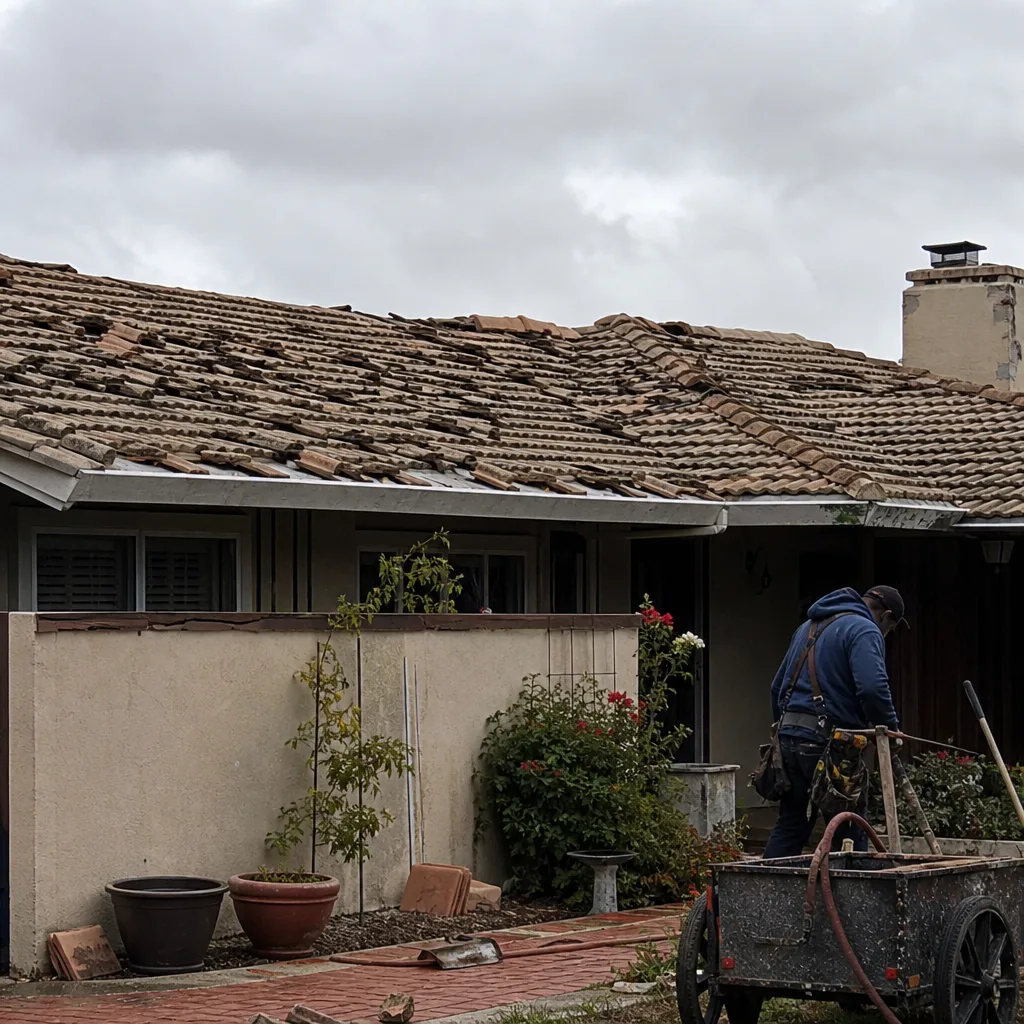 Before
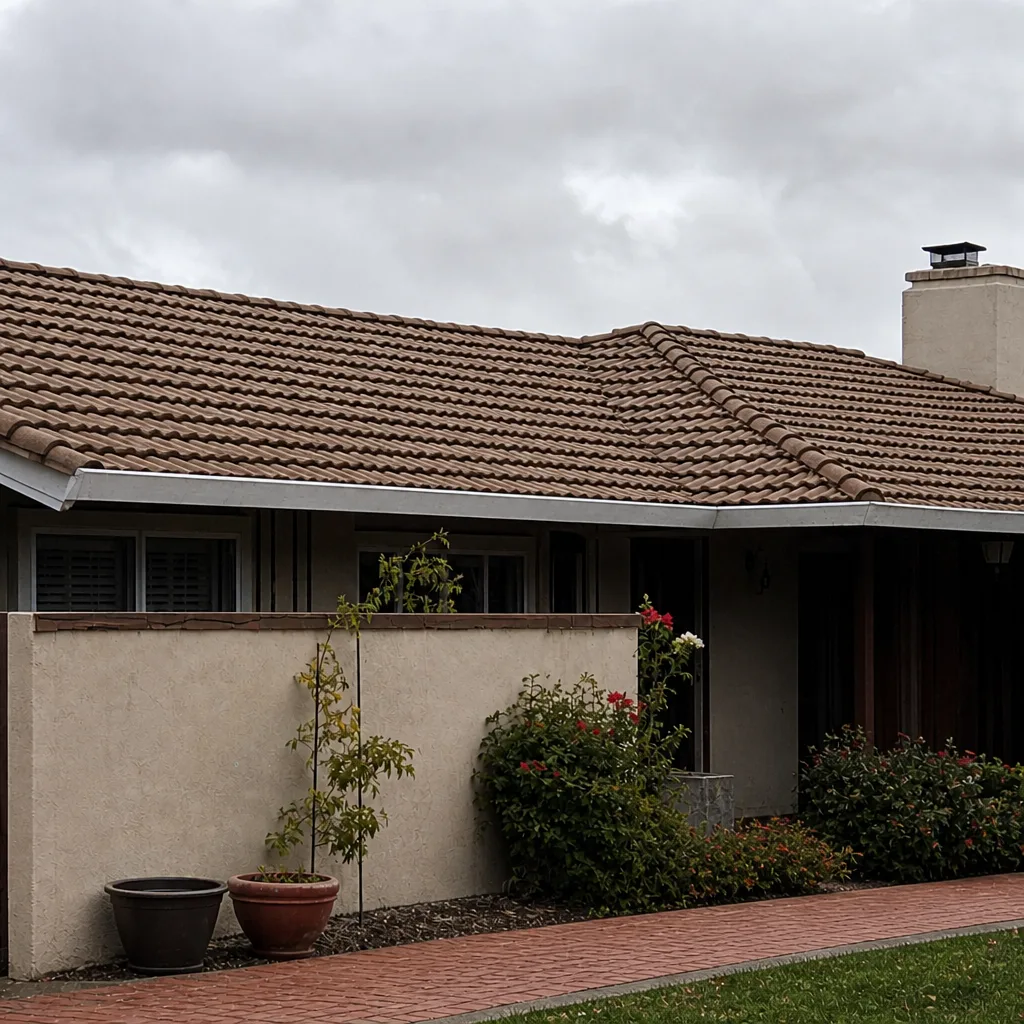 After
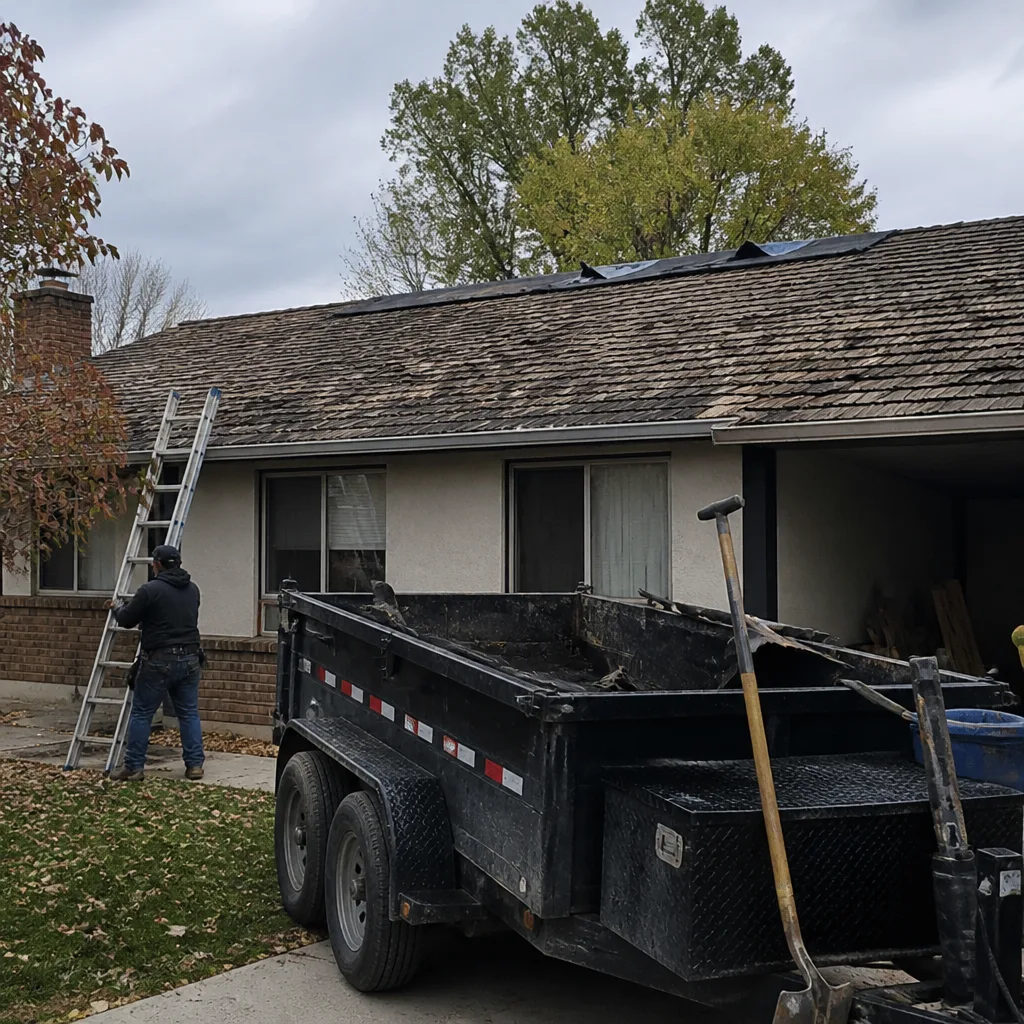 Before
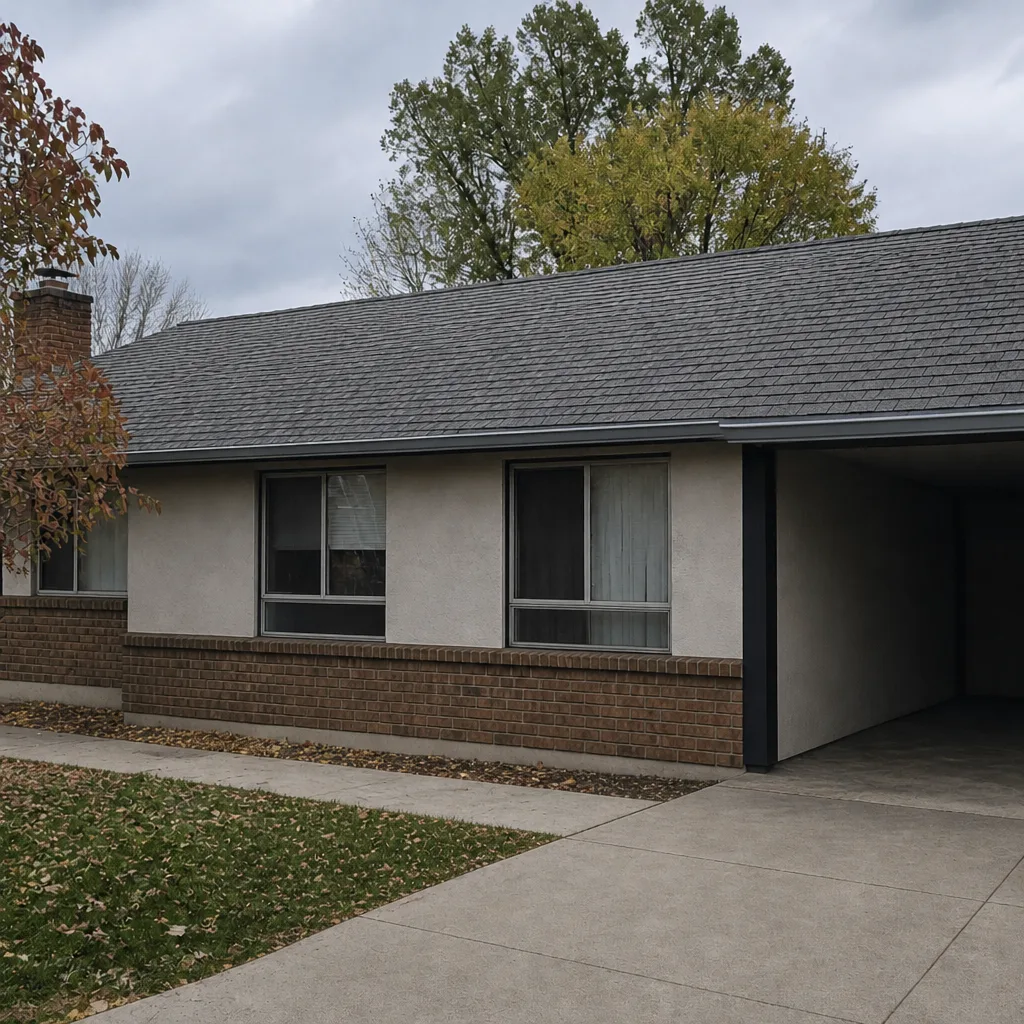 After
When to Call a Professional
Call a professional when you see water staining in the attic, when mortar on the ridge is crumbling, when a slope has slipped tiles after a storm, or when your tile roof is over 20 years old and has never had an underlayment inspection. Also call when you’re planning to sell – a failing underlayment behind good-looking tile will come up at inspection, and better you know now. A trained roofer walking a tile roof knows where to step and where not to. Cracking a tile costs more than the inspection. Shepherd & Sons Roofing Winchester offers free estimates in Winchester – call (844) 797-8167. We answer the phone with a live person, not a call center.
Frequently Asked Questions
Once a year at minimum, ideally in early spring after the last freeze and again in fall before winter. Winchester’s freeze-thaw cycle opens flashing and mortar joints, and its summer heat cracks underlayment. Two inspections a year catch both cycles’ damage while it’s still small.
Yes. The underlayment and flashing are what fail, and a roof can hold out leak-free for a while after the membrane has already started to go. An annual underlayment and flashing check is the only way to know. Call (844) 797-8167 for a real inspection, free.
Typically 20 to 25 years, sometimes shorter in high-desert heat cycles. The tile lasts decades longer than the membrane under it, which is why the underlayment timeline drives the maintenance schedule. If your home is near that mark, it’s worth an inspection.
Better not. Walking a tile roof in the wrong spots cracks field tiles, and matching a replacement in an older color can be hard. Check from the ground with binoculars and from a ladder at the eave. Leave the on-roof access to a roofer who knows where to step.
Water staining on the attic deck or rafters. It means water is already past the underlayment. The tile can look perfect and the deck can be wet at the same time. Check the attic after a heavy rain and call us if you see anything.
Yes. Free estimates, a free second opinion on any written estimate, and a no-trip-charge visit inside our own county. Every job comes with the 90-Day Done Right Promise in writing. Call (844) 797-8167 to set it up.
The Bottom Line
A tile roof’s maintenance schedule works backward from the layer you can’t see. Underlayment and flashing fail first, tile lasts longest, and a roof that looks fine from the curb can be wet underneath. Check the attic and the flashing every year, clean the gutters twice a year, inspect the underlayment on a 20 to 25 year clock, and don’t walk the field tile yourself. In Winchester, time your inspections to the spring thaw and the fall freeze. Do that and your tile roof will outlast the people checking it. Shepherd & Sons Roofing – same address, same name on the truck, the name on the license.
Written by the team at Shepherd & Sons Roofing Winchester.