
Last updated November 17, 2026
 Metal roofing
 Architectural shingles
 Tile roofing
 GAF
 Owens Corning
 Flat & low-slope
Free roof inspection with deck photos before we talk money - GAF and Owens Corning certified installation
Roofing Emergency Preparedness Guide for Winchester Homes
When a microburst hit a neighborhood near us three summers ago, the homeowners who had a tarp, a contractor’s number, and their insurance policy number on hand spent an average of $4,000 less than their neighbors who didn’t. Same damage. Different response time. That gap is what this guide is about. Winchester doesn’t get slow, gentle leaks the way coastal towns do – we get wind that arrives sideways and hail that strips a roof in eight minutes flat. By the time you finish reading, you’ll know what to photograph before storm season, what to do in the first four hours after damage, how to tarp without wrecking your claim, and how to spot a storm chaser before he gets a ladder off his truck.
Quick Answer
To prepare a Winchester home for monsoon-season roof emergencies, photograph your roof and interior now for an insurance baseline, keep a tarp and your policy number where you can reach them, and after damage document everything in photos before you move a single shingle. Call your insurer first, then a local roofer with a published address and license. The order matters because insurance pays based on what you can prove, and proof gets harder with every hour that passes.
Styles & brands we work with
- Architectural shingles
- Metal roofing
- Tile roofing
- GAF
- Owens Corning
- Flat & low-slope
Table of Contents
- Pre-Storm Prep Checklist for Winchester Monsoon Season
- First Four Hours After Wind or Hail Damage
- How to Tarp a Winchester Roof Without Voiding Your Claim
- What to Say (and Not Say) When You Call Your Insurer
- Storm Chasers vs. Legitimate Local Roofers
- Warning Signs Homeowners Miss
- What Happens After the Emergency Repair
Pre-Storm Prep Checklist for Winchester Monsoon Season
Monsoon season in the Winchester Valley runs roughly July through September, and the storms that cause the most roof damage here aren’t the long soaking rains – they’re the short, violent cells that drop a half inch in twenty minutes and throw 60 mph gusts across a ridge. The prep work that matters most happens on a dry, calm afternoon in June, not during the storm.
Here’s the checklist we walk homeowners through every spring:
- Photograph every roof plane. Get on the ground and use your phone’s zoom, or ask someone with a ladder to shoot from a safe angle. You want wide shots of each slope and close-ups of valleys, flashing, and any existing patches. Date-stamp them.
- Shoot the attic and ceilings. Open the attic hatch and photograph the underside of the decking, rafters, and any stains on ceilings below. If you have an old water mark, measure it and note the date. Insurers want to know what was already there.
- Clear gutters and downspouts. A clogged gutter in a microburst turns into a waterfall against fascia and soffit. Clean them in June, not October.
- Trim overhanging limbs. Any branch within six feet of the roof is a projectile waiting for a gust. Cut it back before the wind decides for you.
- Secure loose yard items. Trampolines, patio furniture, and shed panels become roofing missiles during a Winchester microburst. Strap or store them.
- Store your tarp and policy number together. A folded 20×30 tarp, a box of roofing nails, and a card with your insurance policy number and your roofer’s number in the same garage bin. This is the four-hour head start.
That last one sounds obvious. Almost nobody does it. The homeowners who do are the ones who come out $4,000 ahead.
First Four Hours After Wind or Hail Damage
The first four hours after a Winchester storm decide how much of the damage insurance will cover. The sequence below isn’t arbitrary – it’s built to capture evidence before it degrades and to keep you out of the way of the actual emergency response.
- Make sure everyone is safe and the house is dry inside. Check the attic for daylight or water streaming in. Move furniture and valuables out from under active leaks. Put buckets down and photograph where they are.
- Photograph everything before you touch anything. Wide shots of the yard, the roof, the interior. Close-ups of every dent, tear, and missing shingle. Video is even better – walk the whole exterior slowly and narrate what you see. Hail dents on gutters, downspouts, and vents are the evidence adjusters look for, and they photograph best in the first hour.
- Call your insurance company’s claims line. Not your agent, the claims line. Report the damage and get a claim number. We’ll cover exactly what to say in a later section.
- Get the roof dried in. This is where a tarp goes up, or where you call someone to put it up. Interior water damage compounds fast in our heat – a wet ceiling in a Winchester summer starts growing mold in 24 to 48 hours.
- Keep every receipt. Tarp materials, hotel, dumpster rental, anything you spend because of the damage. Save them for the adjuster.
Notice what’s not on that list: climbing on the roof yourself. More homeowner injuries happen in the first four hours after a storm than in any other phase, usually from wet shingles and a shaky ladder.
How to Tarp a Winchester Roof Without Voiding Your Claim
Safe emergency tarping is a stopgap, not a repair. The goal is to keep water out until a professional can assess the roof. Done right, it protects your claim. Done wrong, it can give an adjuster a reason to question what was damage and what was homeowner work.
The do’s:
- Do photograph the damage thoroughly before the tarp goes up. A tarp hides evidence. Get your shots first.
- Do use a heavy-duty tarp and secure it with furring strips or boards screwed into the deck at the edges, not through the field of the roof. Nails driven through open shingles create new holes you’ll be explaining later.
- Do tape seams with roofing tape and let the tarp drape over the ridge and eave so water runs off.
- Do keep your receipts for tarp materials. Most policies reimburse reasonable emergency mitigation.
The don’ts:
- Don’t get on a wet roof. This is the single biggest cause of injury after a storm in Winchester. If you can’t safely reach it with a ladder set on solid ground, don’t.
- Don’t cover up damage the adjuster needs to see. If you tarp before photographing, you’ve created a dispute.
- Don’t make permanent repairs. Tarping is mitigation. Replacing shingles before the adjuster inspects can turn a covered loss into a fight.
- Don’t sign anything a contractor hands you at the door before you’ve read it and understood what it authorizes.
If the damage is on a steep pitch, a second story, or near a valley where the roof meets a wall, that’s a job for someone trained to work at height. We don’t recommend homeowners attempt those.
What to Say (and Not Say) When You Call Your Insurer
The first call to your insurance company sets the tone for the whole claim. Keep it factual, keep it short, and write down everything.
What to say:
- “I’m reporting storm damage to my roof from the wind and hail that hit the Winchester area on [date].”
- “There is [describe what you see: missing shingles, water coming through the ceiling, dented gutters].”
- “I’ve photographed the damage and I’m requesting an adjuster inspection.”
What to avoid:
- Don’t guess at the cause. “I think it was a tornado” or “the roof was already getting old” can create unnecessary disputes. Report what you see, not what you guess.
- Don’t estimate the dollar amount. That’s the adjuster’s job, and a wrong number anchors the claim badly.
- Don’t say “I’ll just have my guy fix it.” Insurers want a documented mitigation, not a verbal promise.
Document the call. Write down the date, time, the name of the person you spoke with, the claim number they gave you, and anything they told you to do next. If the call gets heated or the adjuster says something that matters, follow up by email so you have it in writing. Keep a folder with all of it. When we take a second look at a claim for a homeowner, that folder is often the difference between a fair settlement and a short one.
Storm Chasers vs. Legitimate Local Roofers
Storm chasers show up in Winchester the morning after a hail event. They’re usually from out of state, they drive unmarked trucks, and they knock on doors with a clipboard and a story about how your roof is totaled. Some of them do fine work. Most don’t, and the ones who don’t are gone by the time the problem shows up.
Here’s the on-the-spot test we suggest homeowners use. Ask these questions of anyone who knocks on your door after a storm:
- “What’s your physical address?” A real local roofer has one and can name it. A storm chaser will name a hotel or a P.O. box.
- “Where’s your license number so I can look it up?” A legitimate roofer hands it to you without hesitating. Look it up before anything else.
- “Can I see your insurance certificate?” Real roofers carry general liability and workers’ comp. Storm chasers often don’t.
- “Will you be here in 90 days if my roof leaks?” This is the one that separates the real thing from the drive-by. Get the answer in writing.
- “Can I see photos of a roof you did in this county?” Not a photo of a roof. A roof you can go look at, or a neighbor who’ll vouch for the work.
At Shepherd & Sons Roofing, the answer to all five has been the same since 1996: same address, published license number, written 90-Day Done Right Promise, and Bill’s own name on the truck. That’s a different world from a crew that won’t be here next summer. When you’re comparing bids, the name on the truck is the name on the license – and if those two things don’t match, you’re talking to the wrong roofer.
Warning Signs Homeowners Miss
Not all storm damage announces itself. In Winchester, we see plenty of roofs that took a hit and didn’t show a leak until the next rain – sometimes weeks later. These are the signs worth catching early:
- Granules in the gutter or at the bottom of downspouts. Hail strips the grit off a shingle. That grit doesn’t come back, and the shingle underneath is now thinner than the one next to it.
- Dented metal vents, flashing, or gutters. If the soft metal around the roof took a hit, the shingles took one too.
- Dark streaks on the ceiling after a storm, especially at the top of a wall-to-ceiling corner. That’s water finding its way down the top plate.
- Missing granules on the north slope. North-facing shingles in Winchester age slower from sun but faster from hail, because they don’t dry out between storms.
- A subtle change in how the attic smells. Musty, or like wet cardboard. That’s moisture before you can see it.
If you spot any of these, a roof repair in Winchester today is cheaper than a full replacement next spring. A roof inspection after a storm usually costs nothing and takes an hour.
What Happens After the Emergency Repair
The emergency part is over. Now comes the part that decides whether you ever do it again: the permanent repair or replacement.
If the damage is confined to a slope or two, a targeted repair is usually the right call. If the roof was already near the end of its life – and in Winchester, a lot of roofs on homes built in the ’90s and early 2000s are now past 25 years – a repair is throwing money at a roof that’s already finished. A roof replacement in Winchester is the honest answer when the deck underneath has taken on water more than once. On a home where the roof slope is low or the aesthetic demands something other than shingles, we also do metal roofing in Winchester, and a name like IKO or Boral is usually on the table if you want to see how a specific product performs in our heat. Name the shingle and we’ve likely set it.
Whatever the path, get a written line-item bid. Ask how many squares the roofer counted. Ask for the nailing pattern – the pattern earns the wind rating, not the shingle wrapper. And ask what happens if it leaks in 90 days, because a written 90-Day Done Right Promise should be the answer on paper, not a handshake. When you’re ready to look at options, start with the Shepherd & Sons Roofing Winchester home page or call and ask for a free second opinion on any written estimate you’ve already received.
Common Mistakes to Avoid
- Climbing on the roof after the storm. Wet shingles and a shaky ladder are how most Winchester storm injuries happen. Photograph from the ground and let a trained crew do the roof work.
- Waiting until it leaks. Hail damage on a shingle doesn’t always leak the first time. Waiting until it does can mean water inside the attic and a much bigger claim.
- Tarping before photographing. A tarp covers evidence. Get your shots first, then cover.
- Signing a storm chaser’s contract at the door. Especially anything with an assignment of benefits clause, which can hand your claim settlement to a third party. Read it, take it inside, and ask someone you trust.
- Guessing at the cause when you call insurance. Report what you see, not what you think happened. Guesses create disputes.
- Skipping the line-item bid. A lump-sum price from a storm chaser leaves no way to compare it to a real local bid. Ask for the itemized version.
- Not keeping receipts. Tarp, hotel, dumpster, meals during displacement – all reasonable storm costs, and all reimbursable when you can prove them.
See the difference
 Before
 After
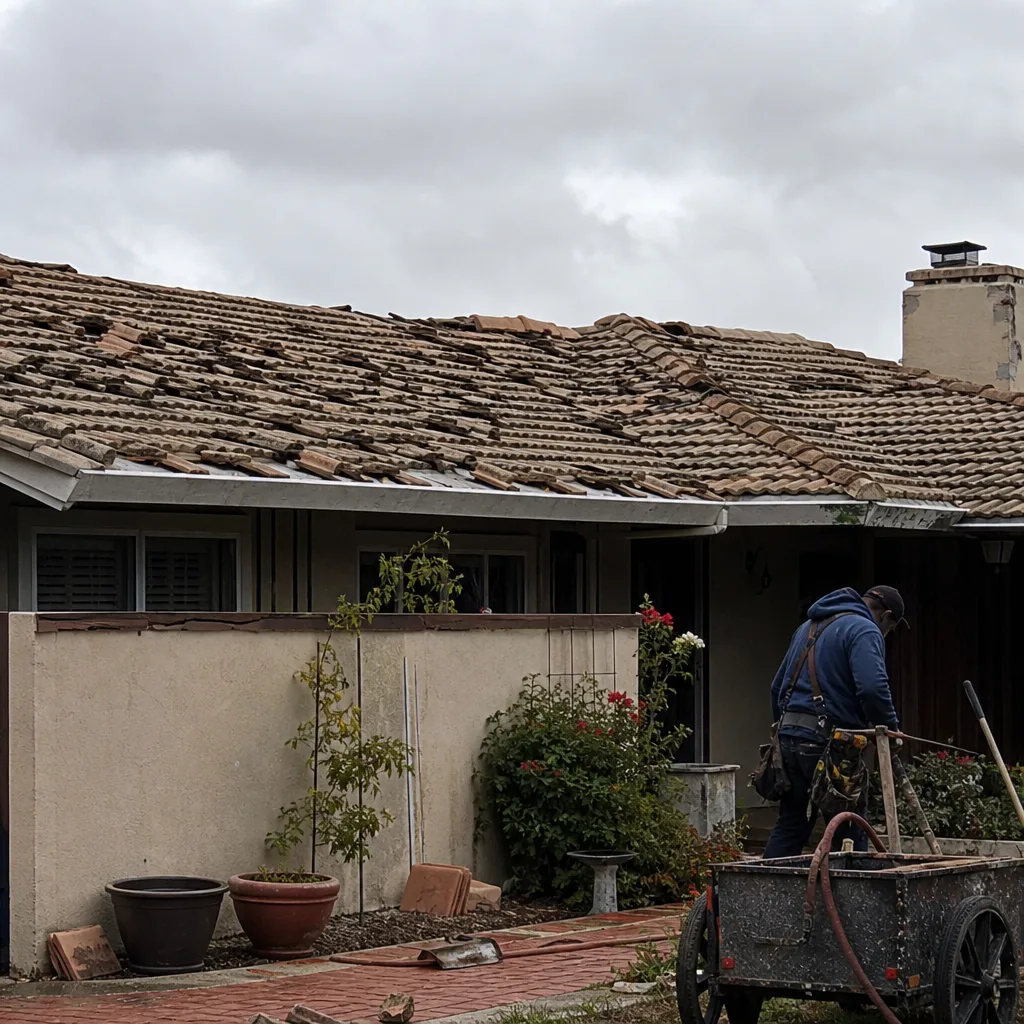 Before
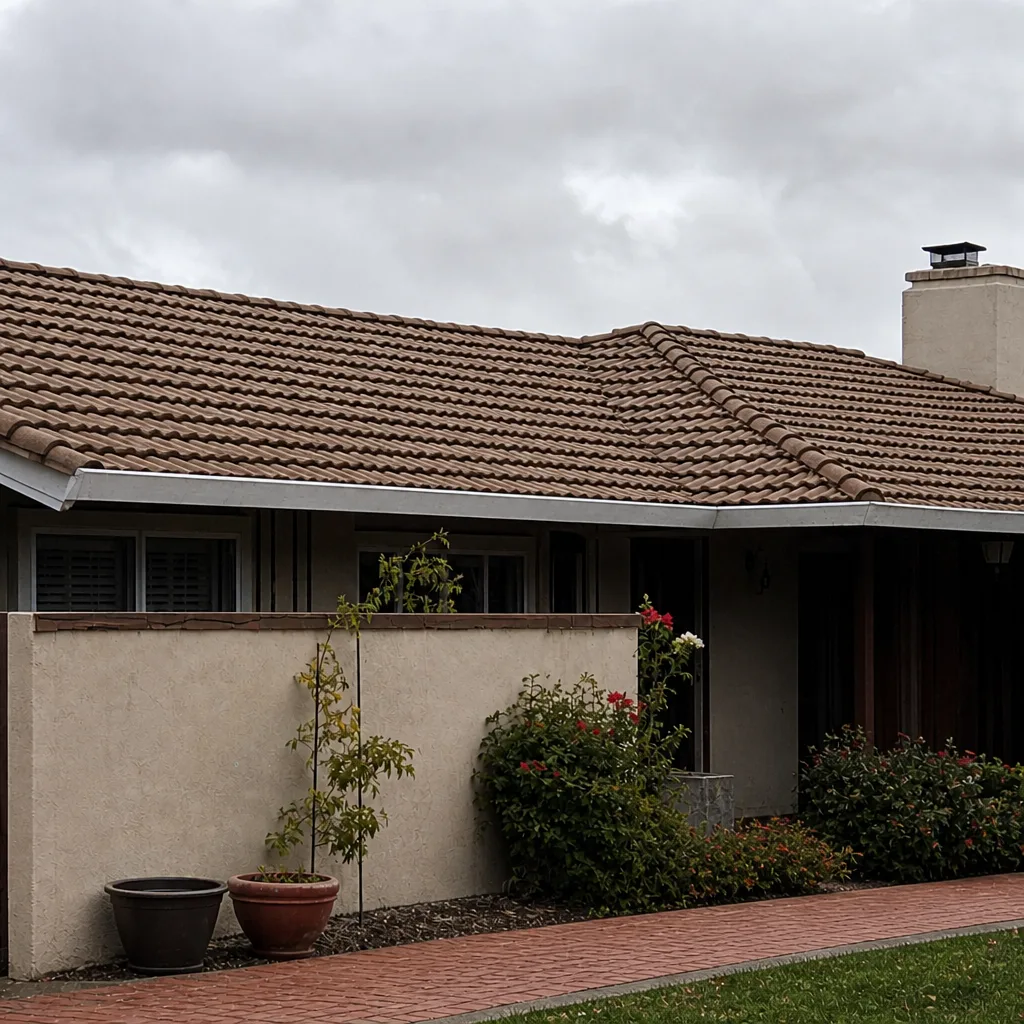 After
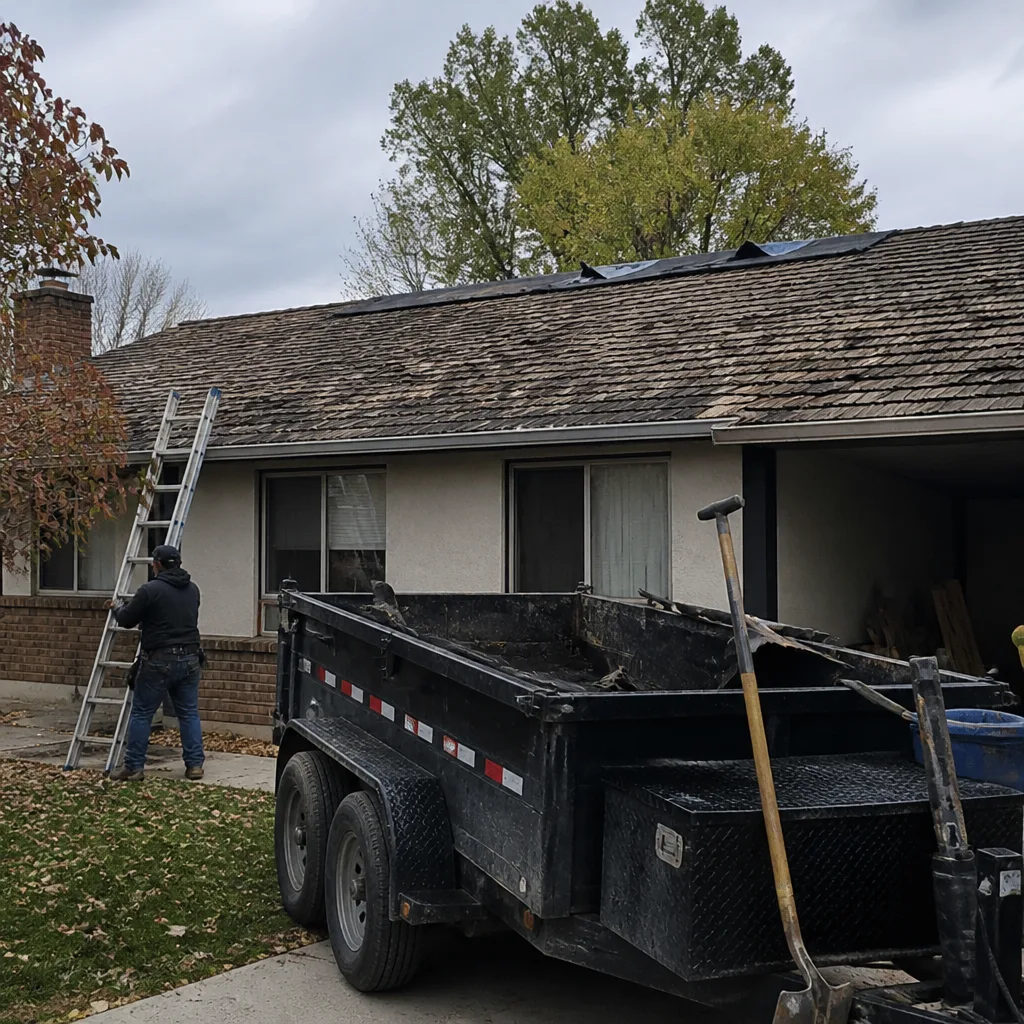 Before
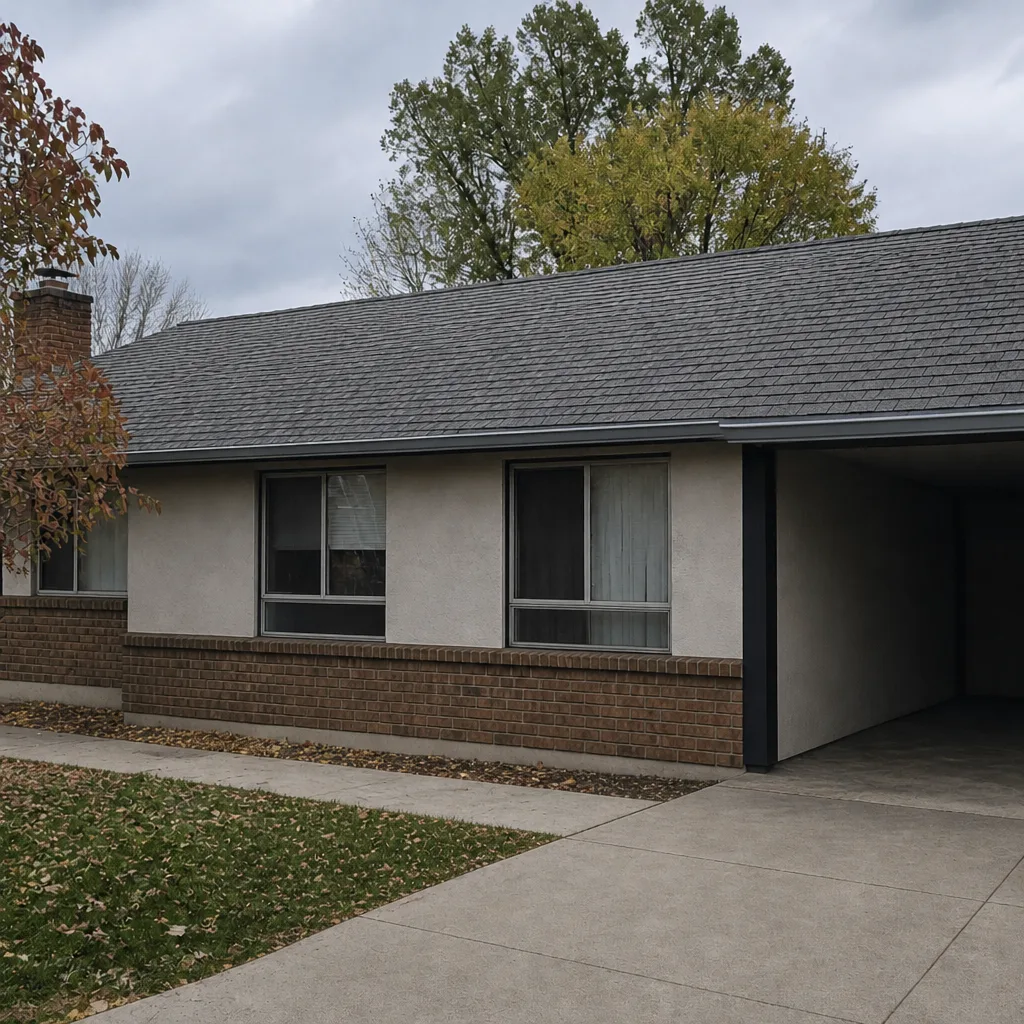 After
When to Call a Professional
Call a roofer right away when any of these are true after a Winchester storm: water is actively coming through a ceiling; shingles are missing or torn across more than a few square feet; a tarp needs to go on a second story or a steep pitch; you see daylight through the attic decking; or you’re not sure what you’re looking at. None of these are things to sleep on. In a Winchester summer, a wet attic becomes a mold problem before the weekend is out.
For anything short of active water intrusion, a free inspection is the right next step. A written line-item estimate and a free second opinion on any bid you’ve already received will usually tell you more in an hour than a week of guessing. Shepherd & Sons Roofing Winchester offers free estimates in Winchester – call (844) 797-8167 and a live person will pick up, including nights and weekends after a storm.
Frequently Asked Questions
Photograph the damage before you touch anything, then call your insurance claims line and get a claim number. Only after both of those steps should you tarp or dry in the roof. The order protects your evidence and starts the claim clock with the insurer on your side.
Most homeowners policies cover reasonable emergency mitigation, including tarping, to prevent further damage. Keep your receipts for the tarp and any materials, and photograph the roof before the tarp goes up. Call (844) 797-8167 for a free quote – we’ll tarp it and give you a written record you can give the adjuster.
Hail damage looks like random dents, bruising, or granules knocked loose in soft-metal areas and shingles – the pattern is scattered, not uniform. Age shows as uniform granule loss, curling, and brittleness across the whole slope. An adjuster and a roofer will often disagree on this, which is exactly why a free second opinion on any written estimate is worth having before you settle.
Emergency tarping and drying in typically runs a few hundred dollars, and targeted storm repairs commonly land in the low hundreds to low thousands depending on how many squares and how steep the pitch. A full replacement is a different conversation and should always come as a written line-item bid. Call (844) 797-8167 for an exact quote – estimates are free, and there’s no trip charge inside our own county.
A storm chaser has no local address, no published license number, and won’t be here in 90 days. A legitimate local roofer has all three, plus a written workmanship promise. Ask for the address, look up the license, and get the 90-day answer in writing before you sign anything.
Don’t sign anything at the door, and don’t let anyone on the roof until you’ve looked them up. Call us for a free second opinion on any bid they handed you. We’ll tell you what we’d do, free of charge, and you can decide from there.
The Bottom Line
The difference between a $900 repair and a $12,000 interior damage claim after a Winchester storm usually comes down to four things you can do before the storm ever hits: photograph your roof now for a baseline, keep a tarp and your policy number in one place, know the first four hours of steps in order, and have the number of a roofer with a real address in Winchester. Storm chasers will still come through after every hailstorm. The homeowners who come out ahead are the ones who already know who they’re calling, and who have a free second opinion and a written bid in hand before they decide anything. Call (844) 797-8167 to schedule your free estimate, and we’ll help you get ahead of the next one.
Written by the team at Shepherd & Sons Roofing Winchester.