
Last updated November 17, 2026
 Metal roofing
 Architectural shingles
 Tile roofing
 GAF
 Owens Corning
 Flat & low-slope
Free roof inspection with deck photos before we talk money - GAF and Owens Corning certified installation
Roofing Warning Signs: A Winchester Homeowner’s Reference Guide
Granule loss in the gutters is the warning sign homeowners worry about most, and it’s usually the one that matters least. The signs that actually predict a near-term leak are quieter: a faint ring on a closet ceiling, a ridge that’s gone soft at the top, a bubble forming above your bedroom. Most “warning sign” articles try to scare you into calling a roofer before you’ve finished the first paragraph. This guide does the opposite. We’re going to help you sort the “watch it for 90 days” situations from the “get someone on that roof this week” emergencies, so you aren’t panicked over worn asphalt while a real leak goes unnoticed in Winchester.
Quick Answer
Most roof warning signs fall into three buckets: cosmetic signs you should photograph and monitor, signs that mean you should book a repair within the next few months, and signs that mean a leak is already happening or is imminent and you should call a roofer this week. The signs that predict a near-term leak are almost always interior (attic staining, ceiling rings, soft decking underfoot) or structural (a sagging ridge, popped nails, a bubble in the sheathing). Granule shedding, faded shingles, and surface oxidation on tile are usually weathered-but-fine. In Winchester, hail bruising on asphalt and cracked tile after a monsoon are the two exterior signs worth a second look.
Styles & brands we work with
- Architectural shingles
- Metal roofing
- Tile roofing
- GAF
- Owens Corning
- Flat & low-slope
Table of Contents
- The Severity-Ranked Reference Table
- Interior Warning Signs That Predict Where the Leak Is
- Winchester Hail and Monsoon Damage: What It Looks Like Here
- Warning Signs That Look Worse Than They Are
- The Photo Guide: What to Shoot and How to Send It
- Watch vs. Act: A 90-Day Decision Framework
- Seasonal Checklists for Winchester Roofs
- Common Mistakes to Avoid
- When to Call a Professional
- Frequently Asked Questions
The Severity-Ranked Reference Table
The fastest way to sort a warning sign is to ask two questions: is water already getting in, and is it a structural or cosmetic issue? Use the plain-language ranking below to place what you’re seeing. If you can’t decide between two rows, move up one level of urgency. It costs nothing to have someone look, and it costs a lot to ignore a real one.
Cosmetic / Monitor (watch and photograph every 60 days)
- Loose granules in the gutter or at the bottom of downspouts
- Faded or chalky-looking shingles (that powdery white surface is oxidation)
- Minor algae streaks on north-facing slopes
- Light cracking in tile mortar at the ridge caps
- Curling at the very edges of shingles on a hot south slope
Repair Soon (book in the next 2-3 months)
- One or two cracked or slipped tile after a windstorm
- Popped or backed-out nails that lift a shingle slightly
- A single missing shingle or ridge cap
- Gutter pulling away from the fascia on one side
- Ponding water sitting for more than 48 hours in a low spot
- Cracked flashing around a chimney, vent, or skylight
Act Now (call this week, before the next rain)
- Water staining on a ceiling, especially a growing ring
- Sagging roofline or a visibly dipped section along the ridge
- Soft or spongy walking surface underfoot on the deck
- A bubble or blister in the sheathing visible from the attic
- Daylight showing through the roof boards from inside the attic
- Active drip, even a slow one, in an interior room
- Granule loss so severe the mat is visible in patches
Interior Warning Signs That Predict Where the Leak Is
The attic tells you more than the roof does. When we climb into an attic in Winchester, we’re reading stain patterns like a map. The location and shape of a stain almost always points back to a specific exterior failure, which saves a lot of guesswork and a lot of unnecessary climbing.
Reading attic stains
Look at the tips of your rafters first. Dark staining on a rafter tail, near where the roof meets the wall, usually means water is tracking down an ice-and-water membrane failure or a wind-driven rain leak at a roof-to-wall joint. A stain in the middle of the sheathing panel, with a clean run beneath it, usually points to a nail hole that has rusted through or a lifted shingle two or three courses uphill. Follow the water back up, not down.
Reading a ceiling spot
A brown ring on a ceiling inside the house means the water has already soaked through the drywall and dried at the edges. The center of the ring is where it dripped. The direction of travel from the ring center to its darkest edge usually points uphill toward the actual entry point, which can be 4 to 8 feet away on the roof surface. That’s why a roofer needs to see both the ceiling and the roof, not just one.
Softness underfoot
In the attic, if you can press your thumb into a rafter or sheathing panel and leave a dent, that panel has taken water for a long time. That’s not a “monitor” sign. That’s a “call this week” sign. It also changes the scope of a roof repair in Winchester, because rotted decking gets replaced before any new shingle goes down.
One more interior sign worth checking: daylight visible through the roof boards. If you can see light from inside a closed attic, water can find its way in. That’s a structural failure, not weathering.
Winchester Hail and Monsoon Damage: What It Looks Like Here
Generic hail damage descriptions call it “bruising,” which is accurate but not useful. Here’s what hail damage actually looks like on the two roof types we most often see in Winchester: asphalt shingles and clay or concrete tile. Both get hit by the same spring hailstorms and the same monsoon runoff. The damage patterns are completely different.
Hail on asphalt shingles
On asphalt, hail leaves a soft spot about the size of a dime to a quarter, and the granules at the center of the spot are knocked loose, exposing the mat beneath the surface. Run your fingertips over a suspect slope and it will feel like pebbled gray skin with a few smooth dimples. If you can press on a hail spot and feel give, that shingle has been compromised. Also look at metal vents and gutters: if they’re pitted, the roof took the same hit. Hail damage is a function of both shingle condition and impact, so an older shingle on a south slope takes more damage than a newer shingle on a shaded slope.
Hail on tile
Tile doesn’t dent the way asphalt does. Hail cracks it, chips it, or knocks the cement mortar loose from the ridge caps and hips. In Winchester we often see hairline cracks at the tile’s curved shoulder after a storm, and around the mortar at the ridge, small chunks knocked out. Tile is repairable one piece at a time, which is why a single cracked tile after a hailstorm is a “repair soon” situation, not a “new roof” situation.
Monsoon signs
The other Winchester-specific weather pattern is the summer monsoon, which sends more water in 20 minutes than most other storms send in an hour. That’s the storm pattern that reveals flashing failures at chimney and skylight penetrations. If you see water near a chimney inside after a monsoon, that’s flashing, almost every time. It’s usually a smaller repair than a full replacement.
Wind-driven rain around vents and ridge caps is a particular problem in the foothill neighborhoods. We’ve seen more ridge cap lift on the windward slopes than anywhere else in the area. If your ridge caps are lifting, they’re failing, and they need to be re-nailed or replaced before the next big blow. When the scope of damage moves past repair, our team handles roof replacement and installation in Winchester with brands like GAF, Atlas, and Boral, and we’ll name exactly which products we’re using before any work begins.
Warning Signs That Look Worse Than They Are
Half our phone calls start with a homeowner saying “I think my roof is gone,” and half of those calls end with “your roof is weathered but it’s fine, watch it for 90 days.” Here’s how to tell the difference without a ladder.
Surface oxidation isn’t a leak
When asphalt shingles start to look chalky or gray-white, that’s surface oxidation, essentially the sun wearing off the very top layer of asphalt. It looks bad from the street, but it doesn’t mean water is getting in. On a properly installed roof with intact granules beneath, oxidation alone is not a leak risk. A light gray roof can still have 8 years of life left.
Loose granules are often normal shedding
A small amount of granule loss, especially during the first two or three years after installation and again in the last few years of a shingle’s life, is normal. The tell is volume and pattern: a few loose granules in a gutter is fine. A gutter filled with a half-inch of granules after a rain, or bare patches showing through shingles on a 10-year-old roof, is not. So is a sudden, large volume of granules after a hailstorm, which usually means hail damage rather than normal shedding.
Curling vs. cracking
A shingle that curls slightly at the edges but lays flat across the field is ugly but functional. A shingle that has cracked, split, or pulled back from the one below it has lost its ability to shed water. If you can see daylight between two shingles, or the edge of a shingle has lifted away from the field, that section is failing.
Algae streaks are cosmetic
Those dark streaks running down a north-facing slope are a type of algae that feeds on the limestone filler in asphalt shingles. They’re cosmetic. They don’t cause leaks, and they don’t shorten the roof’s life in any meaningful way we’ve observed. If they bother the look of the house, they can be cleaned, but do not let a roofer sell you a full replacement because your roof has streaks.
A good rule of thumb from 30 years of looking at Winchester roofs: if the shingle field lays flat, the granules are intact, and nothing interior is staining, you’re in a monitor situation, and that’s true even if the roof looks bad from the street.
The Photo Guide: What to Shoot and How to Send It
Before anyone climbs a ladder, you can get an honest remote assessment from a photo set. This works well, and it saves money on trip charges. Here’s the exact set of photos to take and the order to send them in.
- Whole-roof shots from the ground. Stand across the street or in the yard and take one wide photo from each of the four facing sides. These show overall shingle condition and slope.
- Close-ups of the suspect area. Get within arm’s reach of the area you’re worried about, using a phone stabilized on a wall or railing, or a selfie stick. Do not climb the roof if the roof is wet, icy, or steep, and do not walk on a roof at all if you’re not confident about footing. If you can’t safely get the shot, say so, and let the roofer come get it.
- Interior photos. Shoot the ceiling stain, the attic sheathing above it, and the rafter tails near the same plane. These three shots triangulate the leak.
- A photo of a rough sketch. Draw the roof from above on a sheet of paper, mark the suspect area, then photograph the sketch. It saves a walk-around.
- A photo of any popped nails, missing ridge caps, or lifted shingles. A ladder-point photo at the edge is enough if you have a safe place to stand.
Text those to a roofer who’ll accept them and you’ll get back a rough assessment, usually within a day. A good roofer will tell you what they can and can’t see in the photos, and where they’d need to go up on the roof to confirm. If a roofer tells you from a single phone photo that you need a full replacement, that’s a warning sign in itself. Compare that to a written estimate and a photo of the deck.
Watch vs. Act: A 90-Day Decision Framework
The panic question most homeowners face is “should I call now or wait?” Here’s how we sort that question. Use a simple 90-day rule. If the sign falls into the “monitor” or “watch” bucket, photograph it now, then look again at 90 days. If it’s the same or smaller, keep monitoring. If it’s bigger, changed, or new, move to “act.” Some examples of what a “monitor” sign looks like when it’s monitored properly:
- Loose granules in the gutter: normal if it’s a few handfuls after a storm, concerning if it’s a bucket a season on a roof that’s over 15 years old.
- A slight chalky look: normal, unless the chalkiness has gone through to the mat in patches.
- A single cracked tile: normal weathering, unless it’s next to a ridge or hip where mortar damage is spreading.
- One popped nail: normal, unless it’s ten nails across one slope, which usually points to under-nailing or thermal movement problems.
Then move to “act” when the 90-day re-check shows any interior sign, any growing stain, or any structural change: sagging, softness, or a bubble in the sheathing. That’s the line.
Seasonal Checklists for Winchester Roofs
Roofs age on a calendar in Winchester, but the calendar is set by the high-desert sun and the monsoon pattern, not by a generic “spring and fall” schedule. Below is the schedule we recommend.
Before the spring hail season (March)
- Walk the yard and note any shingles on the ground after winter.
- Photograph the roof from all four sides; keep the photos as a baseline for any future hail claim.
- Clear gutters and downspouts.
After a hail event
- Look at gutters, downspouts, and metal vents for dents (hail hits metal first).
- Check for loose granules in the gutter and at downspout exits.
- Inspect tile mortar at ridge caps and hips for fresh chips.
- Take dated photos before you call anyone.
Before the monsoon season (June)
- Check flashing at the chimney, skylights, and any roof penetration.
- Look for lifted ridge caps or popped nails.
- Clear any debris from valleys and low spots, where water collects fastest.
Fall (October)
- Check attic sheathing after the first hard rain for new stains.
- Look at the ridge line for sagging: a straight ridge should look straight.
- Confirm gutters are clear again before the winter rain.
Common Mistakes to Avoid
- Panicking over a full bucket of granules. If the roof is cool and the granules are loose in a gutter, that’s a “watch” item. The exception is sudden, heavy granule loss after a hail event, which is worth a hail-damage inspection.
- Climbing a wet or steep roof to inspect it yourself. The most common injury we hear about from Winchester homeowners is a fall from a wet roof, not a leak. If you can’t safely stand on a ladder, don’t. Photos from the ground or from inside are usually enough for a first pass.
- Filling a ceiling stain with paint and forgetting it. Painting over a ceiling ring hides the evidence, but the leak keeps running. Mark the edges with tape or take dated photos before any paint goes on.
- Hiring a storm chaser who knocks after a hailstorm. Out-of-state crews work the Winchester area after every hail event, quote a low number, and are gone by the time the leak comes back. Ask for a local address and a license number you can look up. If they can’t give you a real physical address, that’s not a local roofer.
- Letting a contractor talk you into a full replacement when the roof has one failed section. A local roofer with a ladder and a UV light can show you what’s a repair and what’s a replacement. Insist on seeing the deck photos before you talk money.
- Ignoring a small spot in the attic because it isn’t dripping. A stain that isn’t currently wet is still a leak that has found its way through. It’s the cheapest repair you’ll ever do; wait a year and it becomes a deck replacement.
- Skipping a second opinion on a written estimate. Our standing offer of a free second opinion exists because the price often varies by thousands between bids. Bring us any written estimate and we’ll tell you what we’d bid, same scope, same products.
See the difference
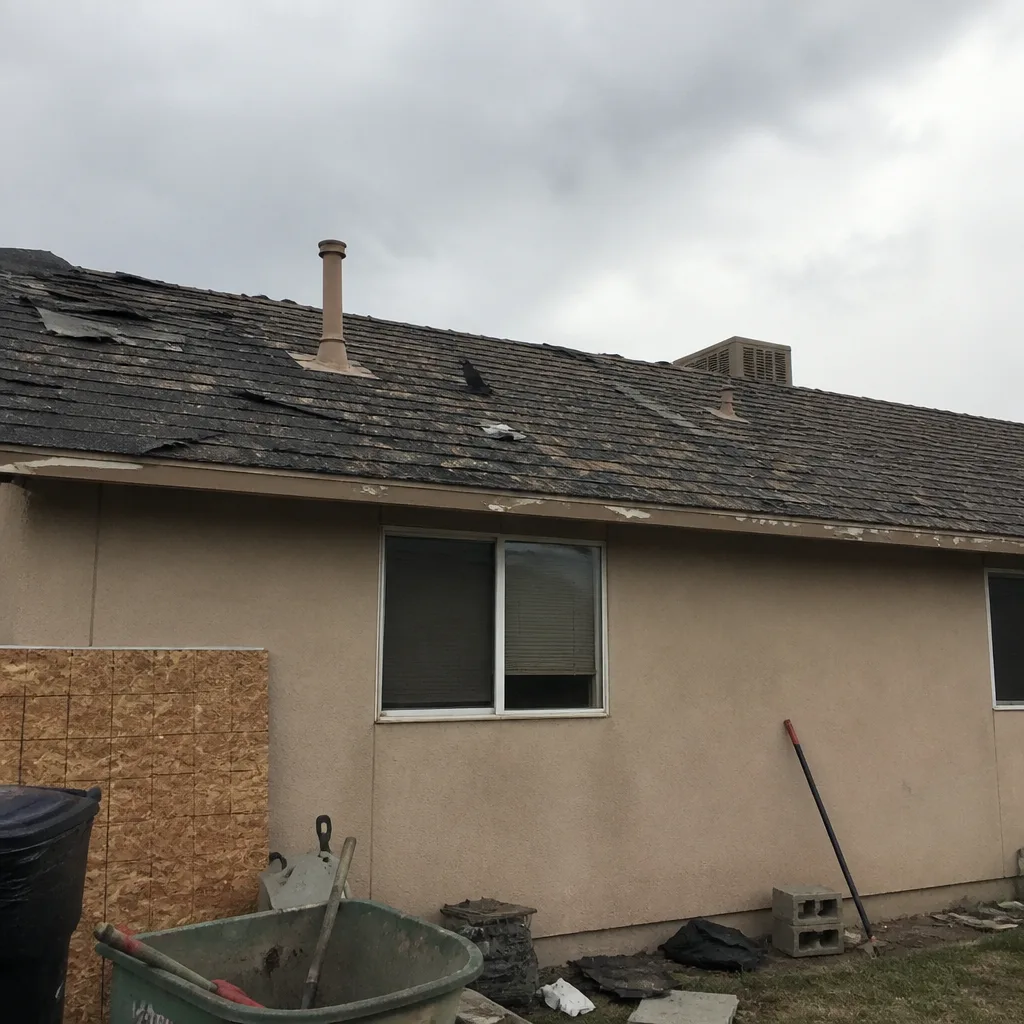 Before
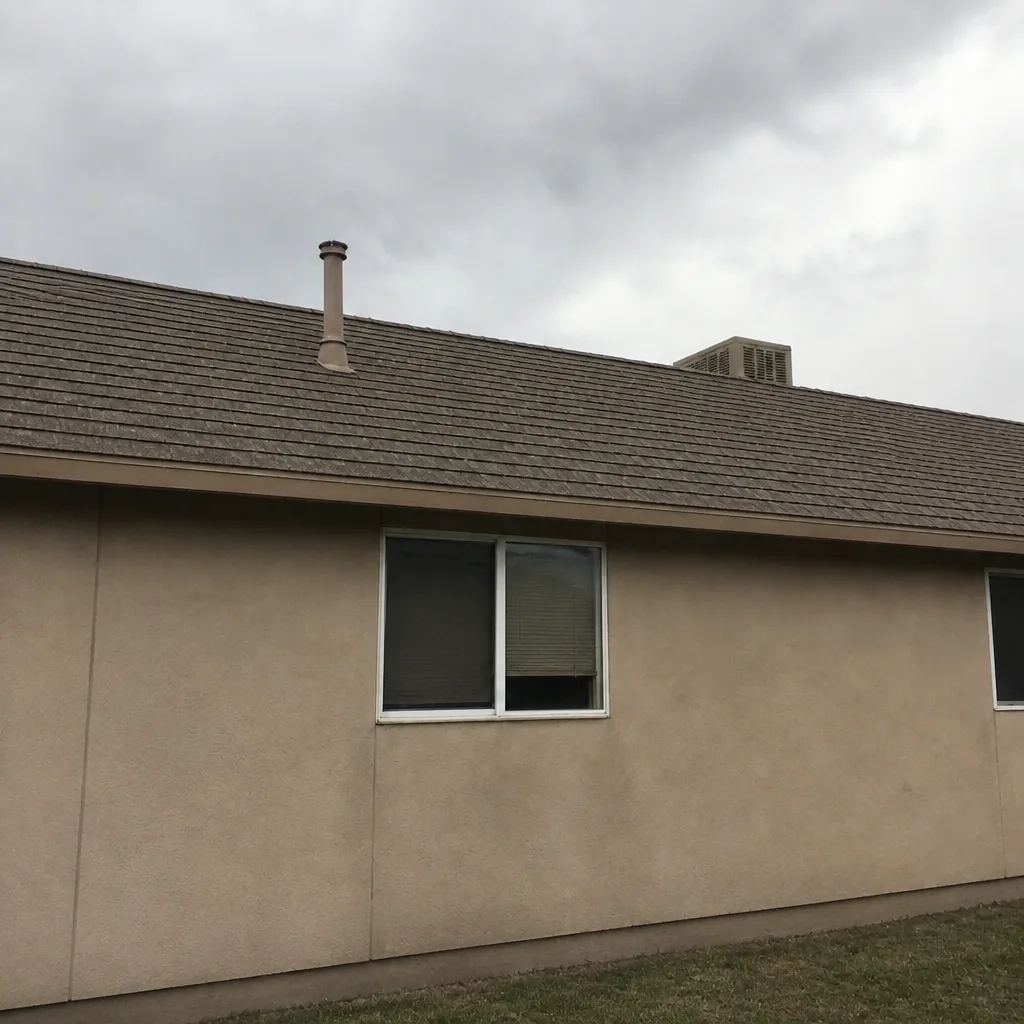 After
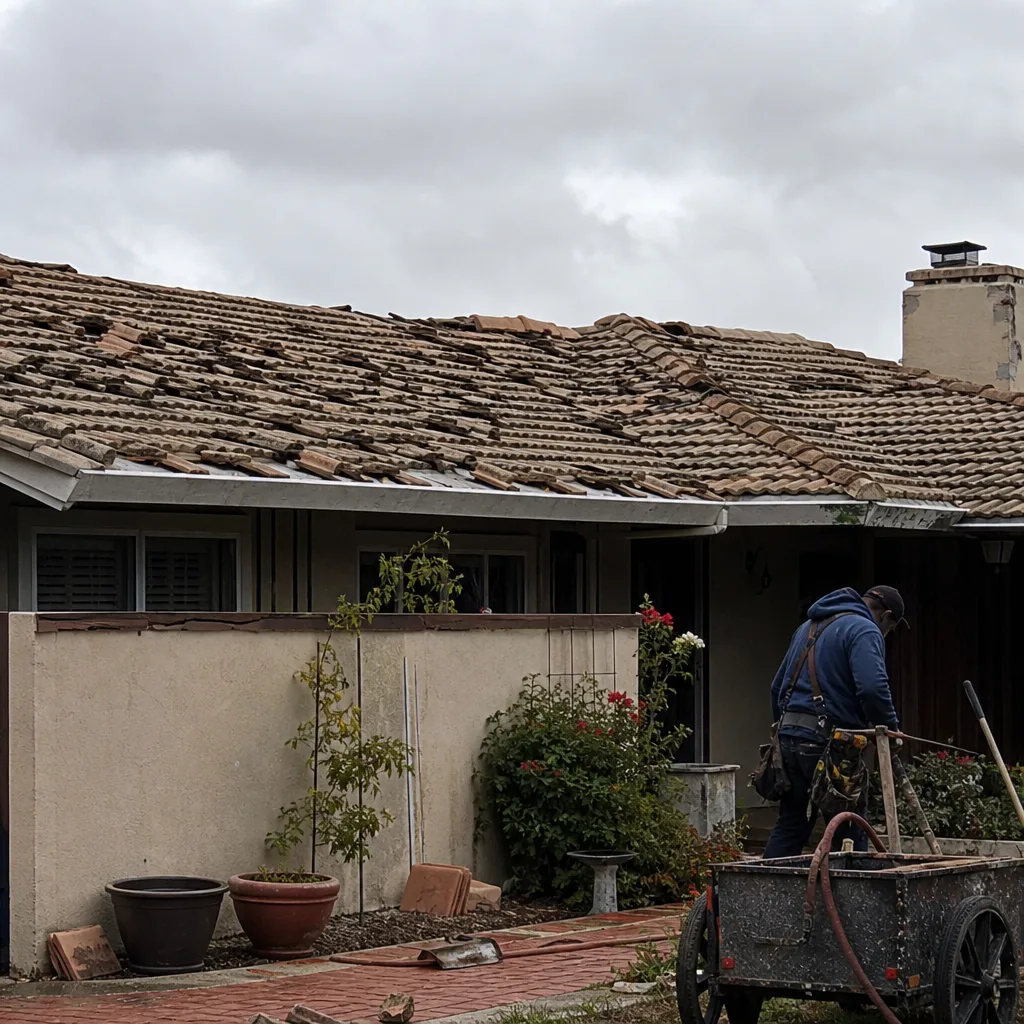 Before
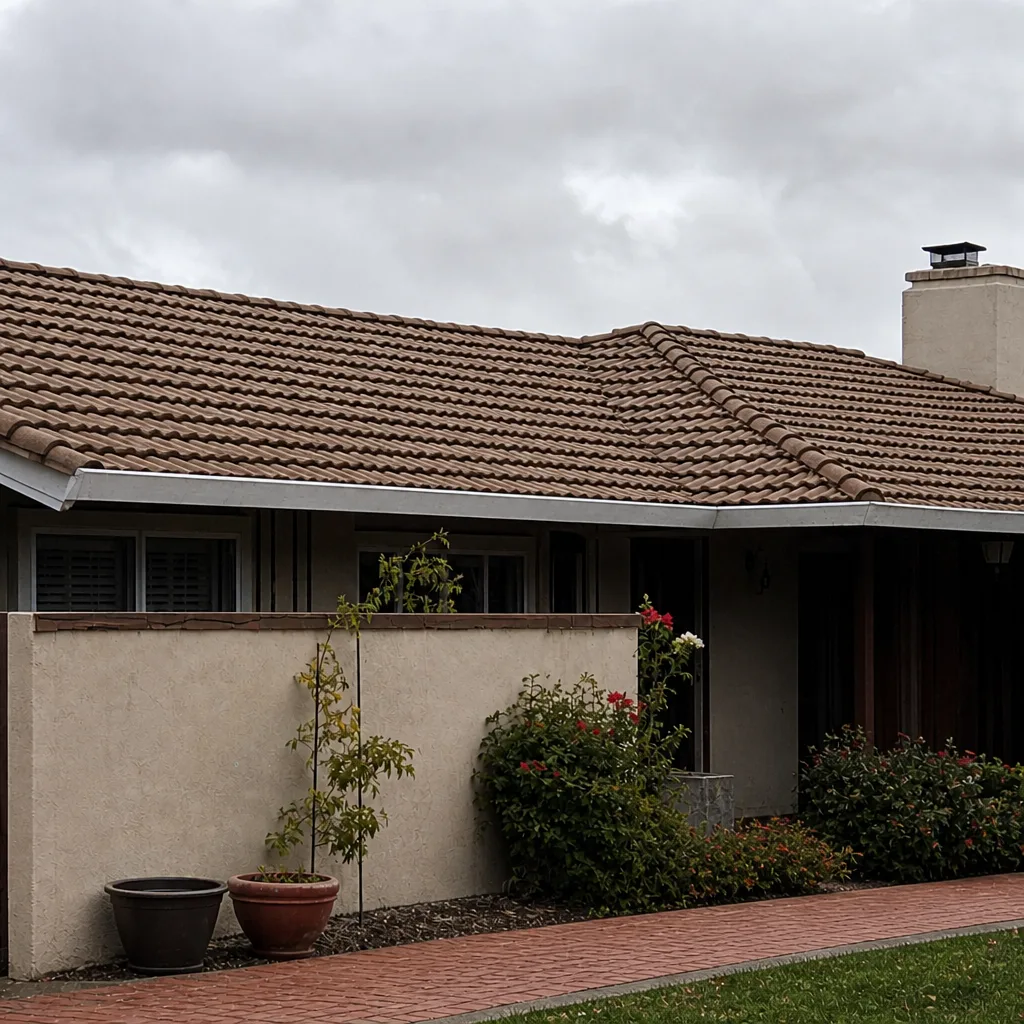 After
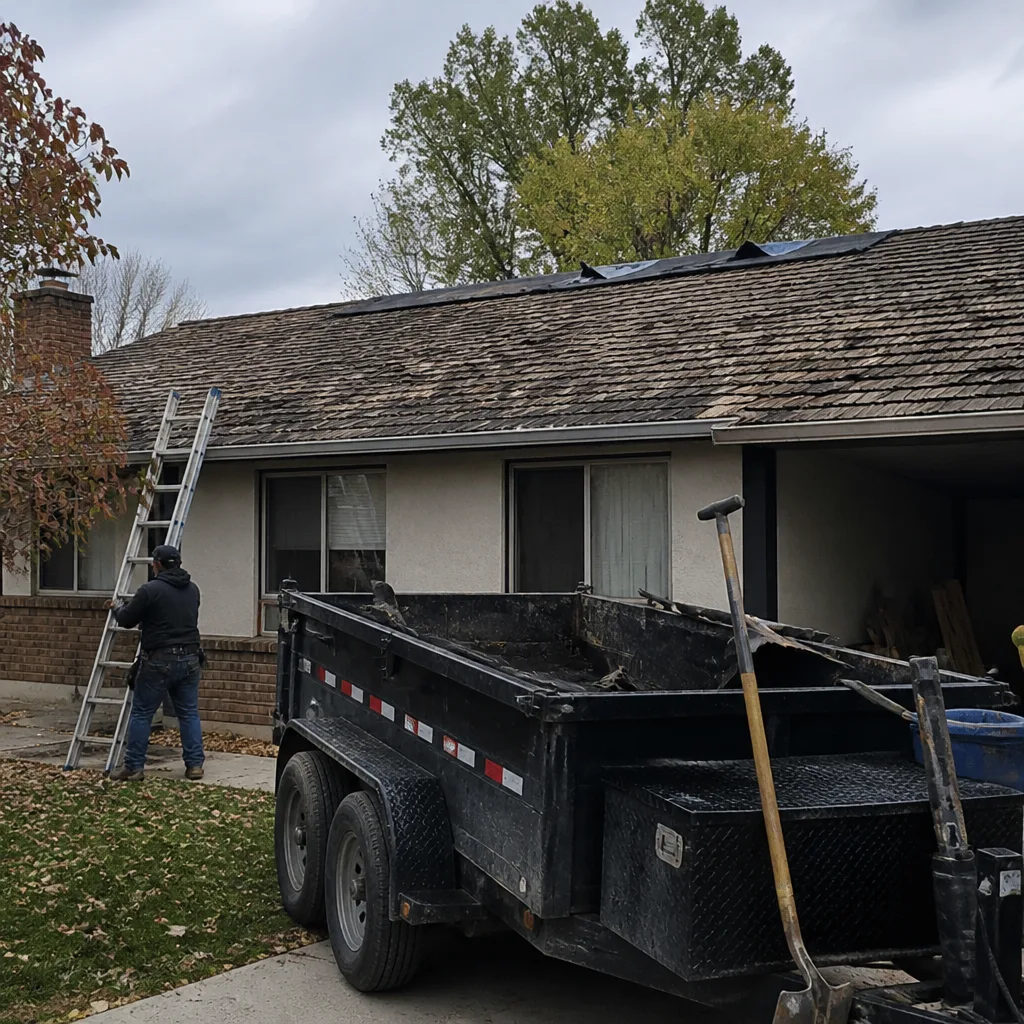 Before
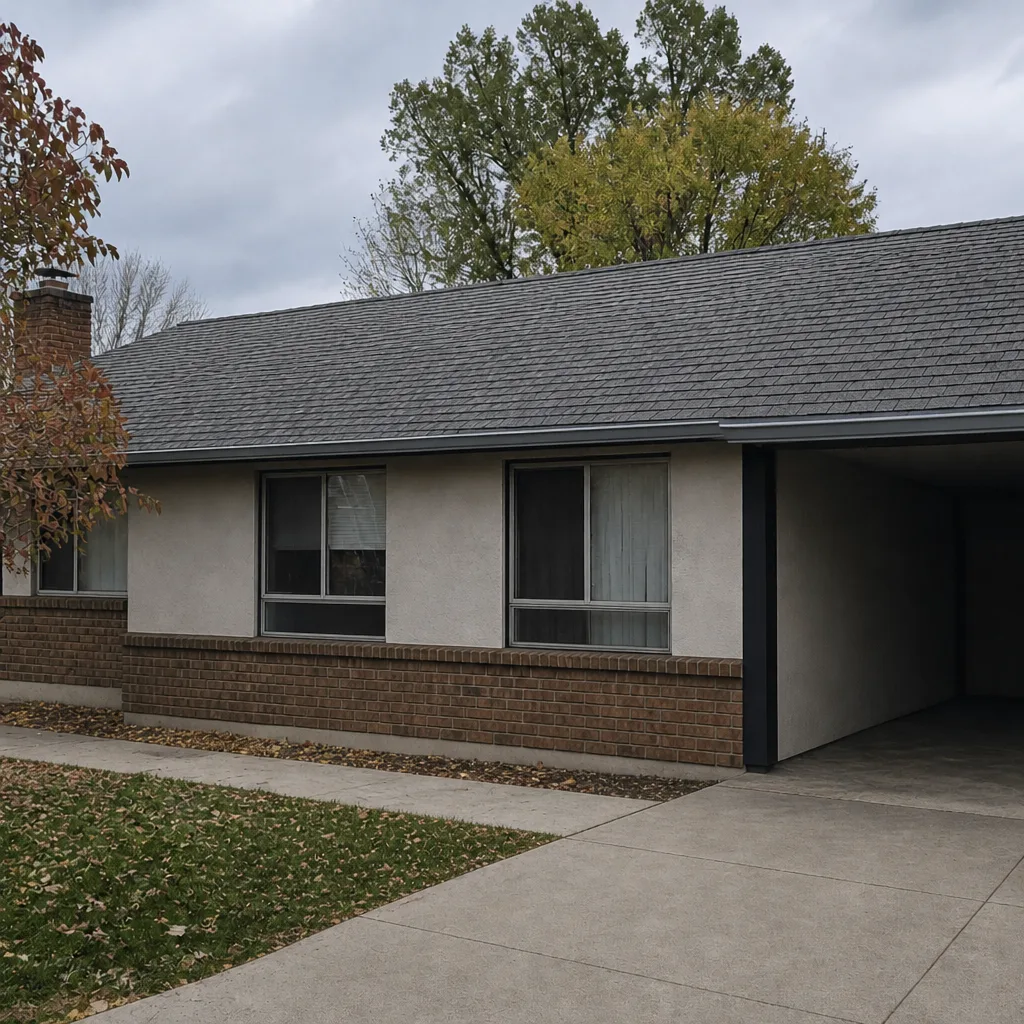 After
When to Call a Professional
Call a roofer this week, not next month, when you see any of the following: a growing ceiling stain, water where it doesn’t belong after a rain, a sagging ridge or soft spot underfoot, daylight visible through the roof boards, a bubbling section of sheathing in the attic, or a large volume of granules in your gutters from a single recent hailstorm. Also call if you’re unsure. A short conversation, or a few photos, sorts most of these faster than the homeowner can. When a bigger scope is in the picture, from replacement down to a single chimney flashing repair to metal roofing in Winchester, a written, fixed-price estimate keeps the scope honest. Shepherd & Sons Roofing Winchester offers free estimates in Winchester, and a live person answers the phone 24/7 – call (844) 797-8167. There’s also a current $40 off any repair over $200, and a free second opinion on any written estimate, no trip charge inside our county.
Frequently Asked Questions
A roof needs replacing when the shingle field is uniformly worn or the decking has widespread rot; it needs repair when a single section, flashing point, or ridge cap is the only failed element. In our experience, most Winchester roofs under 15 years old with localized damage are repair candidates, not replacements. The right call comes from seeing the deck, not from a phone photo, so the free estimate is worth scheduling either way.
Hail damage on asphalt looks like small, softened dimples the size of a dime to a quarter with granule loss at the center, exposing the mat beneath. If you can see bare grey or dark patches where granules used to be, and the same slope has pitted metal vents, that’s a hail-damaged slope. A few loose granules in the gutter after a storm is normal; a bucket after a single hail event is worth a call.
Usually not, unless the volume is large or the shingle surface shows bare patches. Normal shingle shedding leaves loose granules in a gutter, but bare mat visible through the shingle is a different story. Photograph the gutter and the shingle field, then re-check in 90 days; if it’s worse, call for an inspection.
Almost always, but not always in the same place as the stain. Water tracking from a failed flashing, a popped nail, or a cracked ridge cap can travel 4 to 8 feet before it shows up on a ceiling inside the house. That’s why we ask for both the ceiling photo and the attic photo when you call; the pair tells us where the actual entry point is likely to be.
Yes, mainly at the penetrations. Monsoon rain arrives hard and sideways, which stresses chimney and skylight flashing more than steady rain does. A yearly pre-season look at the flashing, ridge caps, and valleys, before the first big storm of the summer, heads off most of the monsoon leaks we see.
Photos are great for sorting out “monitor” versus “call someone,” but they don’t replace an in-person estimate when the scope is real. A photo can show a missing shingle; it can’t show a soft deck under it. Send photos first, and if the roofer confirms the scope, the free on-site estimate is still the right next step.
The Bottom Line
The signs that usually make homeowners panic (granule loss, oxidized shingles, algae streaks) are the ones that most often mean “watch it for 90 days.” The signs that actually matter are the quiet ones inside the house: ceiling rings, attic staining, soft spots underfoot, a sagging ridge. Photograph what you see, check it again in 90 days, and move to action when an interior sign shows up. In Winchester, after a hail event, look at the metal gutters and vents before the shingles; if the metal is pitted, the roof took the same hit. Most of the questions in this guide get answered with a look at the deck and a real written estimate. If you’re on the fence after reading this, that’s the fastest and most honest way to sort it.
Anchor links for the record: Shepherd & Sons Roofing Winchester home.
Written by the team at Shepherd & Sons Roofing Winchester.