
Last updated November 17, 2026
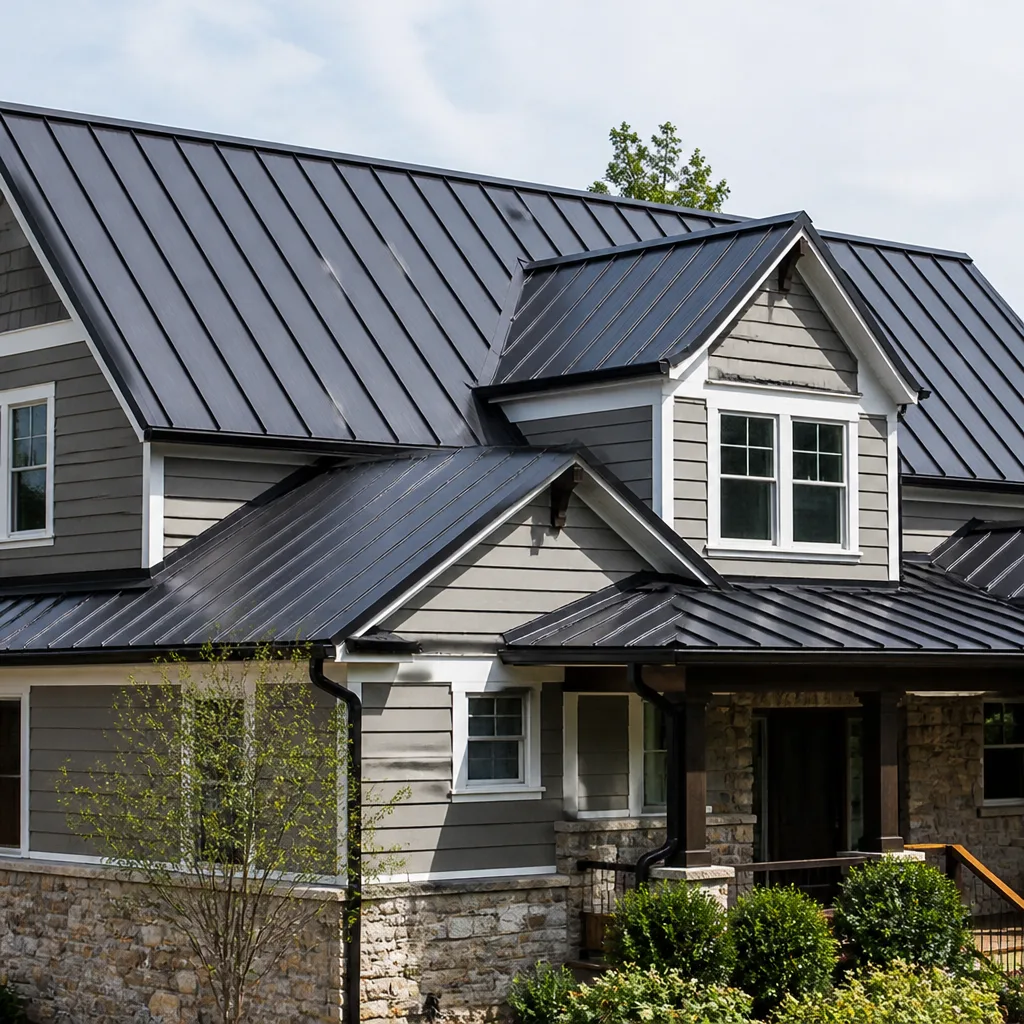 Metal roofing
 Architectural shingles
 Tile roofing
 GAF
 Owens Corning
 Flat & low-slope
Free roof inspection with deck photos before we talk money - GAF and Owens Corning certified installation
Metal Roofing Warning Signs Every Homeowner Should Know
If your metal roof is leaking, the panel itself almost certainly isn’t the problem. The problem is at a flashing, a fastener, a sealant joint, or a dissimilar material interface – and each one has a different fix. That’s the counterintuitive part most homeowners never hear: metal roofs don’t fail across the broad face of the panel. They fail at the edges, the penetrations, and the seams where one material meets another. In our experience across Winchester, the panels that leak are usually sound. The connections around them aren’t. This guide shows you how to read those connection points yourself – what a bad fastener looks like, when rust is harmless and when it’s a warning, what ponding water tells you from inside the attic, and which flashing details get cut short on fast jobs. Read it once and you’ll know more about your roof than most of the people who might bid on it.
Quick Answer
The warning signs of metal roof trouble show up at the connections, not the panels: backed-out or over-driven fasteners, rust bleed along cut edges and fastener heads, standing water on low-slope sections, loose ridge caps and eave trim, and headwall flashing cut too short. Any leak that appears at one of these points is a repair, not a full replacement – and a trained eye can usually tell the difference in a single walk-around.
Styles & brands we work with
- Architectural shingles
- Metal roofing
- Tile roofing
- GAF
- Owens Corning
- Flat & low-slope
Table of Contents
- Why Metal Roofs Fail at the Connections, Not the Field
- The Fastener Inspection Walk: Backed-Out vs. Over-Driven
- Rust Bleed Patterns: Surface Oxidation vs. Base-Metal Corrosion
- What Ponding Water Looks Like From Inside the Attic
- The Trim and Flashing Checklist: Ridge, Eave, and Headwall
- Noise: Normal Thermal Movement vs. a Too-Rigid Panel
- Winchester Climate, Code, and Metal Roof Realities
- Your Annual Metal Roof Inspection Checklist
Why Metal Roofs Fail at the Connections, Not the Field
A metal panel, properly installed, is essentially a single piece of weather-shedding material that can last decades. It doesn’t crack, split, or dry-rot the way asphalt shingles do. That durability is the whole reason people choose metal in the first place. But durability of the panel isn’t the same as durability of the roof system. The roof is a system, and the system’s weak points are where the metal meets something else.
Think about where water actually gets in. It gets in at the holes drilled for fasteners. At the seams where panels overlap. At the ridge cap where two slopes meet. At the eave where the panel ends and the gutter begins. At the headwall where your roof runs up against a vertical wall or chimney. Each of these is a place where the metal connects to something that isn’t metal – caulk, a gasket, a different material, a wood substrate – and that’s where the water finds a path.
On a roof we looked at in Winchester last spring, the homeowner had been told by a bidder that the entire south slope needed to come off. The panels were fine. Three fasteners at the eave had backed out a quarter inch and the gaskets under them had dried out. Water was tracing back under the panel and showing up at the ceiling. That’s a repair measured in the hundreds, not a replacement measured in the tens of thousands. The lesson: on a metal roof, always ask where the leak is actually coming from before anyone talks about tearing the roof off. If you want the full picture of how these repairs are handled, our roof repair in Winchester page lays out the common fixes.
The Fastener Inspection Walk: Backed-Out vs. Over-Driven
This is the single most valuable twenty minutes you’ll spend on your roof each year. Walk your metal roof with your eyes, not your hands – you don’t need to touch anything, you just need to see it. Fasteners tell you more about a metal roof’s health than any other single indicator, and they fail in two opposite directions.
Backed-out fasteners
When a screw backs out, it’s usually because of thermal movement – the panel expanding and contracting with heat and cold – working against a fastener that wasn’t set quite deep enough or lost its grip. A backed-out screw sits proud of the panel. The gasket underneath it no longer compresses against the metal. That’s a direct path for water. You’ll see the screw head sitting above the panel like a little metal pimple, sometimes with a stain trailing away from it.
Over-driven fasteners
An over-driven screw is the opposite problem. It’s set too deep, which deforms the panel around it into a little dish. That dish holds water. Worse, an over-driven screw compresses the gasket past the point where it can recover, and the panel now has a slight divot that never perfectly seals. Over-driving is common on fast installations where a crew runs a screw gun at full speed and doesn’t feel the gasket seat. It’s also hard to spot from the ground – you have to get up close.
Here’s the walk, in order:
- Start at the eave on the sunny side of the roof, where thermal cycling is hardest on fasteners.
- Scan in a straight line up the panel, following the fastener rows. Backed-out screws stand proud; over-driven ones sit in a dimple.
- Look for any fastener where the gasket is cracked, flattened, or missing.
- Check the fastener rows at the panel ends and along the perimeter – the edge zones take the most wind load and movement.
- Note any loose fastener. A handful is normal wear; a scattered pattern usually means over-driving or a rigidly fastened panel.
If you count more than a dozen loose or damaged fasteners per slope, that’s a sign the roof wasn’t fastened correctly from the start. That doesn’t automatically mean replacement, but it’s worth a look from a pro. When we install a metal roof, name the panel – whether it’s a GAF or a CertainTeed profile – and the fastener spec goes with it. If you’re weighing new metal against repair, our metal roofing in Winchester page covers the installation side.
Rust Bleed Patterns: Surface Oxidation vs. Base-Metal Corrosion
Rust on a metal roof is not automatically bad news, and a lot of homeowners panic over nothing. The key distinction is where the rust is and what pattern it’s making. Surface oxidation is normal. Base-metal corrosion is not, and the difference is visible if you know what to look for.
Surface oxidation
On Galvalume (the zinc-and-aluminum coated steel common on value-priced metal roofs) and on painted panels, surface oxidation is a light, powdery, generally uniform discoloration. On a painted roof it often shows as a faint chalkiness or fading, not a red streak. It’s cosmetic. It doesn’t shorten the life of the panel, and it doesn’t mean water is getting in. Plenty of Winchester metal roofs have some surface oxidation after a decade and are in perfectly good shape.
Base-metal corrosion
Base-metal corrosion looks different. It’s active red rust that starts at a cut edge, a fastener hole, a scratch, or the bottom of a panel where water sits. It leaves a rust stain bleeding down the panel – the classic rust bleed – and the metal beneath looks pitted or eaten at, not just discolored. This is serious because it’s eating into the steel, and it usually begins at the connections: cut panel edges that weren’t sealed with a proper treatment, or fastener heads whose protective coating has failed.
The distinguishing test is simple. Look at the direction the rust is running. A stain running from a cut edge or a fastener head is base-metal corrosion and needs attention. A general discoloration across the field of the panel is surface oxidation, and you can leave it alone. The most common cause of the serious kind is a cutting crew that cut panels in the driveway with a saw and left the raw edges untreated – a common shortcut on a fast job. Ask any bidder how they treat cut edges. The answer tells you whether they know what they’re doing.
If you see rust bleeding from under a fastener or along a seam, call a pro for a look. Most such spots are caught early enough to be sealed and re-coated. Let them sit and they’ll eat through the panel.
What Ponding Water Looks Like From Inside the Attic
Some metal sections are pitched low – a porch roof, a shed, a transition over a garage – and low-slope sections are where you’ll see standing water after a heavy rain. Standing water is a warning sign, not an emergency, but it needs watching. From inside the attic, it looks like rings or dark, damp patches on the underside of the roof deck, and the stains trace the slope of the metal above.
Here’s why this matters. A metal panel that holds water holds it at exactly the seam where the panels overlap. Water standing at a seam finds the gasket, then the fastener, and eventually the underlayment. But the leak won’t show at the ponding spot – it’ll show a few inches downhill, usually at the ceiling below the low end. So the place you should look after every major rain is not where the ceiling stains are; it’s inside the attic, following the deck slope uphill from any stain.
This is the single most missed inspection in Winchester. Attics here get hot and the light is dim, so people don’t look up there. Here’s what to check:
- Dark, wavy rings on the underside of the decking, especially near low-slope sections.
- Damp patches spreading from a panel seam uphill from the ceiling stain.
- Drips or a bright line of water where the metal meets a valley or a change in pitch.
- Discolored wood, softness, or a fresh water smell that wasn’t there after the last storm.
- Water standing at the ridge side of a low-slope run – it can be deep enough to pool against the ridge cap.
If you find anything up there, the fix is usually to address the ponding itself – re-pitch a small section, add a seam, or attend to the fasteners at the water’s edge – not to replace the roof. A trained roofer can usually tell in one look whether you’ve got ponding or a proper drainage slope. A few homeowners have called us after every big rain for years with no actual leak; the roof was fine and we told them so. Others had ponding that had been quietly softening a deck for years.
The Trim and Flashing Checklist: Ridge, Eave, and Headwall
If fasteners are the most common failure point, flashing is the runner-up – and it’s where fast installations show their seams most clearly. Flashing is the metal trim that seals every edge and transition. It gets cut and bent on the job, which makes it the detail most likely to be rushed.
Ridge cap movement
The ridge cap is the trim that caps the peak where two roof slopes meet. A properly set ridge cap sits tight and doesn’t move. If you can see it lifting, or it looks like it’s slipped sideways from the panel, that’s a warning. Loose ridge caps let wind-driven rain in at the peak – which is hard to diagnose later because the leak shows up far from the ridge. Check it from the ground by looking at the peak line: if it’s wavy or gapped, get it looked at.
Eave drip edge separation
At the bottom edge of the roof, the drip edge should extend past the fascia and angle down so water drops clear into the gutter. If the drip edge has pulled away or the gap between the panel end and the gutter is more than about an inch, water can run behind the gutter and rot the fascia. In Winchester, where we get hard, wind-driven rain off the foothills, an undersized eave detail is one of the most common causes of fascia rot.
Headwall flashing cut short
The headwall is where your roof runs up against a vertical wall – a chimney, a dormer, the house wall itself. The flashing there has to be tucked up into the wall or siding and integrated with the panel. On fast jobs, this is the detail that gets cut short: the flashing is left too low, or it’s run under the panel end with no counter-flashing, and water gets in behind it. If your headwall flashing looks like a small metal strip sitting on top of the panel rather than tucked up into the wall, that’s a warning. This is the single most common leak we find on newer metal roofs after a few years.
When you’re getting bids, ask where the headwall flashing goes up the wall and how it’s sealed. If the answer is vague, so is the detailing.
Noise: Normal Thermal Movement vs. a Too-Rigid Panel
Metal roofs pop and tick. If you’ve had yours for a year or two, you’ve heard it: a soft “ting” or “pop” as the sun comes up and the panels warm, and again as they cool at dusk. That’s thermal movement, and it’s completely normal. The metal expands and contracts with temperature, and the sound is the panels moving very slightly against their fasteners and clips. A properly installed metal roof is supposed to do this.
What’s not normal is a loud, sharp pop that happens in one spot over and over, or ticking that’s much louder than the rest of the roof. That can mean a panel is fastened too rigidly – it has nowhere to expand, so the pressure builds until it releases with a sound. Over time, a rigidly fastened panel works against its fasteners and can back them out (which takes you back to the fastener section above).
A straightforward way to test it: if the noise is fairly even across the whole roof and happens at the same times of day as the temperature shifts, it’s normal. If one panel or one section sounds off, get a pro to look at how it’s fastened. In our experience, a panel that sounds different than its neighbors is a panel that was installed differently – usually by a crew that moved too fast.
Winchester Climate, Code, and Metal Roof Realities
Winchester puts your metal roof through a specific set of stresses, and they’re worth understanding because they explain which warning signs to watch most closely. We get intense summer heat on the roof panels (surfaces routinely climb well above air temperature in the afternoon sun), cold winter mornings that make the metal contract sharply, and periodic hard, wind-driven rain from the western foothills. That’s a lot of thermal cycling, and thermal cycling is what works fasteners loose and drives the noise.
Add in the occasional wind event – and on the open, exposed lots in Winchester, and in the exurban pockets outside town, the wind loads on a roof are real – and the perimeter fasteners and ridge cap become the most loaded details on the roof.
On the code front, metal roofs are addressed by the same roofing code as other materials, and any replacement or major repair needs permits pulled and inspected. One detail that trips up out-of-town crews in Winchester: the ice-and-water underlayment requirements at the eaves and valleys matter even more on metal than on shingle, because metal sheds water faster and concentrates it at the same points. If a bidder doesn’t mention underlayment or permit, that’s a bid to walk away from. Our roof replacement and installation in Winchester page covers the permit and inspection side, and our Shepherd & Sons Roofing Winchester home page explains how our written 90-Day Done Right Promise works on any job.
If your metal roof is showing signs and you’re not sure how far the problem goes, a free second opinion on any written estimate is the cheapest way to find out before you commit. Call (844) 797-8167. A live person answers, any hour, including after a storm.
Your Annual Metal Roof Inspection Checklist
Here’s the annual walk in the order we’d do it. You can do the ground-level parts yourself; the roof-top parts are best left to a pro, but you can use this list to ask good questions when you call one.
- Ground walk, sunny morning. Look up the sunny slope. Look for backed-out fasteners (small bright dots standing proud) and rust stains running from fastener heads or cut edges. Note anything that looks off.
- Check the peak line. Is the ridge cap straight and tight, or wavy and gapped? A loose ridge cap is a fast repair and a slow leak.
- Check the eaves and gutters. Is the drip edge tight to the fascia? Is the gap to the gutter within about an inch? Look for fascia rot at the corners.
- Check the headwall. Look at where the roof meets a wall or chimney. The flashing should be tucked up into the wall, not sitting like a strip on the panel.
- After the next hard rain, look inside. Get in the attic with a flashlight and trace the deck uphill from any ceiling stain. Look for damp patches, rings, and water at seams.
- Anytime you hear noise, note it. Even, rhythmic pops at temperature change are normal. A single panel that pops loud and sharp is one to get looked at.
- Once a year, have the roof itself walked. Anyone can see the obvious problems from the ground. A proper inspection walks the fasteners and checks the gaskets up close – that’s the part you can’t do from the gutter line.
Common Mistakes to Avoid
- Replacing the whole roof over a fastener leak. A dozen loose fasteners at the eave is a repair. If a bid starts with “the whole slope has to come off” before anyone has walked the fasteners, get a second opinion.
- Confusing surface oxidation with base-metal corrosion. Faint, even discoloration across a panel is cosmetic. Rust bleeding from a cut edge or a fastener head is not. Knowing the difference saves you a panic call and possibly a bill.
- Ignoring the attic after a big rain. Ponding doesn’t show up where you’d expect. The ceiling stain is the symptom; the problem is up inside, following the deck slope.
- Letting a fast crew cut corners on flashing. Short headwall flashing and a loose ridge cap are the two most common fast-install failures. Ask any bidder how they detail the headwall and the eave.
- Driving screws back in yourself. You can easily over-drive one and turn a small leak into a bigger one. The right fix is to replace the fastener and the gasket at the right depth, and that’s a trained-hands job.
- Not checking the permit. A metal roof replacement or major repair in Winchester needs permits pulled and inspected. A bidder who waves off the permit is telling you something about how they work.
- Calling the first bidder after a storm. Out-of-town storm chasers come through after every big wind event. Ask where they parked their truck and whether they’ll be back in a year. Then ask a local roofer who’s still there.
See the difference
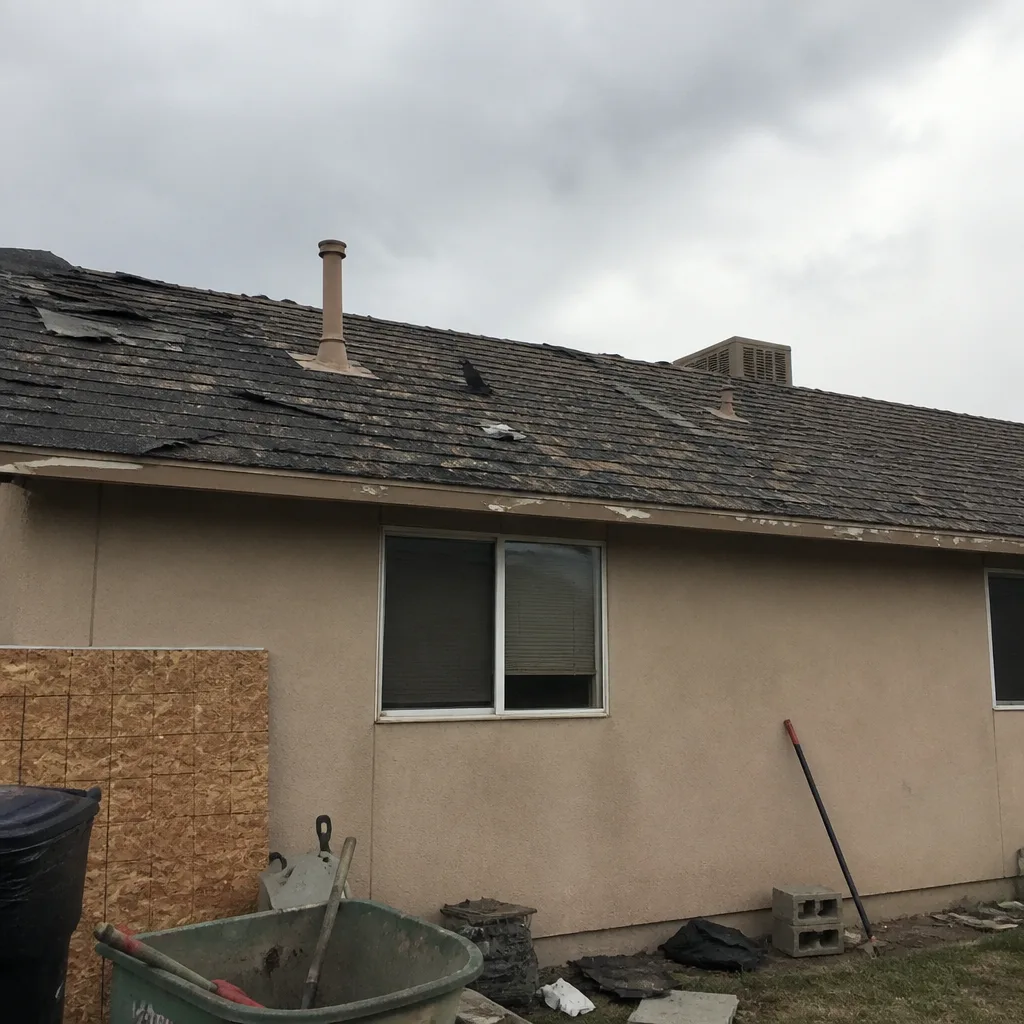 Before
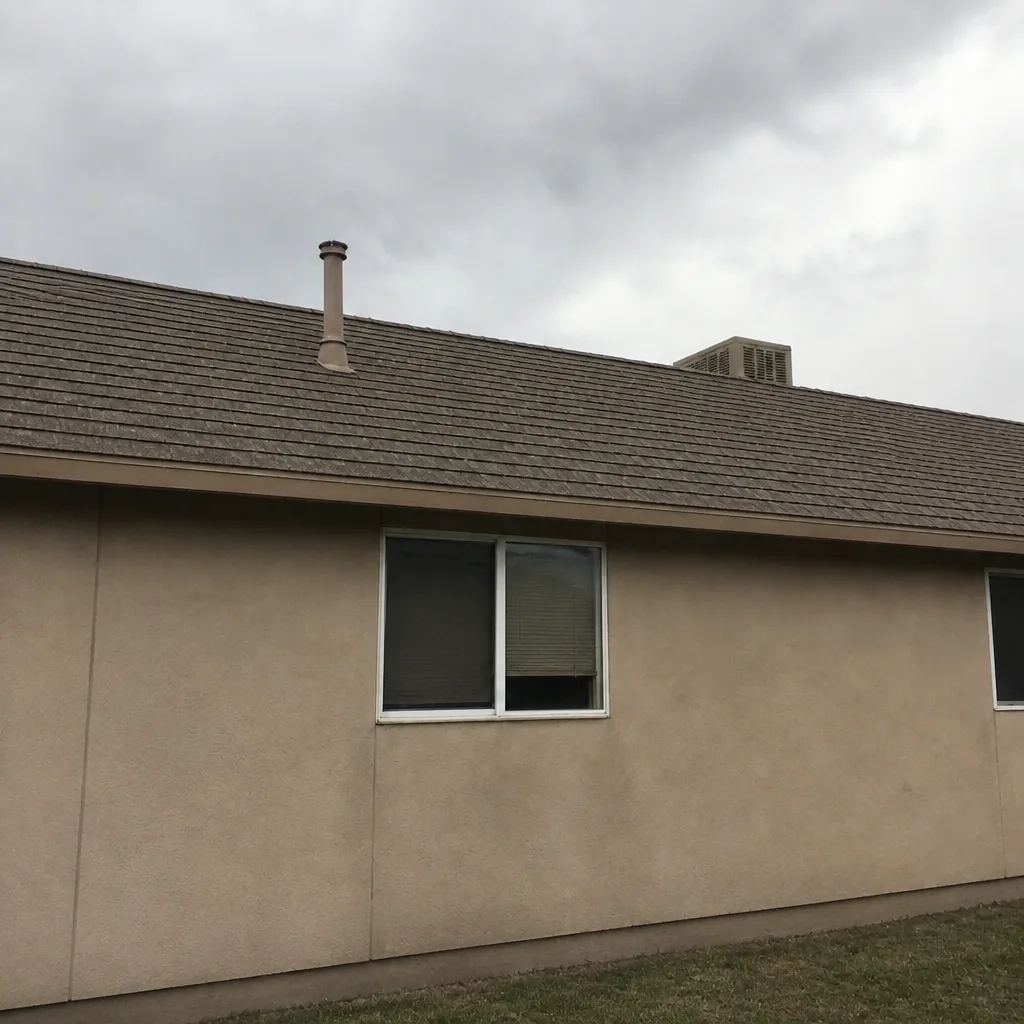 After
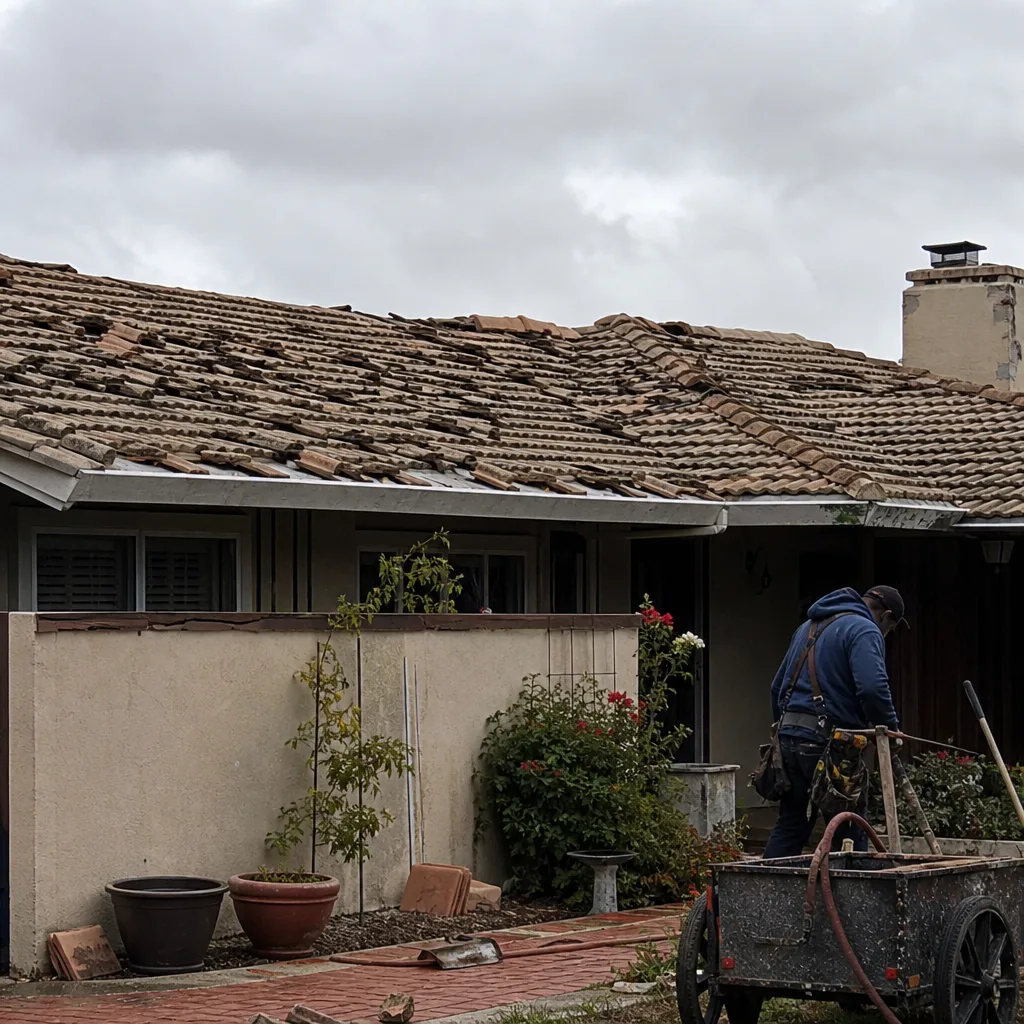 Before
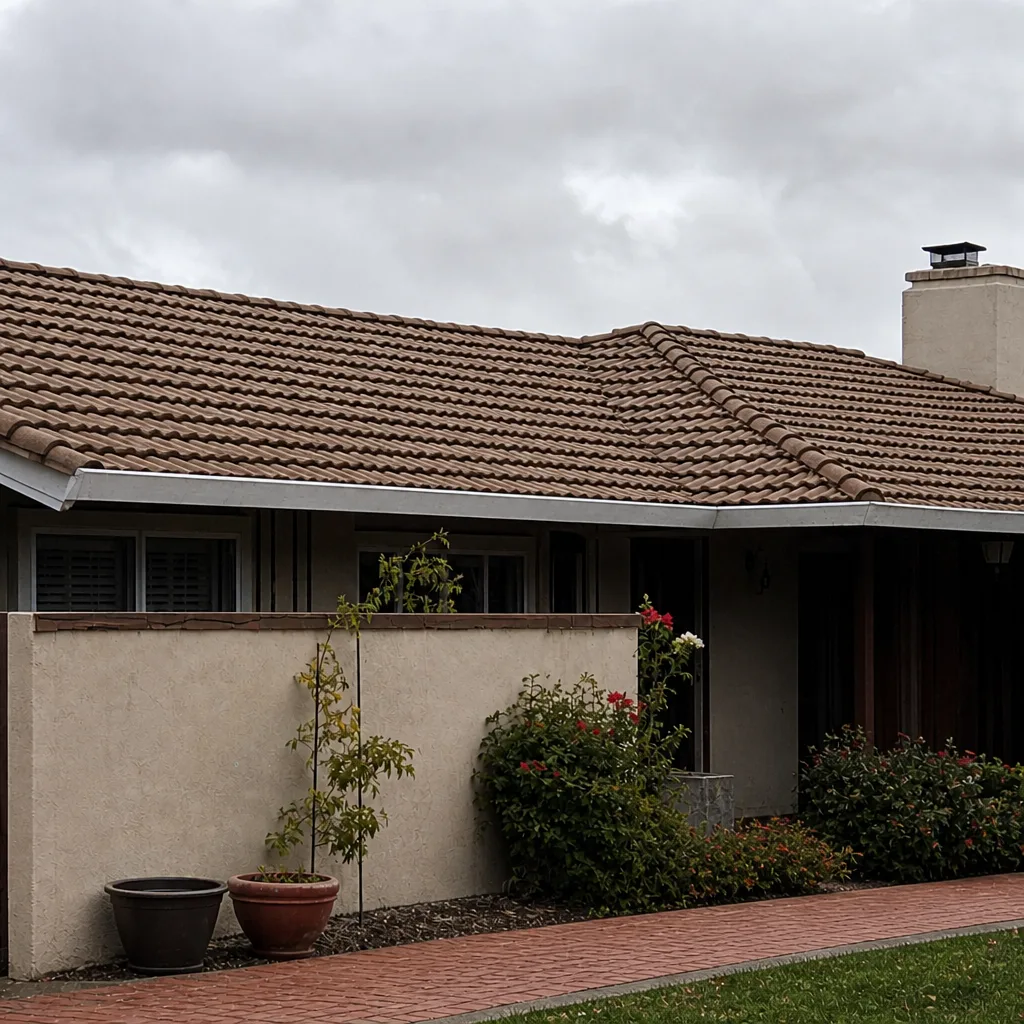 After
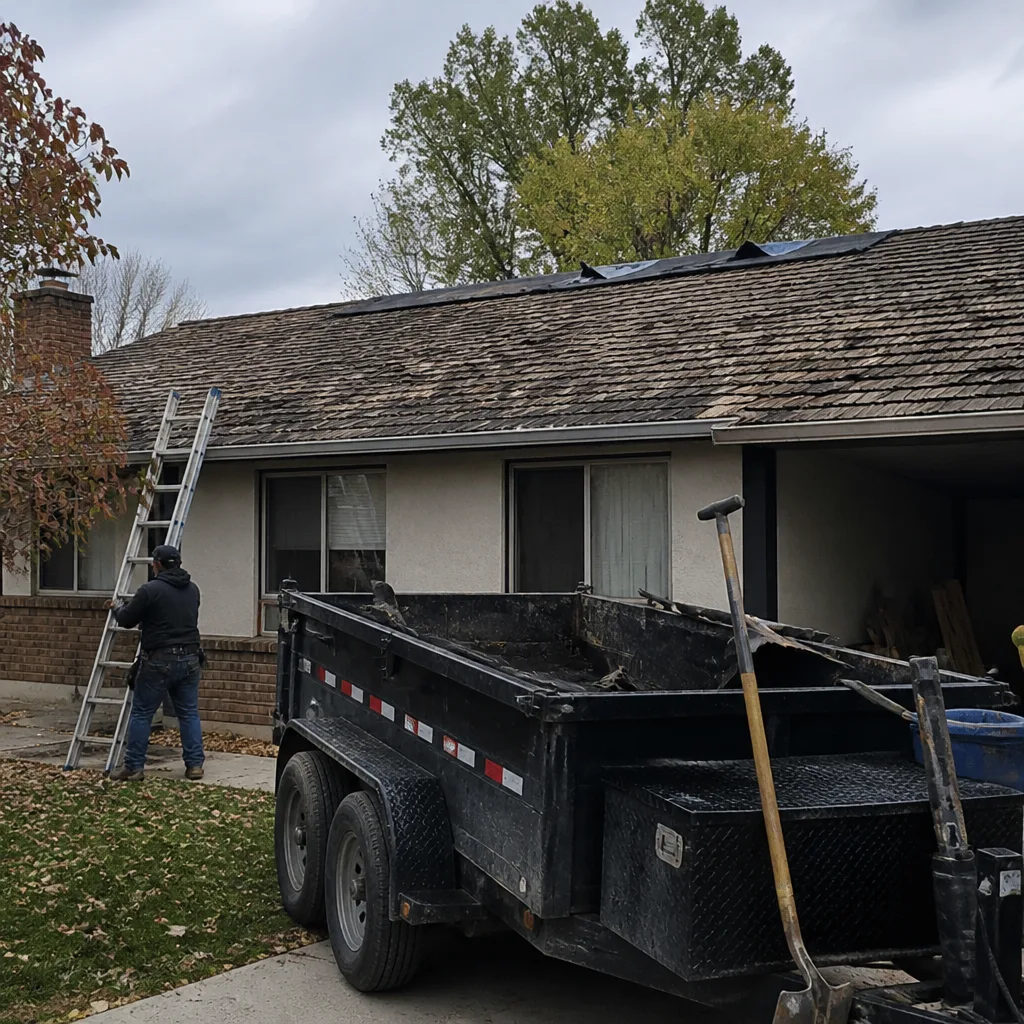 Before
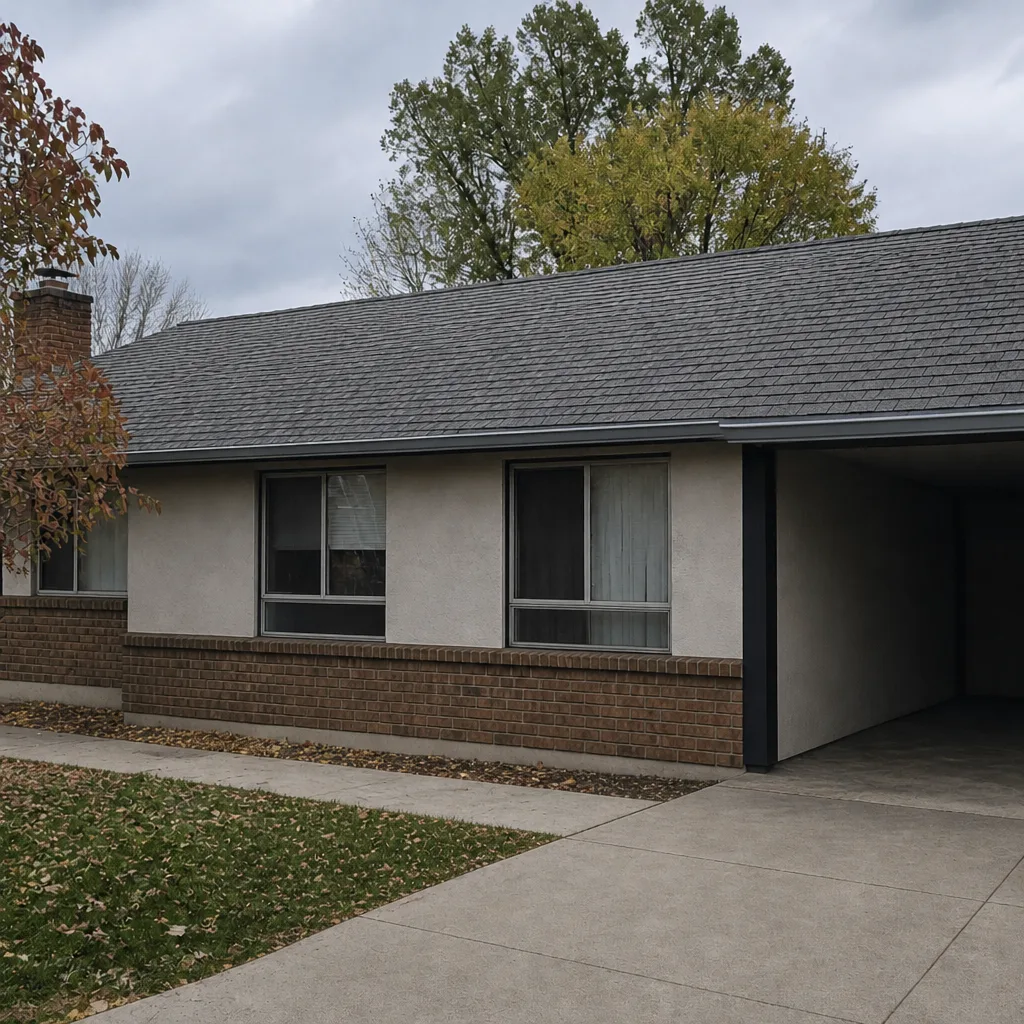 After
When to Call a Professional
Some things you can spot yourself and some fix is better left to trained hands. Call a professional if you see rust bleeding from a fastener or a cut edge, a visible gap in the headwall flashing, a ridge cap that’s lifted, or any water inside the attic after a rain. Call if you’re hearing a hard, sharp pop from one panel, or if you count more than a dozen loose fasteners on a slope. Above all, get a pro on the roof before you accept any bid that goes straight to full replacement. Metal roofing work involves the risk of a fall and the risk of over-driving a fastener into a bigger leak – it’s a trained-hands job, and it’s not worth doing yourself. Shepherd & Sons Roofing Winchester offers free estimates in Winchester – call (844) 797-8167. A live person answers any hour, and there’s no trip charge inside our own county; a free second opinion on any written estimate is always available.
Frequently Asked Questions
No. Most metal roof leaks come from a failed fastener, a flashing detail, or a sealant joint – not from the panel itself – so most are repairs. The panel’s job is to shed water; the connections are where it fails. A roofer who walks the fasteners and the flashing can usually point to the exact cause. Call (844) 797-8167 for a free estimate if you’re not sure.
Most small metal roof repairs in Winchester – resealing a few fasteners, addressing a flashing detail, or fixing a small leak – fall in the low hundreds of dollars, while a larger repair involving several panels or a headwall runs higher. The exact number depends on what we find when we walk the roof. Estimates are free, and we’ll show you the deck photos before we talk money. Call (844) 797-8167 for an exact quote.
We’d advise against it. A backed-out fastener needs to be replaced with a fresh fastener and gasket at the correct depth, and it’s easy to over-drive it and create a bigger leak in the process. The right fix takes the right tool and a feel most homeowners don’t have. Call a pro.
No. Faint, even discoloration across a panel is normal surface oxidation and doesn’t shorten the roof’s life. Rust that’s actively bleeding from a cut edge or a fastener head is base-metal corrosion and needs attention – it’s eating into the steel. The direction the rust runs is the giveaway. If you’re not sure which one you have, call (844) 797-8167 and we’ll take a look.
Usually not. Even ticking as the roof warms and cools is normal thermal movement. What’s not normal is a loud, sharp pop from one spot that happens over and over – that can mean a panel fastened too rigidly. A single panel that sounds different than its neighbors is worth having a pro check.
Yes. Any replacement or major repair needs permits pulled and inspected, and we handle that as part of the job. If a bidder waves off the permit or can’t tell you how they detail a headwall flashing, that’s a bid to walk away from. Call (844) 797-8167 to talk through your job.
The Bottom Line
Metal roofs fail quietly and in specific places – the fasteners, the trim, the flashing, the seals, and the spots where metal meets a different material. Not across the field of panels. Learn to read those connection points and you’ll spot trouble while it’s still a cheap repair. Look for backed-out fasteners and over-driven ones, know the difference between surface oxidation and base-metal corrosion, check the attic after a hard rain, and ask every bidder exactly how they detail the headwall and the eave. Those questions separate the roofer who’s going to be back next year from the one who isn’t. When you find signs that need eyes, call a pro rather than guessing – the diagnosis is usually quick, and the repair is usually smaller than you feared.
Shepherd & Sons Roofing Winchester is locally owned and owner-operated, and our technicians have up to 30 years of experience with metal work across GAF, CertainTeed, and Boral products. Call (844) 797-8167 for a free estimate – a live person answers any hour, and a free second opinion on any written estimate is always available.
Written by the team at Shepherd & Sons Roofing Winchester.