
Last updated November 17, 2026
 Architectural shingles
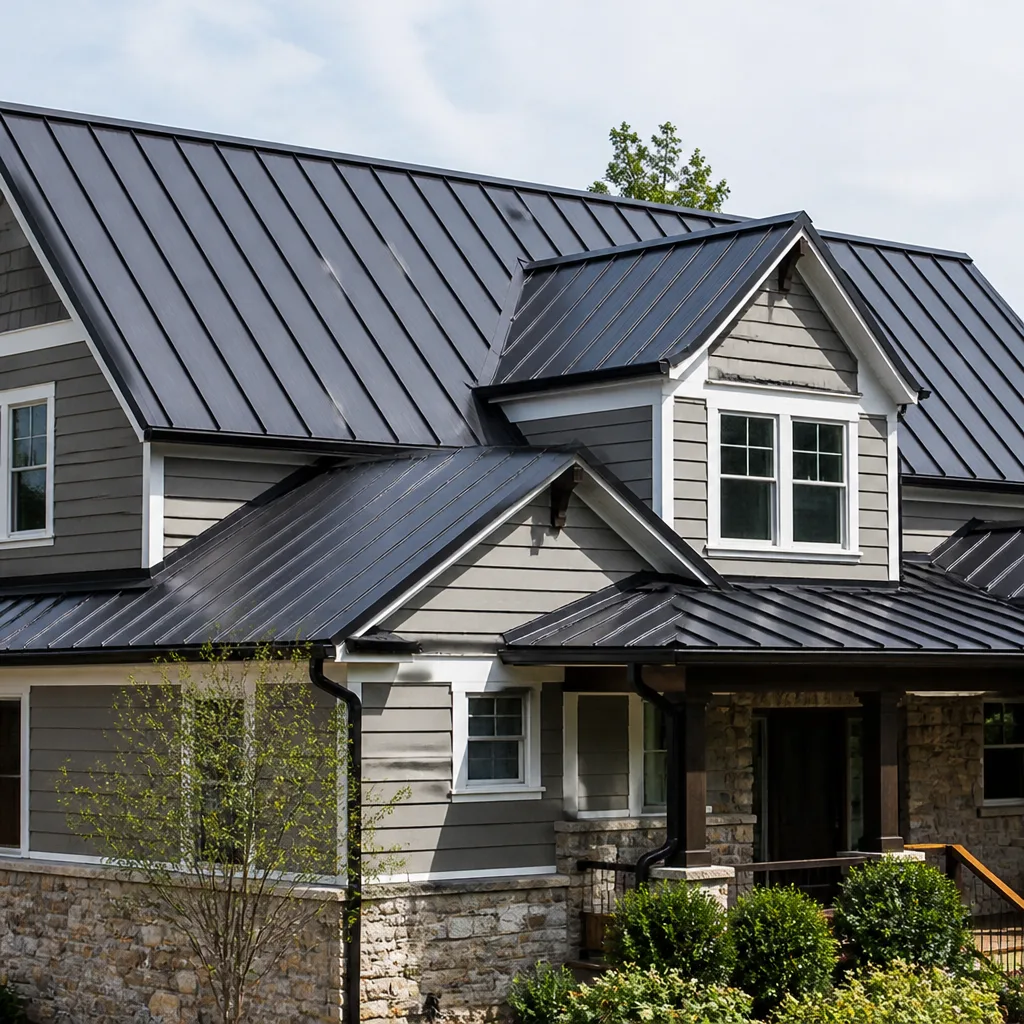 Metal roofing
 Tile roofing
 GAF
 Owens Corning
 Flat & low-slope
Free roof inspection with deck photos before we talk money - GAF and Owens Corning certified installation
Roof Repair Troubleshooting: Common Problems and How to Fix Them
A water stain on your bedroom ceiling is almost never directly below the leak. Water travels along rafters and sheathing for six feet or more before it drips, which is why the patch in the wrong spot fails every single time. We’ve climbed into attics in Winchester where a homeowner had sealed the same stain three seasons running while the actual entry point sat untouched on the far side of the ridge. This guide teaches you to trace the problem backward from the stain to the source: the dry-day attic inspection, the five repair calls we run most often around Winchester, when caulk actually works versus when it hides something worse, and how to spot a bad repair the last guy left behind.
Quick Answer
Most roof leaks can be traced to five common failures: cracked pipe boots, lifted flashing, popped nails, blown-off ridge caps, and debris buildup in valleys. The trick is finding the true entry point by inspecting the attic on a dry day, not the day it rains. Once you know the source, most repairs are straightforward, and a good roofer can tell you what it needs before touching a shingle.
Styles & brands we work with
- Architectural shingles
- Metal roofing
- Tile roofing
- GAF
- Owens Corning
- Flat & low-slope
Table of Contents
- Why You Trace a Leak Backward, Not Downward
- The Dry-Day Attic Inspection That Finds the Real Leak
- The Five Most Common Roof Repair Calls in Winchester
- Why Caulk Is a 12-Month Fix, Not a Repair
- How to Tell If the Last Repair Caused This Problem
- The Two Questions We Ask Before We Drive Out
- What You Can Check Yourself and What You Shouldn’t
- Common Mistakes to Avoid
Why You Trace a Leak Backward, Not Downward
Water is lazy and follows the path of least resistance. On a sloped roof, that path is usually downhill along a rafter or the underside of sheathing, and it can run sideways for several feet before it finds a gap to drip through. That’s why the stain on your ceiling is a poor guide to where the roof is actually failing. The damage you see is where the water exited; the problem is where it entered, and the two are rarely in the same place.
In Winchester, the desert swings make this worse. A roof bakes through a 100-degree summer afternoon, then the temperature drops 30 degrees overnight, and the wood and sealant expand and contract right along with it. Small gaps open at flashing and penetrations that wouldn’t budge in a steadier climate. When the rare hard rain finally comes, water finds those gaps and travels before it shows up inside.
So the first rule of troubleshooting is simple: find the source, not the stain. The way you do that is from above, in the attic, on a dry day, with a flashlight. Everything else in this guide builds on getting that one step right. If you’d rather have a trained eye do it, our Roof Repair in Winchester service starts with exactly that inspection.
What backward tracing looks like in practice
- The stain is on the ceiling near an interior wall. Look uphill and along the nearest rafters, not straight up.
- The water shows at a light fixture or vent. That’s an exit point, so trace the wire run or vent pipe back to where it meets the roof deck.
- The ceiling is dry but the wall is wet. Water may be running down inside the wall cavity from a point much higher on the roof.
- The stain appears only at the corner of a room. Corners collect water from two directions, so check both roof planes that meet above it.
The Dry-Day Attic Inspection That Finds the Real Leak
You want to do this on a dry, sunny day, ideally a few hours after sunrise so any overnight moisture has had a chance to show itself. Grab a strong flashlight, a notepad, and something to mark spots with (a pencil works, chalk is better). Dress for it: long sleeves, gloves, and a good dust mask, because attic insulation and old dust are not kind to your lungs.
Walk the attic slowly and look up at the underside of the roof deck. What you’re hunting for is water staining, dark streaks, or white chalky mineral lines that show where water has dried and left deposits. Follow each streak uphill until it stops. That stopping point, or the highest stained point, is close to your entry. Check the wood around every penetration: pipes, vents, chimneys, and skylights are the usual suspects. Feel the sheathing for softness. A spongy spot means rot has already started, and that changes the repair from a patch to a deck repair.
Our technicians have up to 30 years of experience reading attics, and they’ll tell you the same thing: the flashlight beam should follow the water, not your memory of where the stain is. If you want a second set of eyes, a free estimate includes the inspection, and we’ll show you the photos.
Your dry-day inspection checklist
- Mark the stain on the ceiling first so you know what you’re chasing from the other side.
- Scan the deck uphill from that point for dark streaks, mineral lines, or soft wood.
- Check every penetration: pipe boots, vent stacks, chimney flashing, skylights.
- Look at valleys and where two roof planes meet, since water pools and backs up there.
- Photograph anything suspicious with your phone and note its location. Photos beat memory every time.
- Stop at the attic hatch if the deck looks wet or the roof is sagging. That’s a call-a-professional situation, not a poke-it-with-a-stick situation.
The Five Most Common Roof Repair Calls in Winchester
Over the years we’ve run just about every kind of repair call around Winchester, and the same five problems come up again and again. Knowing what each one looks like from the ground and in the attic will help you describe it accurately when you call. Here’s the lineup, and what each one usually needs.
1. Pipe boot failures
The rubber collar around a vent pipe cracks and splits with sun exposure, and once it does, water runs straight down the pipe into the attic. In Winchester’s summer heat, these boots dry out faster than most people expect. A failed boot usually shows as a stain on the ceiling near a bathroom or kitchen vent. The fix is replacing the boot, not caulking it.
2. Flashing lifts and failures
Flashing is the metal that seals where the roof meets a wall, chimney, or valley. When it lifts or the sealant behind it fails, water gets behind the metal and under the shingles. Look for rust lines, gaps, or lifted edges near a chimney or dormer. This is one of the repairs where the detail matters more than the material.
3. Nail pops and backed-out fasteners
Expansion and contraction can back nails out of the deck until the heads lift the shingle above them. Each one becomes a tiny channel for water. From the attic you’ll see nail tips poking through the sheathing. From the roof, you’ll see little bumps or lifted shingle tabs. The fix is resetting or replacing the fasteners and sealing the shingles properly.
4. Ridge cap blow-offs
Wind gets under a loose ridge cap and peels it back. That exposes the ridge vent and the nails underneath, and water finds its way in fast. On a windy day after a storm, this is one of the most common things we get called about. Repair means reseating and re-nailing the cap, and checking the ridge vent while we’re up there.
5. Valley buildup and debris
Where two roof planes meet, the valley carries a lot of water. When leaves, grit, and debris collect there, water backs up under the shingles instead of draining. In our part of Winchester, the spring winds blow plenty of grit and seed pods into valleys. Cleaning them out and checking the valley metal and underlayment is usually the whole fix.
Why Caulk Is a 12-Month Fix, Not a Repair
We understand the appeal of caulk. It’s cheap, it’s fast, and for a while it works. But caulk is a bridge, not a repair. It fills a gap temporarily, and in Winchester’s sun and heat, that bridge starts to fail within a year. UV exposure dries it out, thermal movement pulls it away from the metal, and the water gets back in. We’ve seen caulk smeared over the same flashing for three consecutive seasons, each time buying a few more months until the next storm found the gap.
There’s a place for caulk, and we’ll be honest about it. It’s acceptable as a short-term bridge when you need to get through a rainy stretch before a proper repair can be scheduled, or as a sealant in a joint that’s designed to flex. It’s not acceptable as a substitute for re-flashing, replacing a boot, or fixing the underlayment. If a roofer’s whole answer to your leak is “we’ll caulk it,” ask what’s actually failing underneath. A real repair addresses the cause, and that’s the standard behind our Roof Replacement & Installation in Winchester work too.
When caulk is fine and when it’s hiding something
- Fine: sealing a small, sound joint as a stopgap before a scheduled repair.
- Fine: a flexible sealant in a designed expansion joint.
- Hiding something: caulk over lifted flashing, where the metal has pulled away from the wall.
- Hiding something: fresh caulk over a cracked pipe boot that should be replaced.
- Hiding something: a bead of caulk around a nail or fastener that’s backed out of the deck.
How to Tell If the Last Repair Caused This Problem
Sometimes the leak you’re chasing started with the last repair. A patch that looked fine from the ground can create a new pathway for water if it was done wrong, and it happens more than people realize. The good news is that bad work leaves signatures, and you can often spot them in the attic and on the roof.
Look for shingles laid with the wrong lap. Each course should overlap the one below it by the depth the manufacturer requires, and when it’s short, water can run under the shingle instead of over it. Check the nail pattern, too. Nails placed too high, too low, or too far apart won’t hold the shingle flat, and wind gets under the edge. And look for missing step flashing where the roof meets a side wall. Step flashing is installed in steps, one piece per shingle course, and when someone skips it or runs a single piece of flashing up the wall instead, water will find the gap between the wall and the roof every time.
We do a Free Second Opinion on any written estimate for exactly this reason. If another outfit has already quoted a repair, we’ll take a look at what’s actually happening up there and tell you straight whether the quote addresses the real problem. That’s part of the Shepherd & Sons Roofing Winchester home standard, and it costs you nothing.
The Two Questions We Ask Before We Drive Out
Before we head out to a repair call, we ask two questions. They’re simple, and the answers save everyone time. Answer them honestly and we’ll know whether we’re dealing with a quick fix, a bigger repair, or something that needs a closer look.
- When did you first notice it, and does it only happen when it rains? A stain that appears during a hard rain and dries out afterward points to a specific entry point. A stain that’s there all the time, or grows even on dry days, can mean condensation or a plumbing issue rather than a roof leak. The answer changes what we look at first.
- Has anyone been on the roof recently? A recent repair, a satellite dish install, or a chimney sweep who climbed up can all be the origin of a new leak. If work was done recently, we look at that area first, because the timing is too useful to ignore.
The more you can tell us (what you saw from the ground, where the stain is, what you found in the attic), the faster we can help. A live person answers our phone around the clock, and a real human will take your answers, not a call center script.
What You Can Check Yourself and What You Shouldn’t
There’s plenty you can safely do from the ground and in the attic. Grab binoculars and walk the perimeter of your house on a dry day. You can spot cracked shingles, lifted flashing, missing ridge cap pieces, and curling tabs without ever leaving the ground. In the attic, with a flashlight, you can map the water stains and photograph what you find. That’s real, useful troubleshooting.
What you shouldn’t do is climb onto a wet or steep roof, or get within arm’s reach of a gas flue. Roofing is one of the trades where a slip has serious consequences, and a wet shingle at the wrong pitch doesn’t give you a second chance. If you find yourself wanting to reach for a ladder, that’s the moment to call a professional. We’d rather answer your call than have you take that risk. If it’s time for the whole roof to be assessed, our Metal Roofing in Winchester and shingle work both start with a full inspection, and we’ll show you the deck photos before we talk money.
Common Mistakes to Avoid
- Patching the stain instead of the source. Sealing the ceiling stain while the entry point stays open just moves the water somewhere else. Trace it backward first.
- Calling the day of the storm. The morning after a downpour is the busiest time for every roofer in Winchester, and it’s the worst time to see a leak clearly. A dry-day inspection is more accurate anyway.
- Assuming caulk is a repair. It buys you months, not years, and it can hide the real failure from the next person who looks.
- Ignoring soft spots in the attic. Spongy sheathing means rot, and a patch over rot won’t last. Fixing it early saves the deck.
- Hiring whoever knocks after a hail storm. Storm chasers come through Winchester after every hailstorm. Ask for an address you can drive past and a license number you can look up.
- Skipping the second opinion. If one quote feels high or vague, get a second set of eyes. It’s free here, and it’s the cheapest insurance against paying twice.
- Trying to diagnose from the stain alone. The stain is where the water came out, not where it got in. The attic tells the real story.
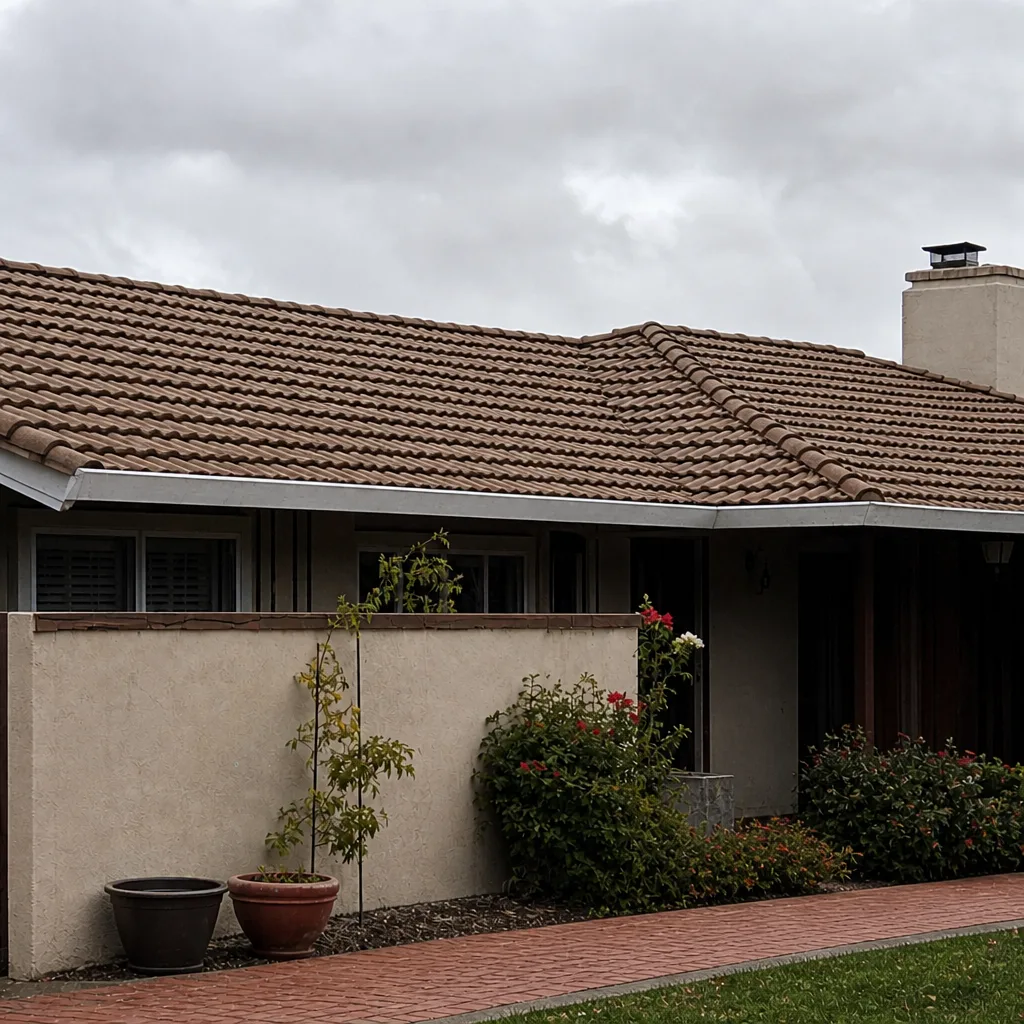
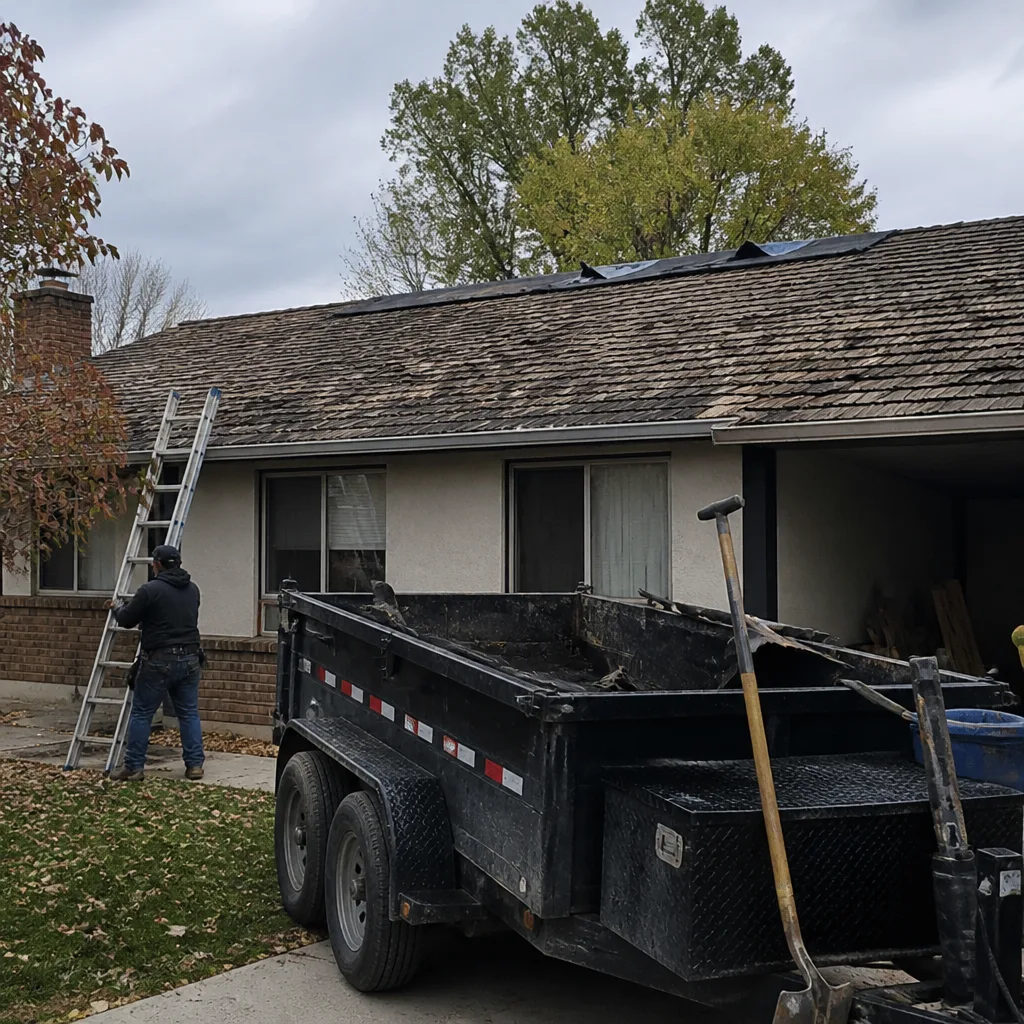
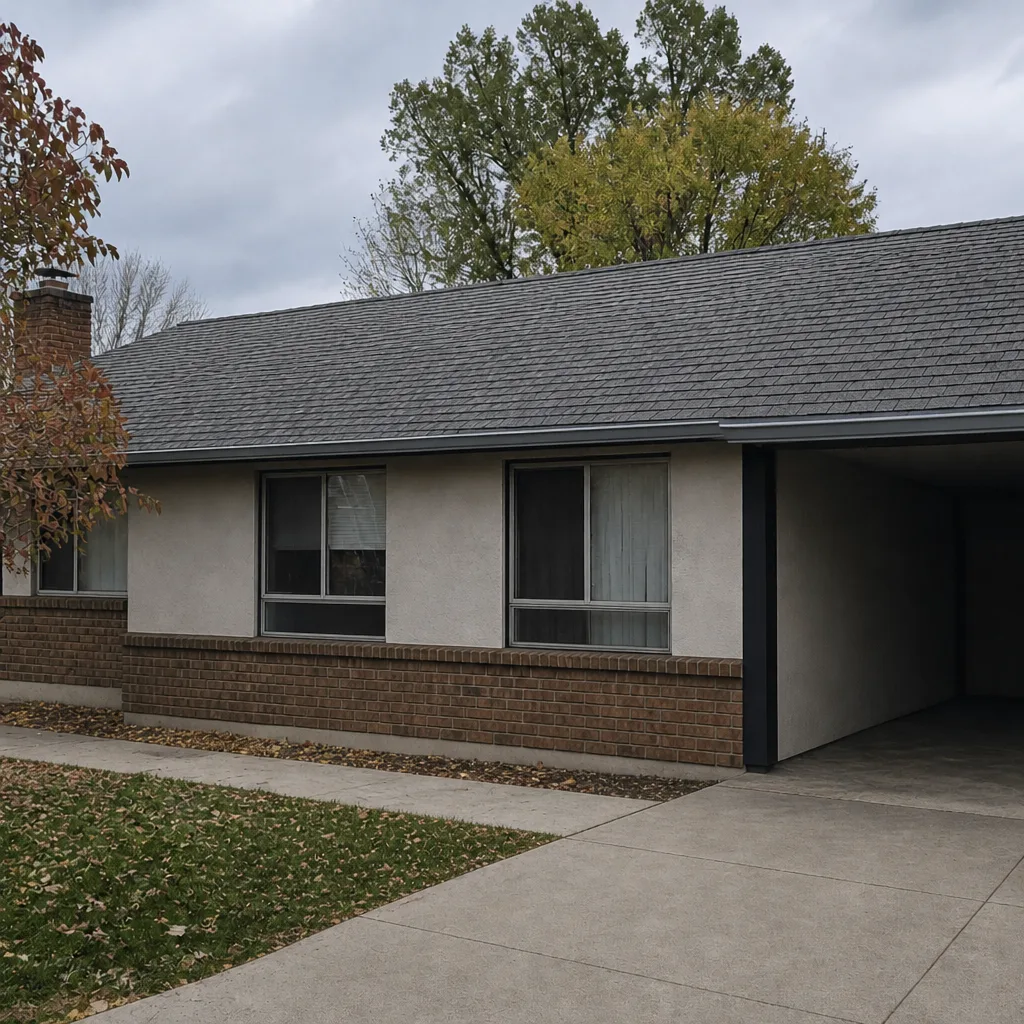
See the difference
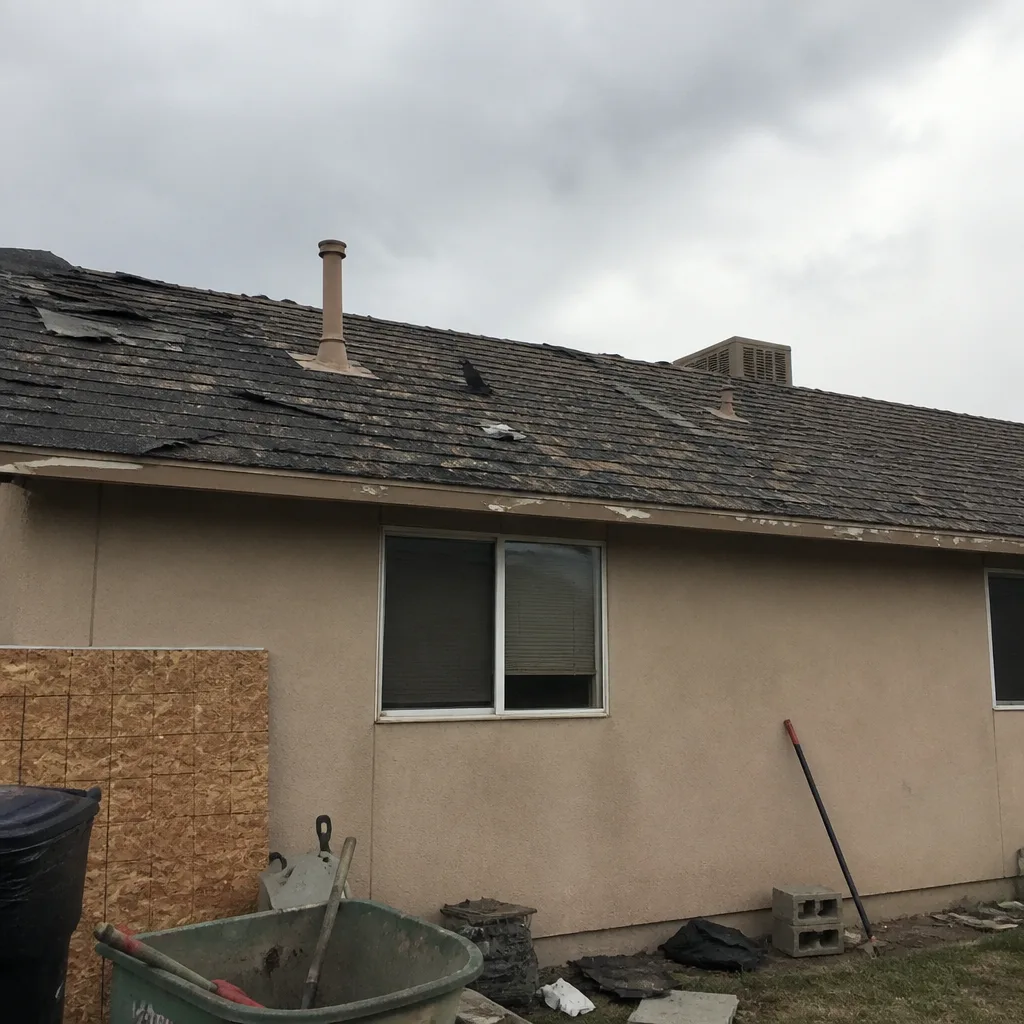 Before
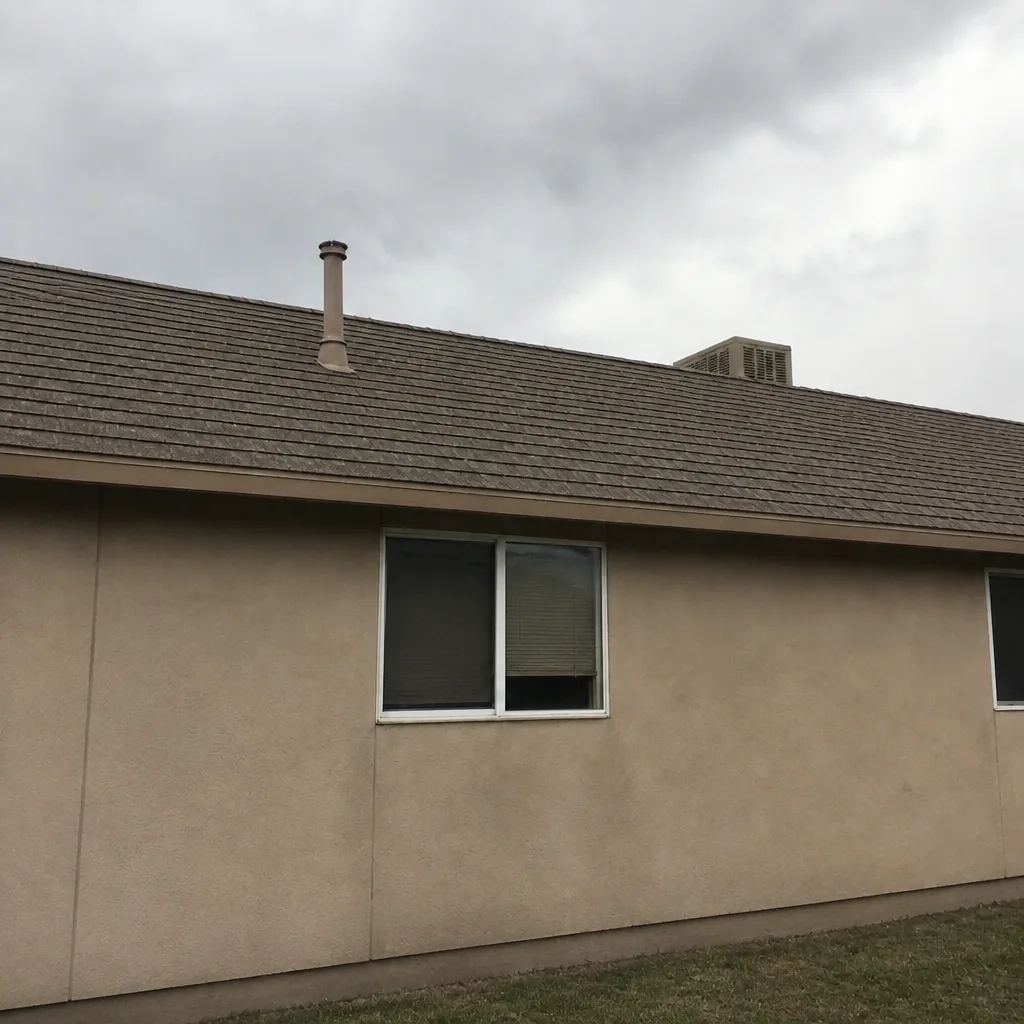 After
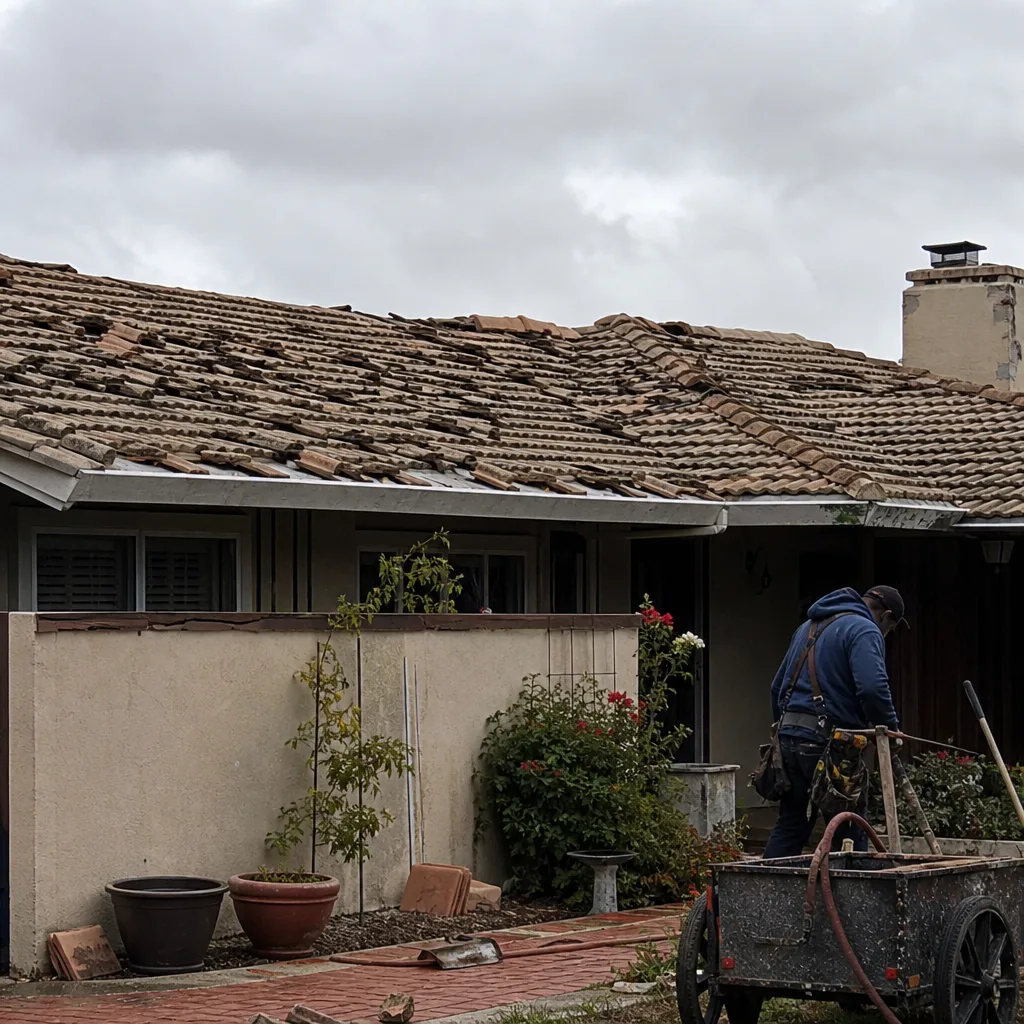 Before
 After
 Before
 After
When to Call a Professional
Call a professional if you find soft or rotted decking, if water is pooling near a chimney or skylight, if a repair keeps failing in the same spot year after year, or if you can’t safely get into the attic to trace the source. Call right away if a storm has lifted shingles, blown off a ridge cap, or opened a gap you can see through. And call if the last repair is still under warranty, because a good roofer stands behind the work and will come take a look. Shepherd & Sons Roofing Winchester offers free estimates in Winchester, and we’ll show you the deck photos and a no-hassle upfront price before anyone touches your roof. Call (844) 797-8167.
Frequently Asked Questions
Most common repairs (a pipe boot, a small flashing fix, or a few popped nails) land in the low-to-mid hundreds of dollars, while larger jobs like a valley repair or ridge cap work run higher. We give a no-hassle upfront price before we start, and we’re running $40 off any repair over $200 right now. Call (844) 797-8167 for an exact quote, and the estimate is free.
Yes, you can often find the general area by inspecting the attic on a dry day with a flashlight. Look for dark streaks and mineral lines on the underside of the deck and follow them uphill to the highest stained point. If you reach a wet patch or the roof looks unsafe, stop and call a professional.
Because the patch is in the wrong place. The stain is where the water exits, not where it enters, and water can travel six feet or more along a rafter before it drips. Seal the true entry point and the stain stops coming back.
Caulk is acceptable as a short-term bridge, like sealing a joint to get through a rainy stretch before a proper repair, or in a flexible joint that’s meant to move. It is not a substitute for re-flashing, replacing a boot, or fixing bad underlayment. In our sun and heat, caulk starts failing within about a year.
Not inside our own county. There’s no trip charge, and the estimate is free. A live person answers the phone around the clock, and we’ll tell you what to expect before we get there.
Look for shingles with the wrong lap, nails placed too high or too far apart, missing step flashing where the roof meets a side wall, or fresh caulk over a lifted flashing. If work was done recently and the leak started afterward, that area is the first place to look. A free Second Opinion on any written estimate will tell you straight.
The Bottom Line
The single biggest improvement you can make to your roof troubleshooting is to stop chasing the stain and start tracing the source. Do the dry-day attic inspection, follow the water uphill to its entry point, and learn to recognize the five common failures: pipe boots, flashing, nail pops, ridge caps, and valley buildup. Treat caulk as a bridge, not a fix. And if anything up there looks soft, steep, or unsafe, put the ladder down and call someone. If you want a straight answer and a look at the deck photos before you spend a dime, that’s what we’re here for.
Shepherd & Sons Roofing Winchester has been locally owned and owner-operated since 1996, same address the whole time, with a published license number and a 90-Day Done Right Promise in writing on every job. Calls are answered by a live person 24/7, and every estimate comes with a no-hassle upfront price. Call (844) 797-8167 to schedule your free estimate in Winchester.
Written by the team at Shepherd & Sons Roofing Winchester.