
Last updated November 17, 2026
 Architectural shingles
 Metal roofing
 Tile roofing
 GAF
 Owens Corning
 Flat & low-slope
Free roof inspection with deck photos before we talk money - GAF and Owens Corning certified installation
Roof Repair Maintenance Checklist for Winchester Homeowners
The number-one call we get in October is from homeowners who skipped their late-summer check and are now dealing with a monsoon leak that a $40 tube of caulk would have prevented in August. Every year, same story: the wind came through in July, a few shingles lifted, nobody looked up, and then the first real rain found the gap. In Winchester, that gap doesn’t announce itself. It drips a week later, usually onto a ceiling you just painted. This guide walks through the exact monthly routine we’ve watched hold up on Winchester roofs, where the stucco-and-tile construction fails first, and where a homeowner can safely stop and call someone.
Quick Answer
A Winchester roof needs a quick ground-level inspection once a month, a deeper check in April and September, and immediate attention after any monsoon wind event. The critical spots are the flashing around stucco walls, the low-slope patio sections, and the valleys where wind-blown debris collects. Most of the work is done from the ground with binoculars and a phone camera, no ladder required.
Styles & brands we work with
- Architectural shingles
- Metal roofing
- Tile roofing
- GAF
- Owens Corning
- Flat & low-slope
Table of Contents
- Why a Winchester checklist looks different
- The month-by-month Winchester roof calendar
- Checking stucco walls and flashing in heat expansion season
- What monsoon debris does to low-slope and flat sections
- How to inspect your roof safely from the ground
- When DIY crosses the line into call-a-roofer
- What roof repairs actually cost in Winchester
- Frequently asked questions
Why a Winchester Checklist Looks Different
Most roof maintenance checklists are written for a four-season climate. Spring thaw, summer storms, fall leaves, winter ice. That’s fine if you live in Ohio. In Winchester, the roof faces a different set of pressures, and a checklist that doesn’t account for them is close to useless.
Three things drive roof failure in Winchester specifically. First, the monsoon season from July through September brings wind-driven rain and, more importantly, wind-blown debris. Mesquite leaves, palm fronds, gravel, and dust pile up in valleys, behind flashing, and on any low slope. Second, the UV load between June and September is brutal. Sealant, caulk, and the sun-facing side of every shingle or tile take a beating that most national maintenance guides never mention. Third, the stucco-and-tile construction that dominates Winchester neighborhoods behaves in specific ways under heat expansion. Stucco walls and roof flashing expand at different rates, and when the difference is repeated for weeks of 100-degree afternoons, the sealant at the joint starts to pull.
Those three factors are why the checklist below is organized by month, not by season, and why it pays attention to the low-slope sections that standard pitched-roof guides ignore entirely.
The Month-by-Month Winchester Roof Calendar
A generic four-season calendar doesn’t match Winchester’s actual roof pressures. Here’s the schedule we hand to homeowners who ask what to do and when.
January through March
Cold nights and mild days. This is the easiest stretch on a Winchester roof. Walk the perimeter of the house once a month with binoculars. Look for anything visibly out of place from the ground. Check gutters for the leaves that blew in during the fall and confirm downspouts are moving water away from the foundation.
April
The pre-monsoon inspection. This is the one that matters. Look at every flashing point, every vent boot, every valley, and every penetration on the roof. Check the attic after a rain for any dark staining or dampness. If anything looked off in the winter checks, this is when you get it fixed, before the July pressure arrives.
May and June
Heat ramp-up. UV load climbs. Pay attention to caulk lines and sealant joints, especially on the sun-facing side of the roof. If caulk is cracked, dried, or pulling away from a stucco wall, this is the window to address it. Don’t wait for the pre-monsoon work to stack up in July.
July through September
Monsoon season. After any wind event, get out and look at the roof from the ground. Check the downspouts for the first sign of clogging from wind-blown debris. Look at the low-slope sections and any flat patio cover. This is the highest-risk window in Winchester and the highest-value window for a quick look.
October
The post-monsoon check. This is where we get the most calls and where most of them could have been avoided. Walk the perimeter, look at valleys, and check for debris that landed during the summer storms and never got cleared. Look inside the attic for any new staining.
November and December
Wind and cold. Wind-driven debris picks back up. Repeat the monthly perimeter walk, clear gutters, and note anything the summer inspection turned up that hasn’t been addressed.
Checking Stucco Walls and Flashing in Heat Expansion Season
Winchester has a lot of stucco-sided homes with tile or shingle roofs. That combination is beautiful and it’s also where we see the most repeat leaks. The reason is heat expansion. Stucco and the metal flashing that terminates the roof against it expand and contract at different rates. Over a Winchester summer, that difference works the sealant joint at the top of the flashing loose.
Where the flashing fails first:
- The headwall flashing at the back of the house, especially where a stucco wall rises above the roof plane. This is where the most heat expansion happens and where the first gap opens.
- Sidewall flashing along gable ends, particularly the south and west-facing sides, where UV is strongest.
- Kick-out flashing at the base of stucco walls where water runs off and needs to be redirected into a gutter or away from the wall. When kick-outs are missing or failed, stucco gets wet from behind and the damage shows up months later as interior staining, not as a roof leak.
- Chimney flashing on older Winchester homes, which typically has a counter-flashing piece embedded in the stucco. If it’s pulling away, water is getting in along that line.
From the ground, look for the shadow line where the roof meets the wall. If the caulk line looks cracked, dark, or separated, that’s the spot. If you see a stain on the stucco just above the roof line, that’s a flashing leak that’s been running for a while. If you can see the flashing lifting away from the wall by a quarter inch or more, that’s a flashing repair, not a caulk job, and it’s time to call.
What Monsoon Debris Does to Low-Slope and Flat Sections
Most roof checklists are pitched-roof checklists. Winchester has a lot of homes with flat or low-slope patio covers, flat sections over additions, and low-slope sections on the back of the house. Those flat sections are a completely different animal, and the standard checklist doesn’t cover them.
During monsoon season, wind-blown debris doesn’t just land on a flat roof, it collects. Mesquite leaves, dust, palm fronds, and gravel all wash toward the low point of the roof and pile up against the drain, the scupper, or the edge. Once they pile up, the water has nowhere to go. It ponds. Then it sits in the sun. The UV breaks down the membrane or coating faster where water has been sitting, and eventually the seam opens. That’s the flat-roof leak we see most often in Winchester, and it almost always starts with something that could have been swept off in five minutes.
Here’s what to do on any low-slope section in Winchester:
- Check it monthly during monsoon season. Look at the drain or scupper. If there’s visible debris buildup, get it cleared.
- After any wind event, look again. Mesquite and palm debris comes in fast.
- Look for ponding. Water that sits in a low spot 48 hours after a rain is a problem, not a maintenance item.
- Look at the seams and edges. If the coating or membrane is cracked, blistered, or pulling at the edges, that’s a repair, not a cleaning.
If you’re not comfortable walking a flat roof (many aren’t, and that’s fine), binoculars from the ground will show you ponding and debris buildup on the drain, which is enough to make a decision.
How to Inspect Your Roof Safely From the Ground
You don’t need a ladder to know more about your roof than most homeowners do. A safe visual inspection from the ground catches 80 percent of what we find on a first visit, and it takes about ten minutes. Here’s the routine we walk homeowners through.
- Pick your light. Late afternoon, with the sun behind you, throws roof shadows that make lifted shingles, cracked tiles, and flashing gaps obvious. Morning light hides them.
- Walk the full perimeter. Not just the front. The back and sides are where wind-driven damage shows up first.
- Use binoculars. A pair of 10×42 binoculars is enough to see shingle granule loss, lifted tiles, exposed nails, and the caulk line at a stucco wall.
- Photograph everything. Take a photo from each side of the house plus a shot of any area that looks off. Zoom in when you review. The phone photo becomes your record and your comparison point next month.
- Check the attic after every rain. A flashlight at the underside of the deck, especially at valleys, around the chimney, and at any penetration, will show staining or active drips before they reach the drywall.
- Look at the ground signals. Granules in the gutter runoff, dark streaks down the walls, or dirt in the downspouts are all roof telling you something.
Roof work at height is genuinely dangerous. If you’ve never been on a roof, don’t start now. Ground inspection gives you most of the information you need, and any repair that requires getting on the roof belongs with someone trained and equipped to do it safely.
When DIY Crosses the Line Into Call-a-Roofer
Some maintenance is genuinely homeowner territory. Some isn’t. The line is easier to find than most people think, and knowing where it sits saves both money and backs.
Fine to do yourself:
- Ground-level photo inspections and binocular checks
- Clearing debris from gutters and downspouts from a ladder, with someone spotting you
- Sweeping leaves and mesquite from a flat section you can see from the ground, if it’s genuinely walkable and low
- Checking the attic for staining after a rain
- Taking notes and photos for a roofer to review
Call a licensed roofer:
- Any repair that requires climbing onto a pitched roof. This includes what looks like minor work.
- Any flashing repair where the flashing has actually separated from a stucco wall. Recaulking over a failed flashing joint is a temporary fix that hides the problem.
- Any missing, cracked, or lifted shingle or tile
- Any leak that has reached the interior, no matter how small
- Ponding on a flat roof that doesn’t drain within 48 hours
- Any repair involving a chimney, skylight, or roof penetration
The single biggest mistake we see is a homeowner caulking over a flashing failure. It holds for a month or two, hides the real problem, and lets water into the stucco assembly. By the time the interior stain shows up, the repair has gone from a flashing job to a stucco repair. If you’re not sure whether the flashing is loose, take a photo and ask.
See the difference
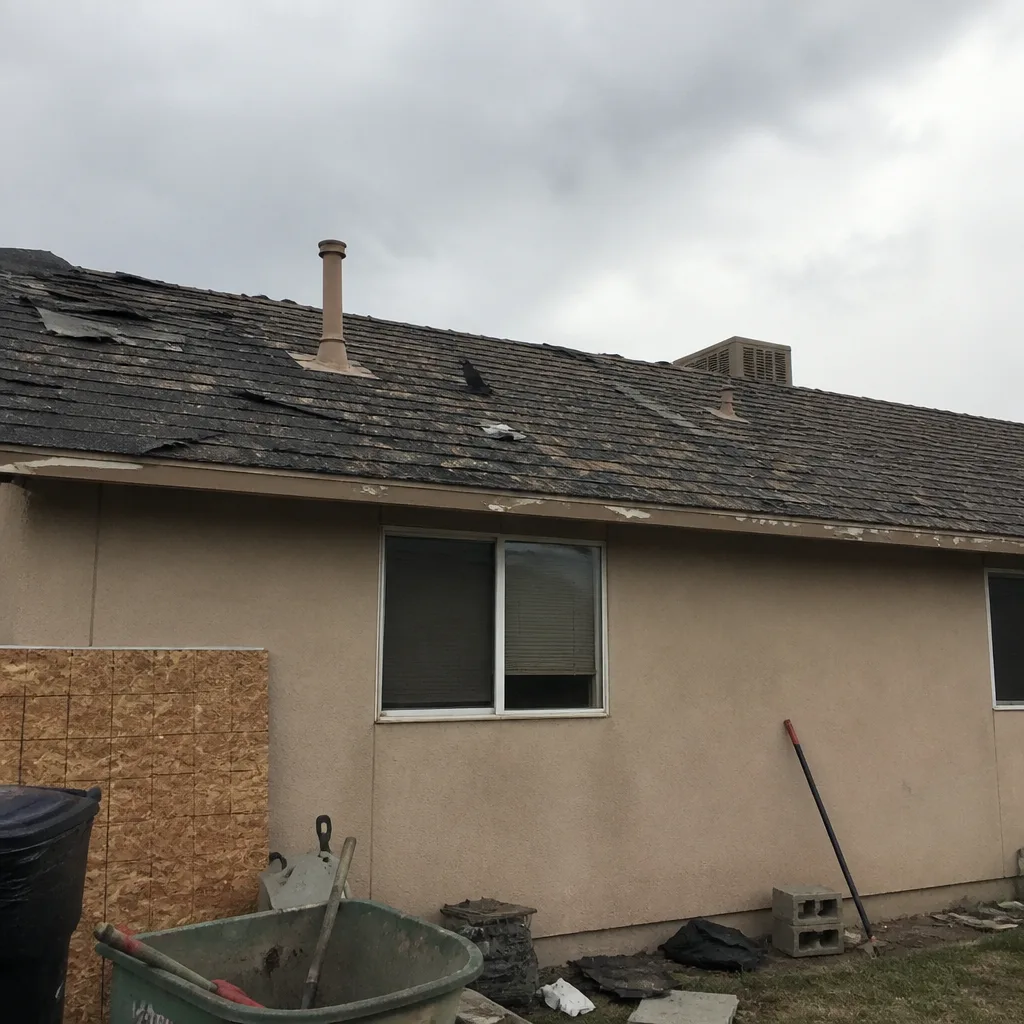 Before
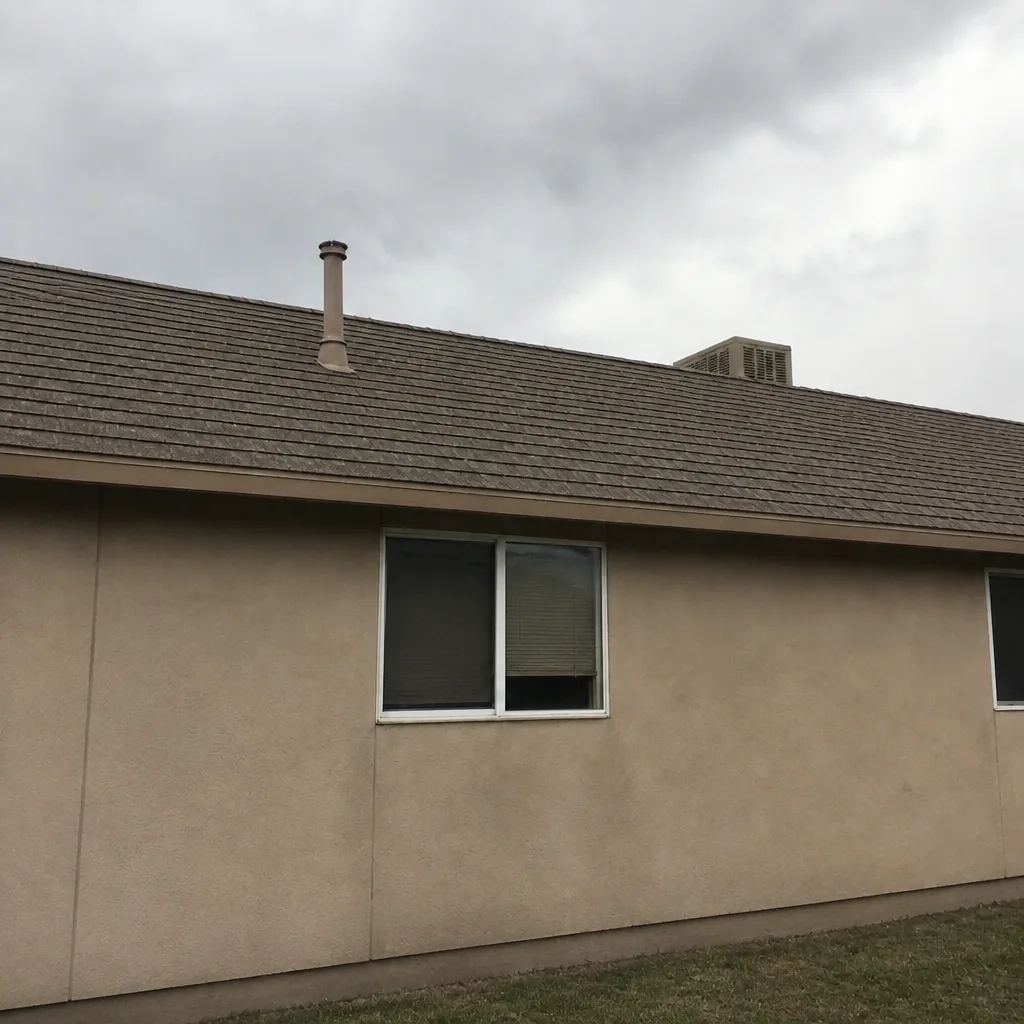 After
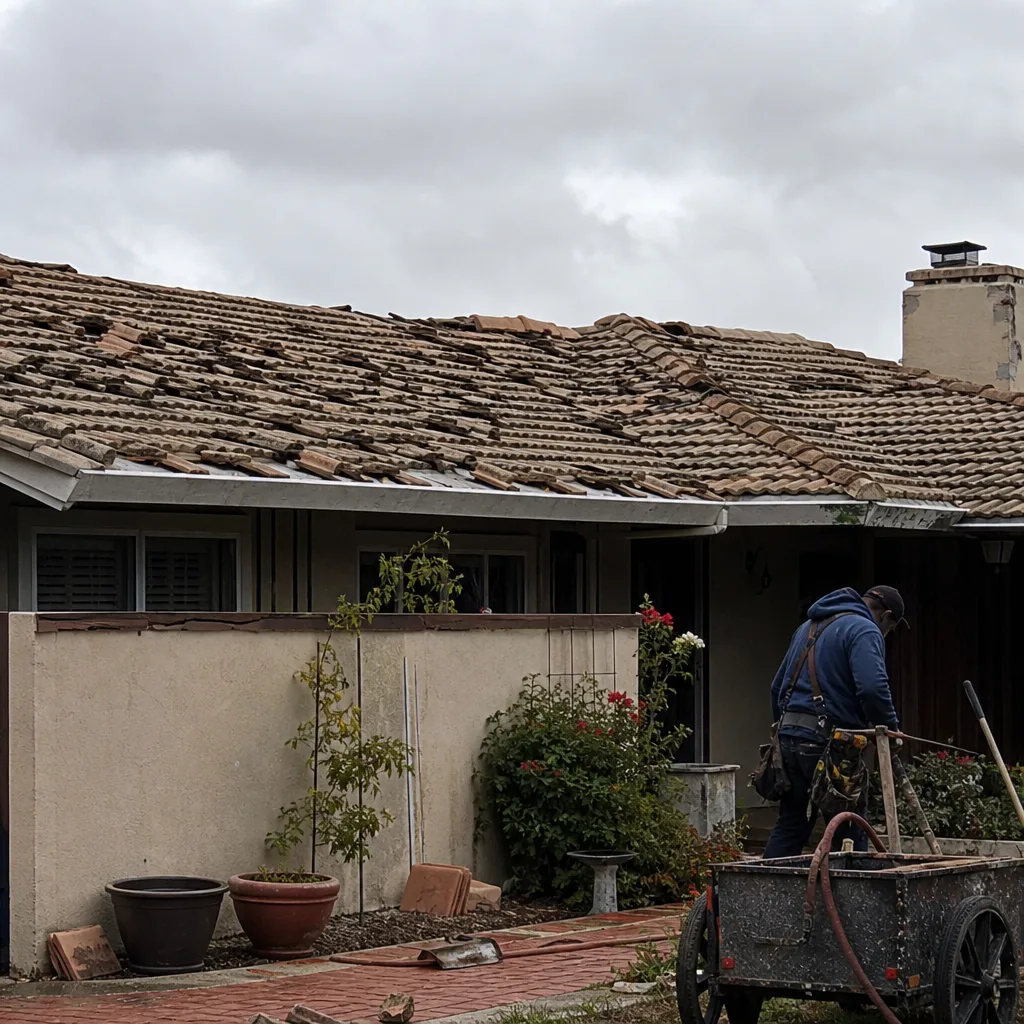 Before
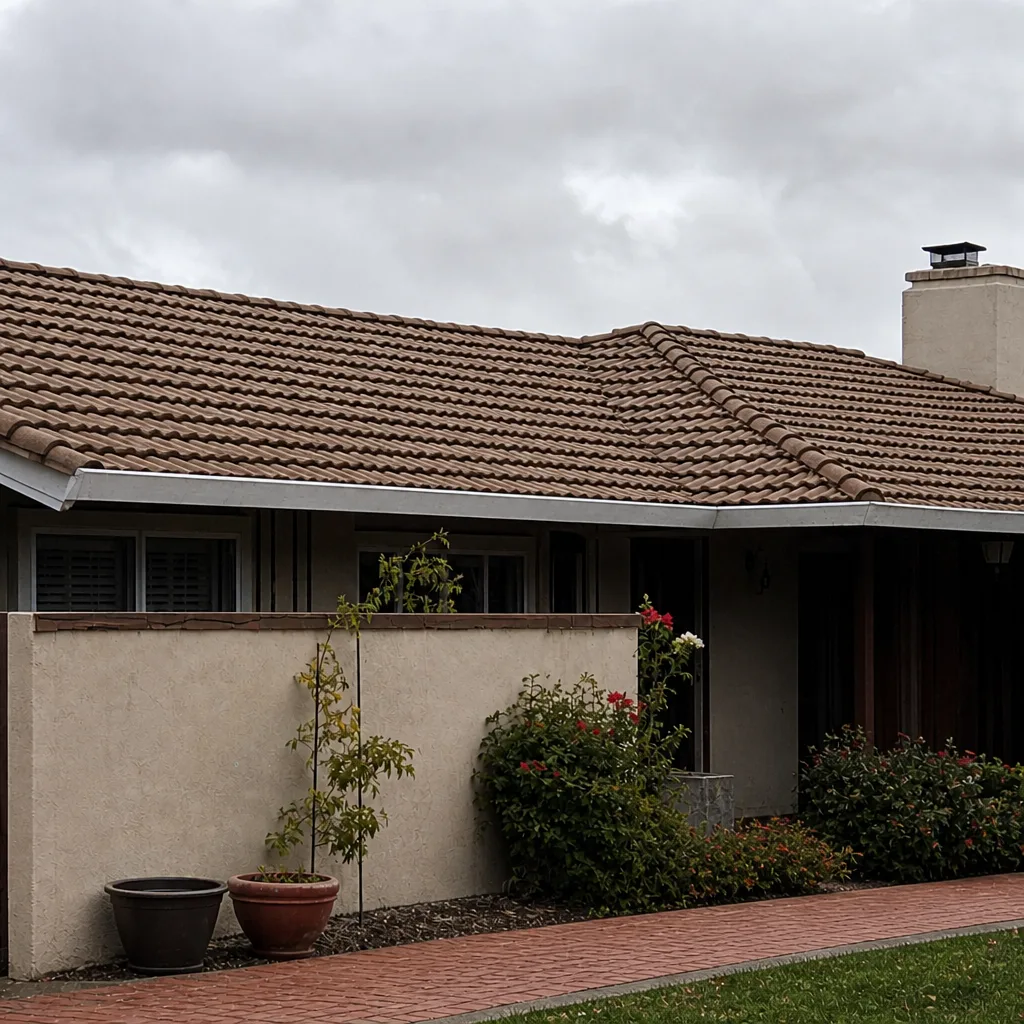 After
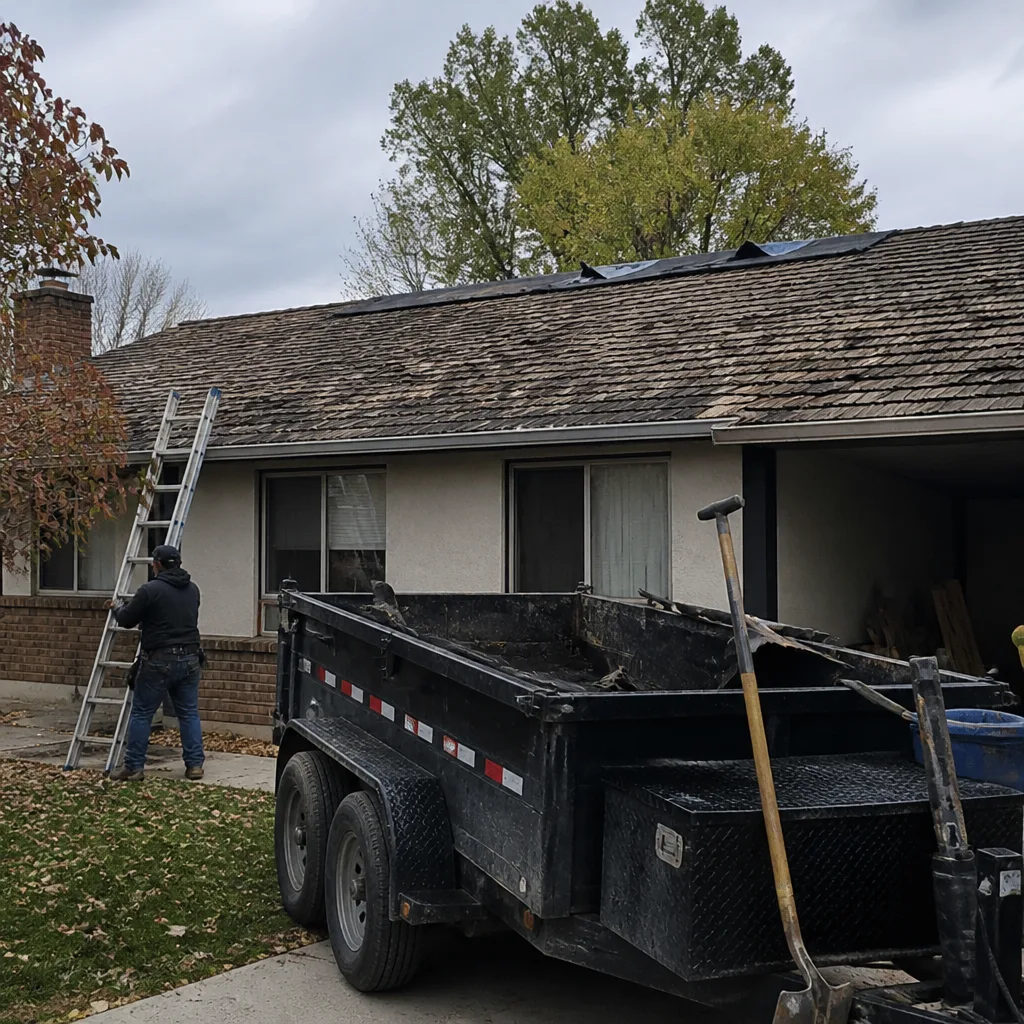 Before
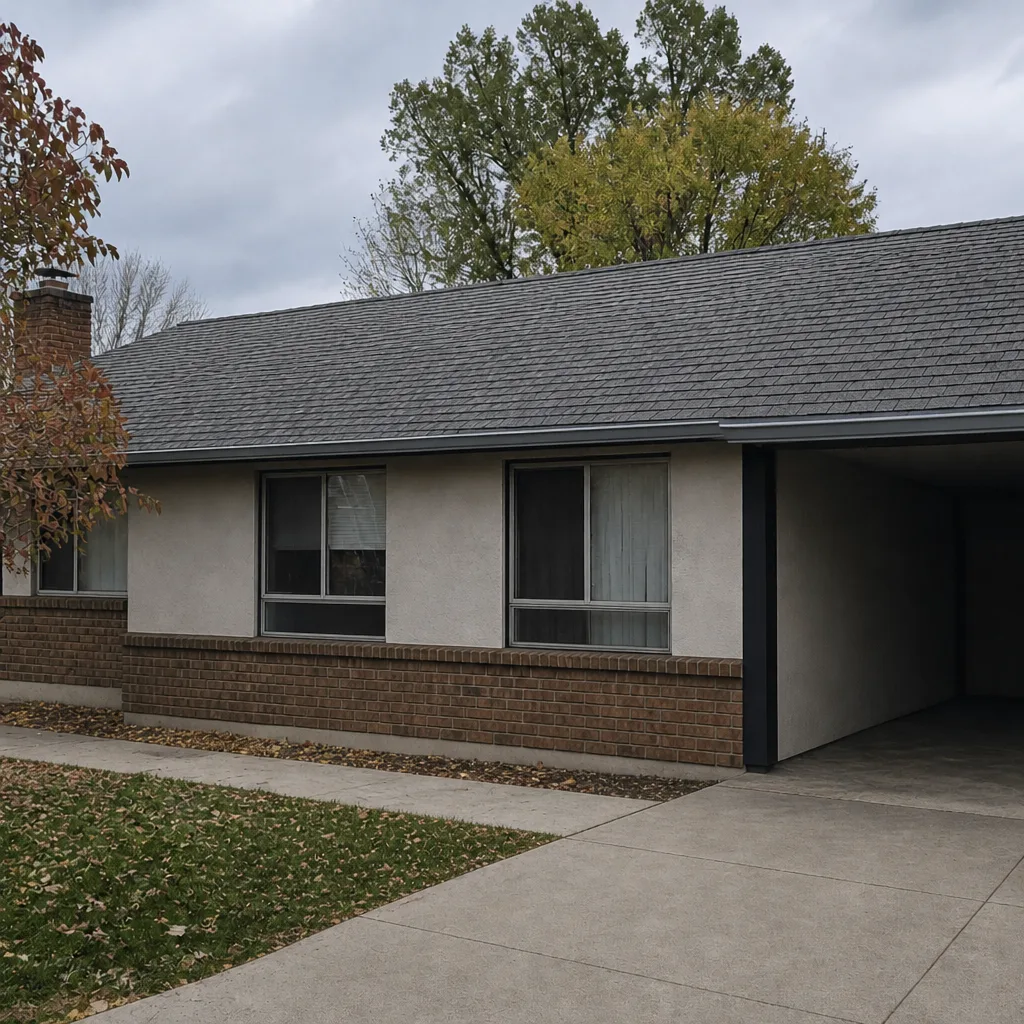 After
Common Mistakes to Avoid
- Skipping the October check. Nearly every monsoon leak we see in Winchester that turned into interior damage was a summer issue that could have been caught in late September. The 8-inch of rain rule is real – one monsoon storm can find every gap in a tired roof.
- Caulking over a failed flashing joint. Caulk hides the problem and lets the stucco assembly get wet from behind. When the damage shows up, it’s not a flashing repair anymore.
- Ignoring low-slope areas because they’re “not really the roof.” Flat patio covers and low sections over additions are where ponding and monsoon debris do the most damage in Winchester. Out of sight, out of schedule.
- Never clearing valleys. Debris in a valley backs water up under shingles and starts rot at the underlayment. It’s a five-minute job that prevents a five-figure repair.
- Using a ladder on a tile roof. Tile chips and cracks under a ladder. Every fall from a roof starts with a ladder on a slope that looked manageable.
- Hiring the storm chaser who knocked on the door in August. The out-of-state company that was in Winchester after the last monsoon will be in another state by October. That’s why we publish a license number and stand behind the 90-Day Done Right Promise in writing.
- Not documenting anything. A photo from last month is how you prove a shingle was cracked before the storm, not after. It’s also how you compare this year’s roof to last year’s.
What Roof Repairs Actually Cost in Winchester
Pricing varies with the specific repair, but here’s the range we see on Winchester homes for the maintenance-related items above. Every number is a ballpark; the exact number depends on access, material, and scope.
- Flashing reseal where the joint is still sound: $150 to $300 per location
- Full flashing repair at a stucco wall: $350 to $700 per location
- Shingle repair (per damaged shingle or small area): $200 to $450
- Tile repair (per broken tile or small section): $250 to $600
- Vent boot replacement: $150 to $275
- Low-slope coating patch or seam repair: $300 to $800
- Gutter cleaning and downspout flush: $150 to $350
Those ranges assume the repair is genuinely a repair and not a sign that replacement is the better move. On a roof that’s near the end of its service life, a $400 repair can become a $12,000 replacement in a season. Visit the Roof Repair in Winchester page if you’re weighing repair against replacement on a specific roof.
Frequently Asked Questions
Once a month from the ground, year-round. Add a deeper pre-monsoon check in April and a post-monsoon check in October, and look again after any major wind event during the July to September season. Most Winchester roof failures we see could have been caught in one of those checks.
Yes, and not always in the way homeowners expect. The wind-driven rain isn’t the main problem. The bigger issue is the debris the wind brings, which clogs valleys and low-slope drains and causes water to back up under shingles and pool on flat sections. Add UV degradation on the same roof through the summer, and by October the roof is tired and one storm away from a leak.
Failed headwall flashing at the back of the house, where the stucco wall rises over the roof. Heat expansion cycles pull the caulk joint loose by mid-summer, then monsoon rain drives in behind it. By the time it shows as an interior stain, the flashing has usually been leaking for weeks.
Minor repairs (replacing a few tiles or shingles, resealing a flashing joint) typically don’t require a permit. Full replacement or significant structural work does. When we quote a replacement, the permit is part of the quote. If a contractor quotes you a lower number and says a permit isn’t needed for a full replacement, ask for that in writing. Then call someone else.
Three questions decide it: how old is the roof, how many separate leaks have you had, and what’s the condition of the underlayment in the areas you can see from the attic? A roof on its second decade with two or three active leaks is usually replacement territory. A 15-year-old roof with one bad flashing joint is a repair. A free second opinion on a written estimate is a good way to pressure-test what the first bidder told you.
Get outside and walk the perimeter with binoculars before the end of the day. Look at the downspouts for granules, look at the valleys for debris, and look at any low-slope drain for ponding. Then check the attic after the next rain. If anything looks wrong, call a licensed roofer before the next storm. Small repairs get cheaper the earlier they’re caught, and that’s true in Winchester as much as anywhere.
We install GAF, CertainTeed, Owens Corning, IKO, Atlas, Tamko, and Boral products. If you have a brand in mind from a previous roof, name it and we’ll tell you whether it’s still available and whether it’s the right match for your home’s pitch and sun exposure.
When to Call a Professional
Call us when a repair requires getting on the roof, when a flashing joint has separated from a stucco wall, when you’ve had a leak reach the interior, or when a low-slope section is ponding forty-eight hours after a rain. Call us after any monsoon wind event if you’re not sure what you’re looking at. Call us before you caulk over something that looks like a flashing failure, because that’s the mistake that turns a flashing repair into a stucco repair.
Shepherd & Sons Roofing Winchester offers free estimates in Winchester. Call (844) 797-8167 to schedule one. A live person answers the phone, not a call center, not a voicemail. No trip charge inside our own county, and every roofing job is backed by the written 90-Day Done Right Promise.
If you’re weighing a bigger move, start with the Shepherd & Sons Roofing Winchester home page, or read about Roof Replacement & Installation in Winchester if the roof is past repair. For homes going to metal, our Metal Roofing in Winchester page covers the maintenance differences you’d want to know before you commit.
The Bottom Line
A Winchester roof doesn’t need much maintenance, but it does need the right maintenance at the right time. Check it from the ground once a month, do a deeper walk in April and October, look at the low-slope sections and valleys after every monsoon storm, and keep an eye on the flashing where the stucco wall meets the roof. Photograph everything, so next month you can compare. When a repair crosses the line into roof work at height, or when a flashing joint has visibly failed, call someone licensed. That’s the whole checklist. It takes ten minutes a month, and it’s the difference between a $40 tube of caulk in August and a full flashing repair in October.
Written by the team at Shepherd & Sons Roofing Winchester.