
Last updated November 17, 2026
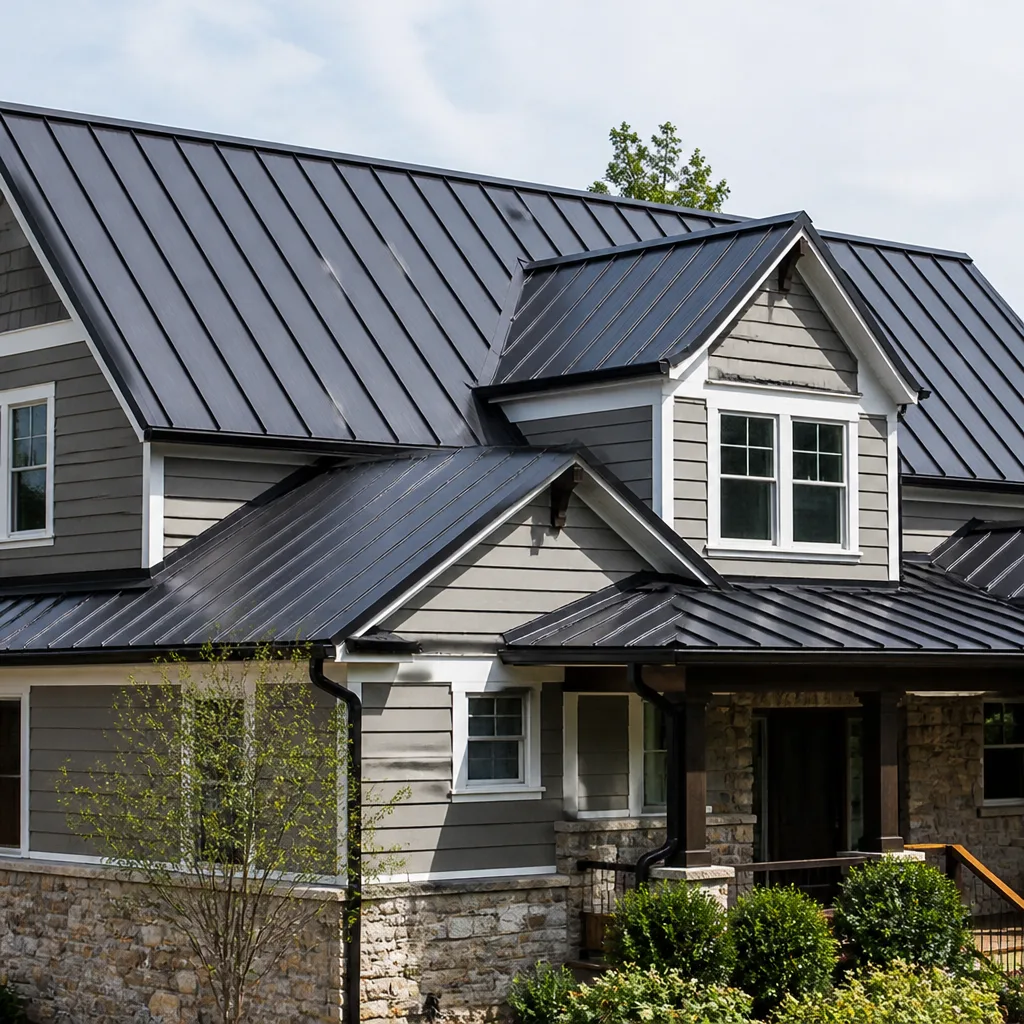 Metal roofing
 Architectural shingles
 Tile roofing
 GAF
 Owens Corning
 Flat & low-slope
Free roof inspection with deck photos before we talk money - GAF and Owens Corning certified installation
Metal Roofing Troubleshooting: Common Problems and How to Fix Them
A metal roof that leaks is almost never leaking through the metal panel itself. It’s leaking at a seam, a fastener, or where the metal meets something that isn’t metal. Treat the wrong one and the leak comes back next monsoon season. We’ve walked hundreds of roofs around Winchester and the pattern holds: the panel is usually the last thing to fail. What fails is everything attached to it or touching it. This guide breaks down the five problems we actually find on metal roofs in southern Nevada, how to tell them apart, and which ones you can handle yourself versus which ones need a roofer on the ladder.
Quick Answer
Most metal roofing problems come from fasteners backing out, sealant failing at penetrations, or galvanic corrosion where two different metals touch. Oil-canning and panel waviness look alarming but are almost always cosmetic. If you can find the leak source and it’s a loose fastener or a worn sealant bead, it’s often a straightforward fix; if it’s a seam, a penetration, or corrosion eating into the metal, call a roofer. In Winchester, the dry heat and big temperature swings between day and night speed up fastener and sealant failure faster than most national guides assume.
Styles & brands we work with
- Architectural shingles
- Metal roofing
- Tile roofing
- GAF
- Owens Corning
- Flat & low-slope
Table of Contents
- Oil-Canning: When Panel Waviness Is Cosmetic and When It Isn’t
- Fastener Back-Out: Why Exposed-Fastener Panels Loosen Themselves
- Galvanic Corrosion: The Dissimilar Metal Combinations to Watch For
- Why Sealant at Penetrations Fails Faster on Metal Roofs
- Condensation in Nevada Attics: The Leak That Isn’t a Leak
- Flashing Failures at Vents, Chimneys, and Valleys
- Common Mistakes to Avoid
- When to Call a Professional
Oil-Canning: When Panel Waviness Is Cosmetic and When It Isn’t
Oil-canning is the wavy, rippled look you sometimes see across the flat part of a metal panel, usually visible on a low-slope roof or one you can see at an angle. Most homeowners who spot it assume the panel has buckled and the roof is failing. That’s rarely the case.
Oil-canning is a byproduct of how the steel or aluminum coil was formed and how the panel was fastened down. It happens when a panel expands against a fixed fastener or when the panels were installed slightly too tight during the cooler part of the day. In Winchester, where a July afternoon hits 105°F and a January night can drop near freezing, that thermal swing is constant and large. Panels move. A little waviness is the metal doing what metal does.
The test is simple:
- Cosmetic oil-canning: the waviness runs along the plane of the panel, appears consistent, and the fasteners are still seated tight. Run your hand along the panel edge and press gently. If it doesn’t move or you don’t hear a pop, it’s cosmetic.
- Structural: the waviness shows up around a fastener that has pulled or a seam that has opened, or the panel lifts when the wind hits it. If you can see daylight at the seam or the fasteners are noticeably raised, that’s not just oil-canning anymore.
We’ve never seen a metal roof fail purely from cosmetic oil-canning. We have seen plenty of roofs where the homeowner hired someone to “fix the ripples” and paid to have panels resecured that never needed it. If it’s cosmetic, leave it. If it’s structural, the cause is almost always a fastener or a seam, and that’s the next section.
Fastener Back-Out: Why Exposed-Fastener Panels Loosen Themselves
Exposed-fastener metal roofs (the kind with screws through the panel face instead of hidden clips) are everywhere in Winchester, and they’re the ones most likely to develop leaks over time. The reason is thermal cycling. Every day, the panel expands in the heat and contracts at night. Every day, the metal around each screw hole moves just a fraction of a millimeter. Over a few thousand cycles, the screw works against its own lock washer and backs out. In a milder climate you might get ten years before this becomes a real problem. In the desert, with that daily swing, we start seeing it at five to seven.
The correct fix is not to grab a screwdriver and crank down the existing fastener. Here’s the sequence that actually works:
- Inspect every fastener on the south- and west-facing panels first. Those get the most sun and fail first.
- Mark any fastener that is raised above the panel surface or that has backed out far enough to show the shoulder washer.
- Back out the loose screw a full turn, then drive a slightly larger-diameter fastener (a #14 or #12 oversized screw depending on the original) into the same hole with a new sealing washer.
- Do not overdrive. The washer should seat against the panel and stop; if the screw buries, it will leak at the dimple and pull back out faster.
- Replace the sealing washer when you replace the screw, every time. The old washer will already be brittle.
Use a screw gun with a torque-clutch, not a drill. A drill will bury the fastener. If you already have several loose fasteners and your roof is more than a decade old, replacing every fastener on the exposed rows is often the smart move; leaving the rest means chasing the same problem again next spring. That’s a good job to price as part of a broader Roof Repair in Winchester evaluation rather than doing piecemeal.
Galvanic Corrosion: The Dissimilar Metal Combinations to Watch For
Here’s the one nobody warns you about when you buy a metal roof: two different metals in contact with each other, plus a little moisture, equals corrosion. The less “noble” metal gives up electrons and destroys itself. The combinations we most often find in Winchester:
- Steel panel meeting aluminum gutter: aluminum is the sacrificial metal here; the steel panel edge and the gutter hanger will corrode. Common when gutters were swapped out by a different contractor.
- Copper plumbing vent flashing on a steel roof: the copper drives the steel panel to corrode around the penetration. We see this on older rural properties where a plumber replaced a vent stack.
- Old galvanized steel flashing under a newer metal panel: the two coatings don’t play well together and the old flashing pit-corrodes.
- Stainless steel fasteners on aluminum panels: usually fine at the screw head with the sealing washer isolating the two, but not fine once the washer dries out and the metals touch.
The fix is a separation layer. A rubber or EPDM gasket, a neoprene washer, or a bituminous tape between the two metals stops the reaction. For a vent stack, replacing the metal flashing with a compatible material (or sleeving it in a rubber boot) is the cleaner long-term answer. If corrosion has eaten into the panel itself and the pitting is deeper than the paint, that’s a panel replacement, not a touch-up. When a metal roof has corrosion, the source almost always traces to whatever’s nearby, so look at the gutter, the flashing, or the vent before you blame the panel.
Why Sealant at Penetrations Fails Faster on Metal Roofs
Sealant at penetrations (vent stacks, exhaust boots, nail-in penetrations for satellite mounts) fails faster on metal than on asphalt for one reason: metal moves more. A metal panel expands and contracts several times more than an asphalt shingle ever will. The sealant has to stretch and shrink along with the panel, and most general-purpose roof sealants can’t keep up. In desert heat, tube sealant also cures brittle in a couple of seasons instead of the five to seven you’d get somewhere cooler.
What holds up in southern Nevada heat:
- High-movement, neutral-cure silicone: the one product in a tube we trust on metal roof penetrations here. It flexes with the panel and resists UV breakdown.
- Butyl tape under a metal boot flange: for a vent stack or pipe boot, tape under the flange plus mechanical fastening does more than sealant alone.
- EPDM rubber boots: the right choice for plumbing vents on a metal panel, because the rubber sleeve absorbs movement instead of fighting it.
- Polyurethane sealant: acceptable where the joint is small and won’t move much, but it won’t outlast silicone in this heat.
Avoid the temptation to re-seal a leaking penetration with the same “roof cement” a plumber left behind. That black mastic cracks and peels within a season on a metal roof. The right fix is to remove the old sealant completely, clean to bare metal, and seal with a high-movement silicone or a rubber boot. If you’re already re-sealing several penetrations on one roof, it’s the sign to check the rest of the roof while you’re up there.
Condensation in Nevada Attics: The Leak That Isn’t a Leak
Every winter in Winchester we get calls from homeowners who are certain their metal roof is leaking, and it isn’t. Water is showing up at the ceiling near the ridge or dripping from the underside of a panel, and it hasn’t rained in a week. That’s condensation, not a leak.
Metal roofs get cold on winter nights fast because the metal has low thermal mass. If the attic under that metal is poorly ventilated – and many rural and older Winchester homes have attics with almost no intake vents – the warm, moist air from the house hits the cold panel underside and condenses. It runs down the panel, dampens the insulation, and shows up as a dark spot on the ceiling. Homeowners call us thinking a seam opened; the seam is fine.
The signs that point to condensation rather than a leak:
- The “leak” shows up after a cold night, not after rain.
- It’s near the ridge or the high side of the roof, where the warm air collects.
- It stopped in the summer. A real leak gets worse in the monsoon, not better.
- There’s frost or droplets on the underside of the panels in the morning.
The fix is ventilation and a proper underlayment on the next roof. On an existing roof, adding ridge vents, soffit vents, or a solar-powered attic vent is often enough. If the roof is already due for replacement, an underlayment with a vapor barrier on a metal roof is the permanent answer. We handle that routinely as part of a Roof Replacement & Installation in Winchester – a metal roof that’s properly vented stops producing those phantom leaks.
Flashing Failures at Vents, Chimneys, and Valleys
Flashing is the metal that transitions from the roof panel to whatever else is on the roof: a vent, a chimney, a valley, the wall of the house. Flashing fails for three reasons: it was installed wrong, it’s the wrong material for the metal panel around it, or it hasn’t been resealed since the roof went on.
The failures we see most on Winchester metal roofs:
- Chimney flashing that was nailed rather than woven into the panel. Nailing is faster and the roofer knows it will leak eventually. The right install is a step flashing woven under the panel and capped with counter-flashing.
- Valley flashing that didn’t get enough overlap. The valley carries the most water on the roof, and a 4-inch lap where 6 is needed means the next big rain pushes water under the edge.
- Flashing that used the same aluminum or galvanized metal as an older roof. Once the panel is steel or copper, the flashing needs to be compatible or isolated. This is the galvanic corrosion point again.
- Sidewall flashing that was caulked instead of stepped. Caulk fails in two to three years in the desert sun; stepped flashing lasts the life of the roof.
If you’re not sure whether the flashing is the leak source, hose the roof yourself in the morning on a dry day, starting low and working up. The first place water shows up inside tells you which flashing run is the culprit. If the leak shows up at a chimney or a valley, get a roofer out before you do anything else – the repair usually involves lifting panels, and lifting panels on your own is how you create a second leak.
Common Mistakes to Avoid
- Slapping sealant on every suspicious spot. Sealant hides the leak for a season and then makes it harder for a roofer to find the real source. Diagnose first, seal second.
- Driving loose fasteners back down with a regular drill. You’ll bury the washer and the fastener will back out again faster. Use a torque-controlled screw gun and a new oversized screw with a new washer.
- Assuming the metal panel is the problem. We’ve pulled panels off Winchester roofs where every fastener and flashing was the real source and the panel itself was fine. The metal is usually the last thing to fail.
- Mixing metals without a separator. An aluminum gutter on a steel roof, or a copper vent on a steel panel, is a corrosion problem waiting to happen. Use a gasket or a different material.
- Ignoring a winter “leak” that stopped in spring. That’s condensation, and it’s a ventilation problem, not a roofing problem. Adding sealant to a roof that isn’t leaking just wastes money.
- Letting a storm chaser convince you the whole roof is shot. A single leak on a metal roof is almost always one fastener, one sealant bead, or one flashing run – not a full replacement. Get a second opinion.
- Skipping the ventilation check on a rural Winchester home. A metal roof over an unvented attic will condensate; no amount of flashing will fix that.
When to Call a Professional
If the leak traces back to a single loose fastener or a worn sealant bead at a pipe boot, and you’re comfortable on a ladder, you can handle it. If the source is a seam, a valley, a chimney flashing, or any penetration that needs the panel lifted, call a roofer. Lifting panels on a metal roof means breaking the fastening pattern and the sealing pattern, and if it goes back down wrong you’ll have a second leak by the first rain. Same story with corrosion that has eaten into the metal itself: that’s replacement territory, not repair. And if you can’t safely walk the roof, or it’s a steep pitch, don’t test your balance to save a service call. Shepherd & Sons Roofing Winchester offers free estimates in Winchester – call (844) 797-8167 and we’ll come look, tell you what we find, and give you a written number before anyone touches the roof.
See the difference
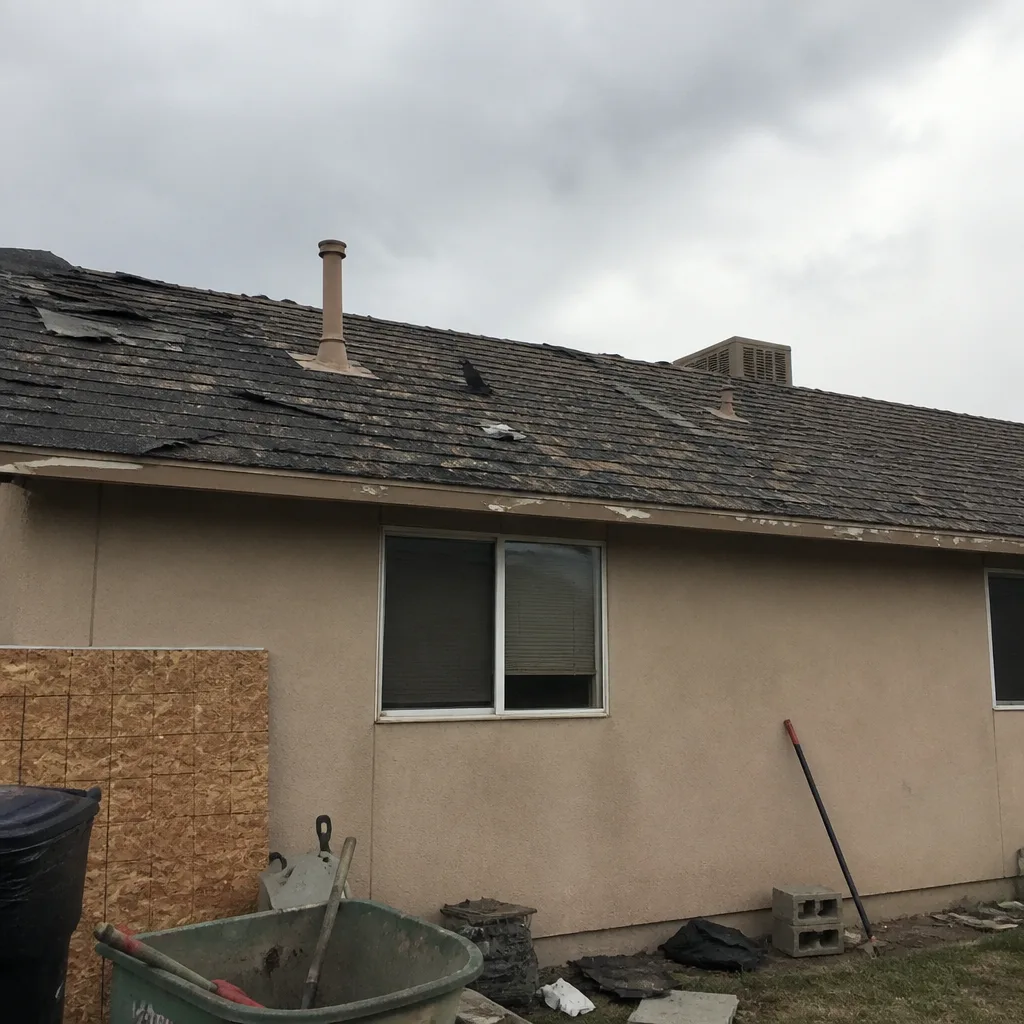 Before
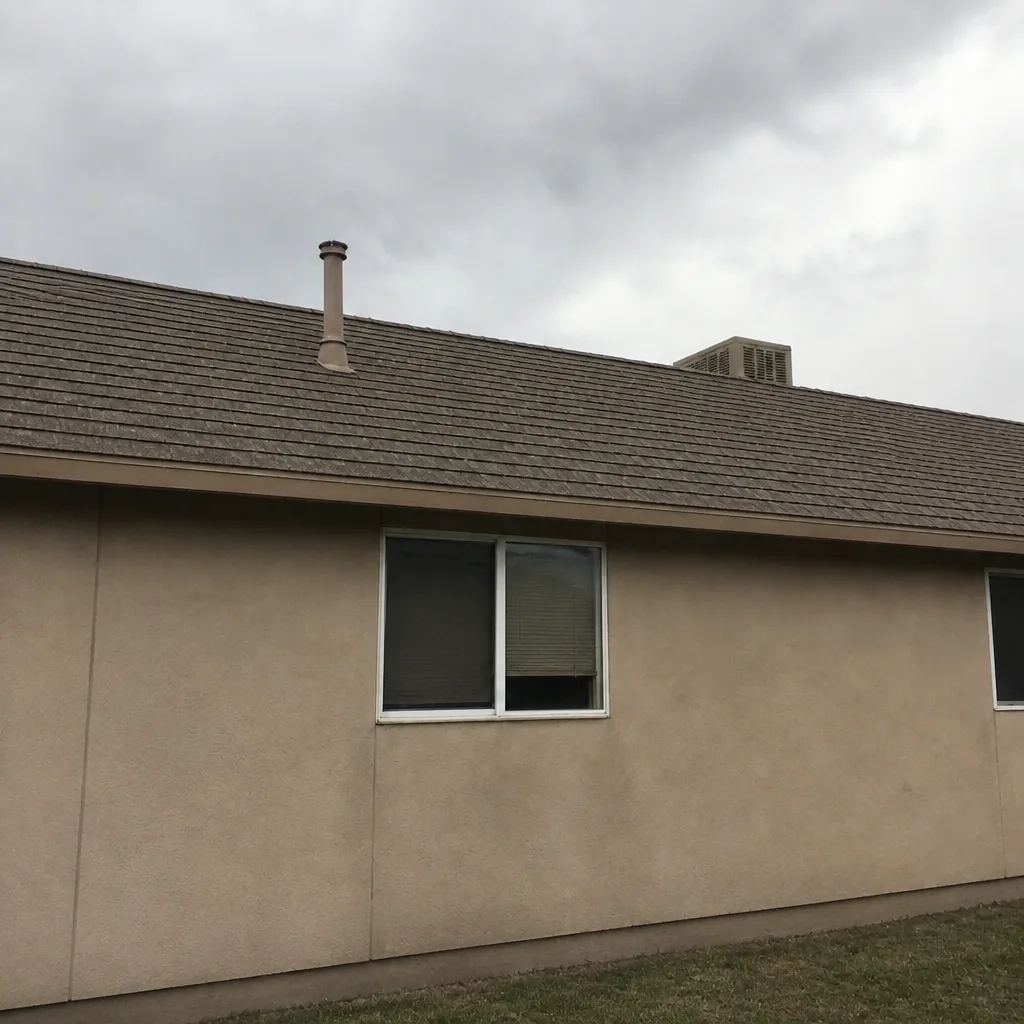 After
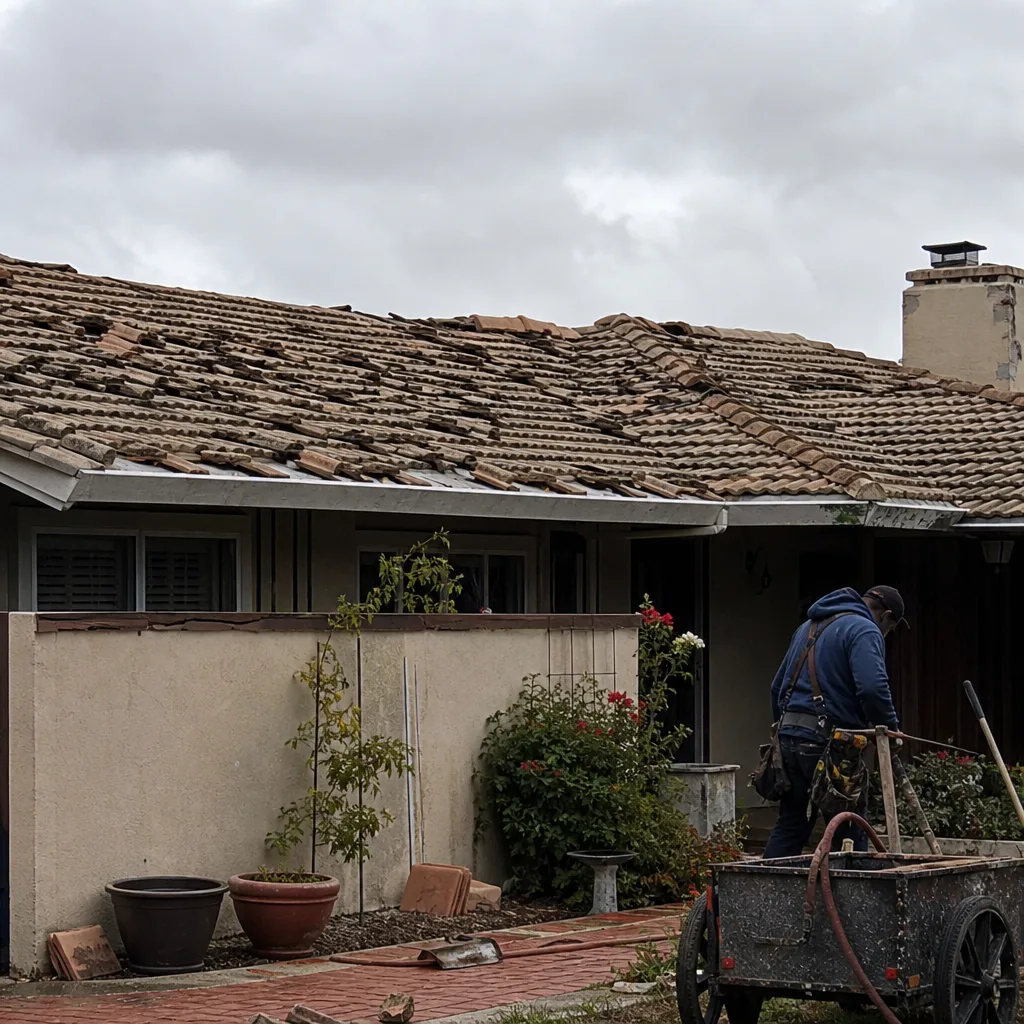 Before
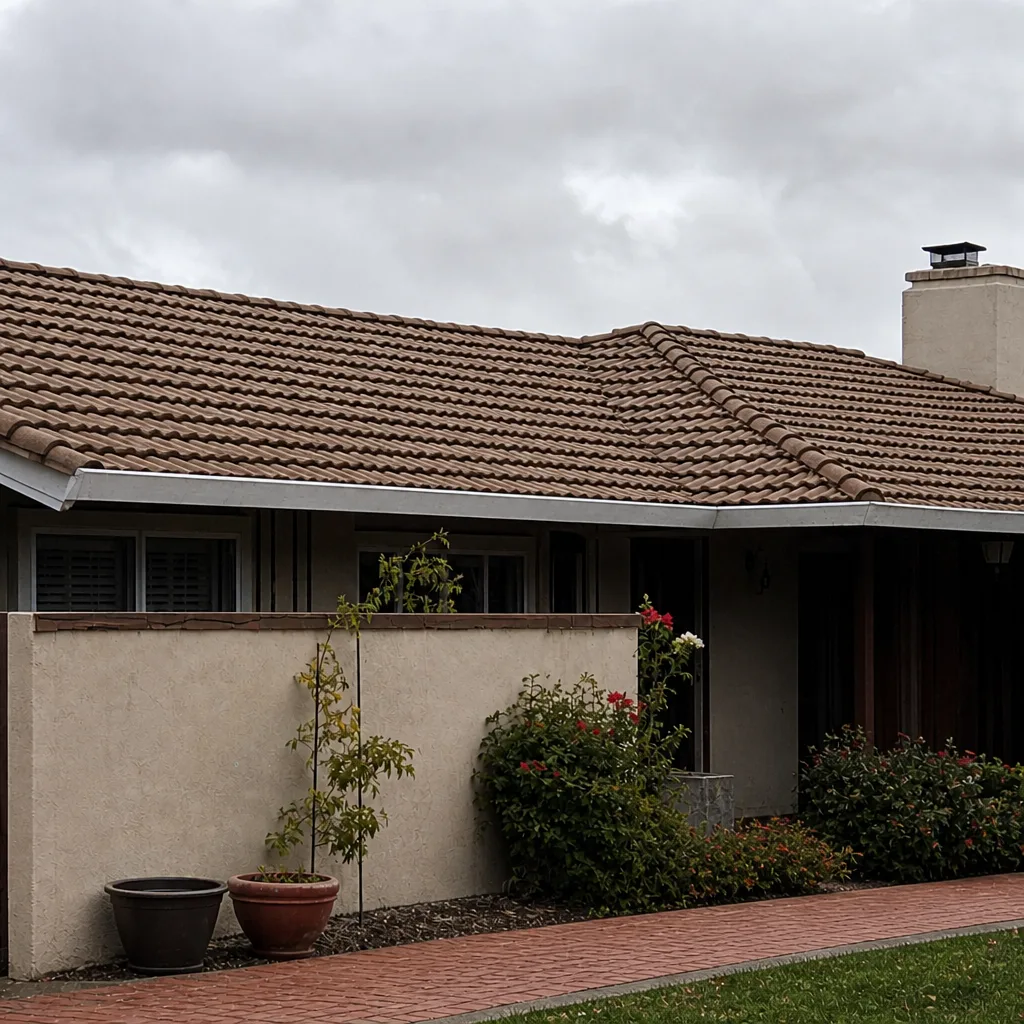 After
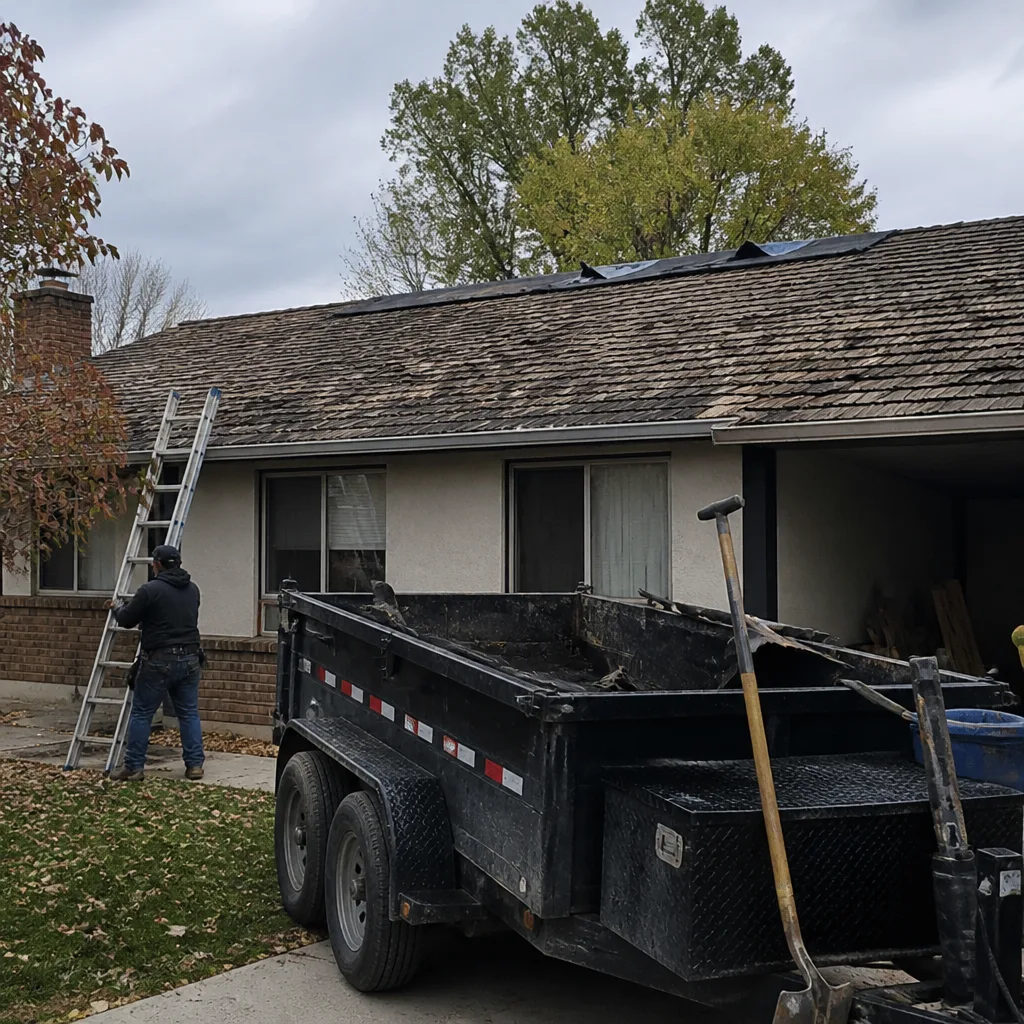 Before
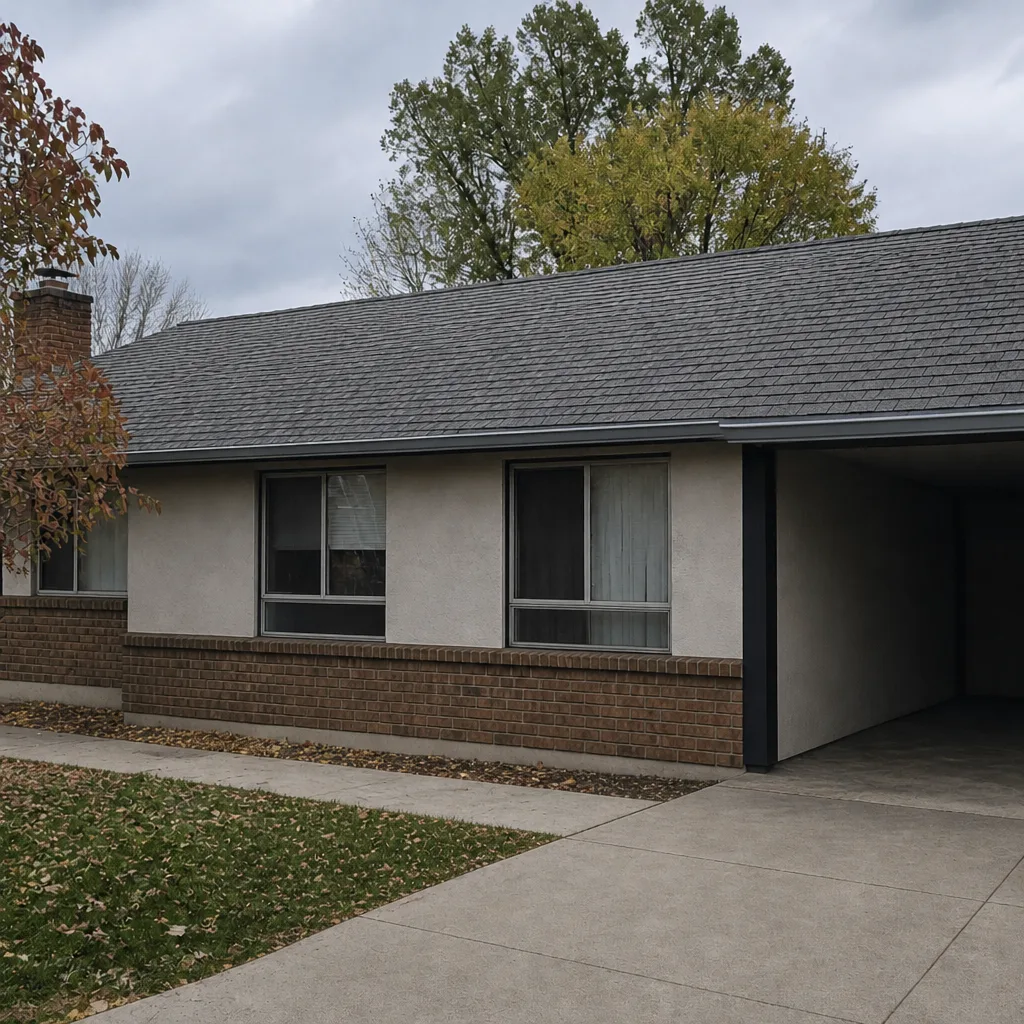 After
Frequently Asked Questions
If the water shows up after a cold night and stops in warm weather, it’s almost certainly condensation, not a leak. Condensation shows up on the underside of the panel, near the ridge, and often involves frost or droplets in the morning. A real leak shows up after rain and gets worse in the monsoon. If you’re not sure, call (844) 797-8167 – we’ll come out and tell you which one it is, free.
You can fix a loose fastener or a worn sealant bead at a pipe boot yourself if you can safely reach it. Anything that involves a seam, a valley, a chimney, or lifting the panel is a roofer’s job. Driving a screw into a panel without addressing the underlying cause is how a small leak becomes a bigger repair. Call (844) 797-8167 for a free estimate before you spend a Saturday on it.
Fastener back-out on exposed-fastener panels. The daily temperature swing between a 105°F afternoon and a 60°F night works every screw loose a fraction at a time, and after five to seven years we start finding loose fasteners on the sun-facing panels. The fix is reseating or replacing the fasteners with new washers, and it’s worth doing before the next monsoon.
Usually not. Oil-canning is cosmetic waviness from the panel’s manufacturing and installation, and it doesn’t affect how the roof sheds water. It becomes a real problem only when it shows up around a loose fastener or an open seam. If the fasteners are seated and the seams are tight, leave it alone.
Two reasons: metal moves more than asphalt, and desert heat cures most sealants brittle within a couple of seasons. The fix is a high-movement neutral-cure silicone or a rubber boot instead of the standard tube sealant – and removing the old sealant completely before the new bead goes on. Call (844) 797-8167 if you’re not sure which product was used on your roof.
Yes. If another roofer has quoted you a full metal roof replacement, bring us the written estimate and we’ll give you a free second opinion. Half the time the real fix is one fastener or one flashing run. We’re owner-operated and we’ve been at the same address since 1996 – call (844) 797-8167 and a live person will pick up, day or night. For a broader look at our metal work, see Metal Roofing in Winchester.
The Bottom Line
A metal roof leak almost always comes from a fastener, a sealant bead, or the flashing where the metal meets something else. The panel itself is the last thing to fail. If the source is a loose fastener, reseat it with a new washer and a torque-controlled screw gun. If it’s a seam, a valley, or corrosion into the metal, call a roofer and get a written number before anyone touches the roof. The same goes for that winter drip that stops in spring – that’s condensation and ventilation, not a roof defect. Shepherd & Sons Roofing Winchester has walked these roofs since 1996; if you’d rather have someone look before you buy a tube of silicone, we’re here. Check our Shepherd & Sons Roofing Winchester home page, or call (844) 797-8167 for a free estimate. We name the product we’d use and the reason, and we put the number in writing. The name on the truck is the name on the license, and you’ll see it on your street on a Saturday.
Written by the team at Shepherd & Sons Roofing Winchester.