
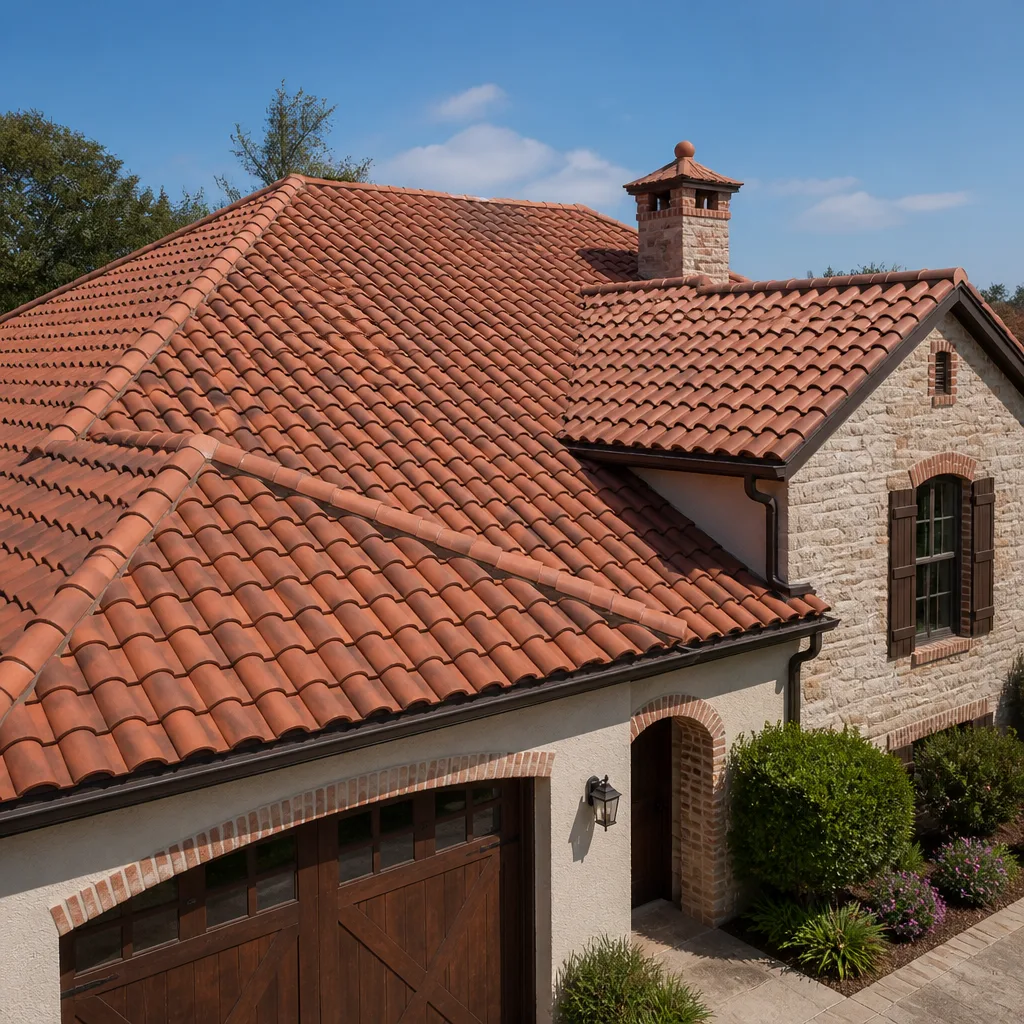
 Tile roofing
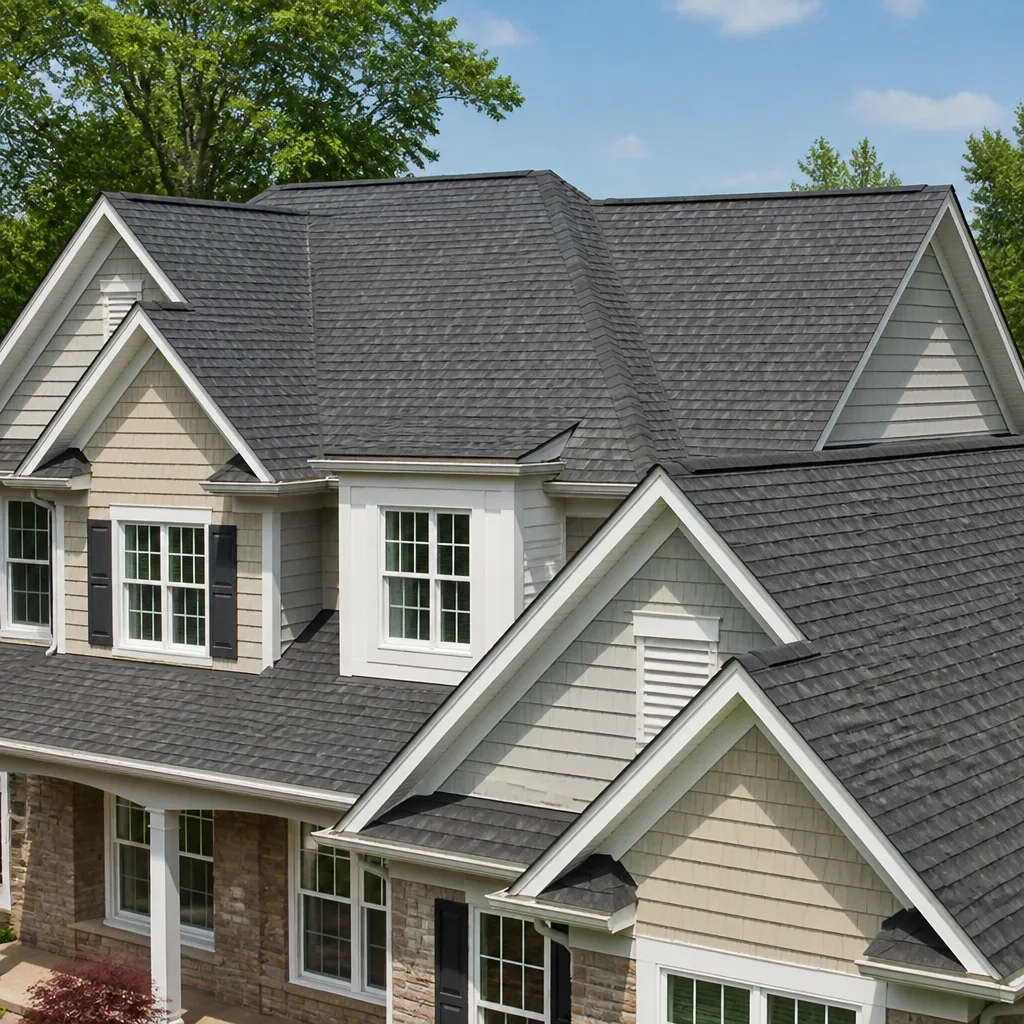 Architectural shingles
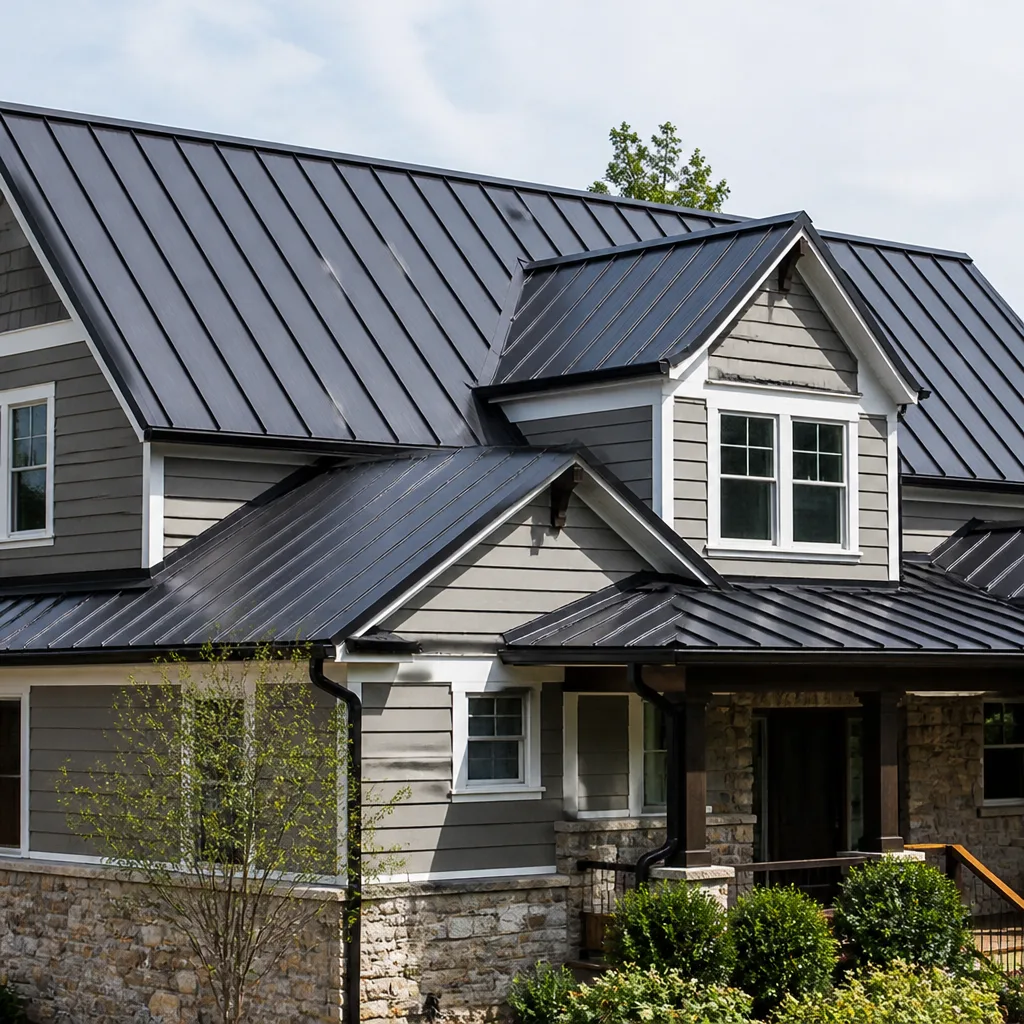 Metal roofing
 GAF
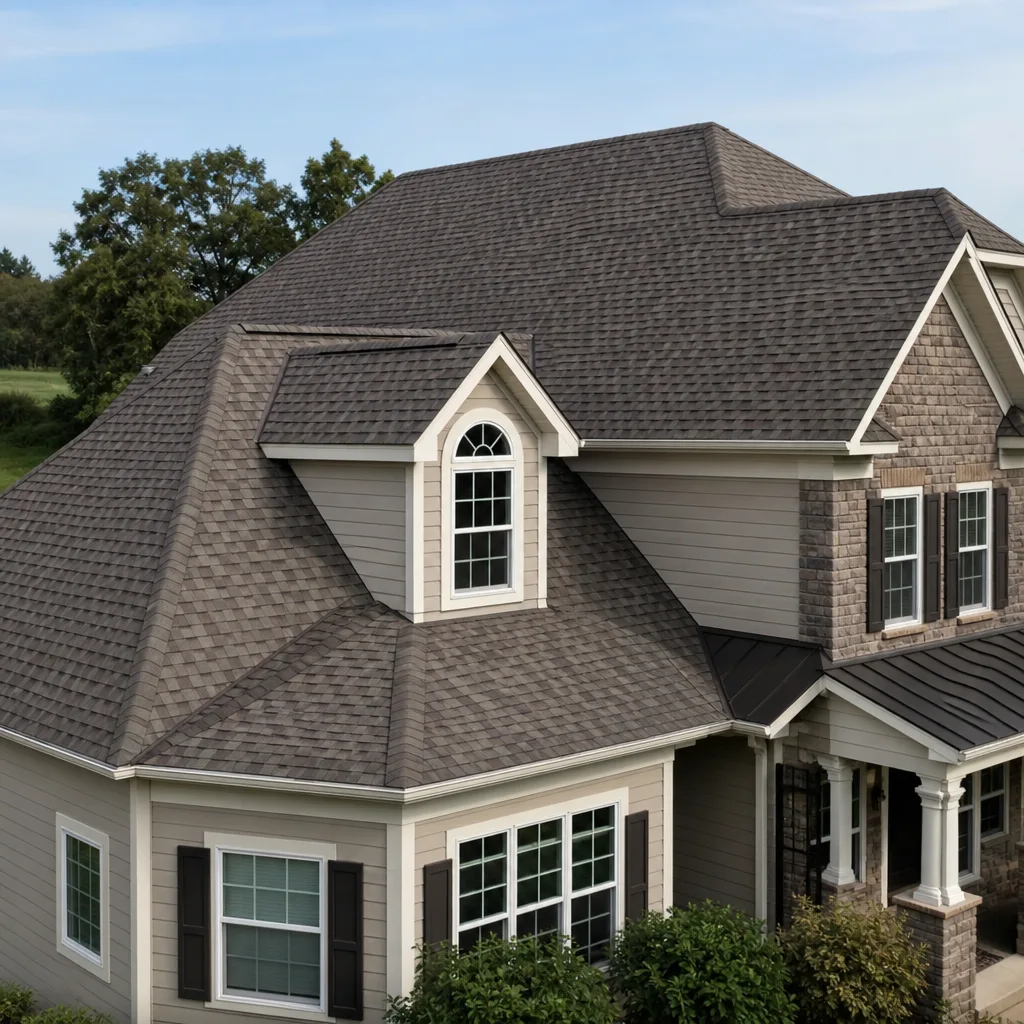 Owens Corning
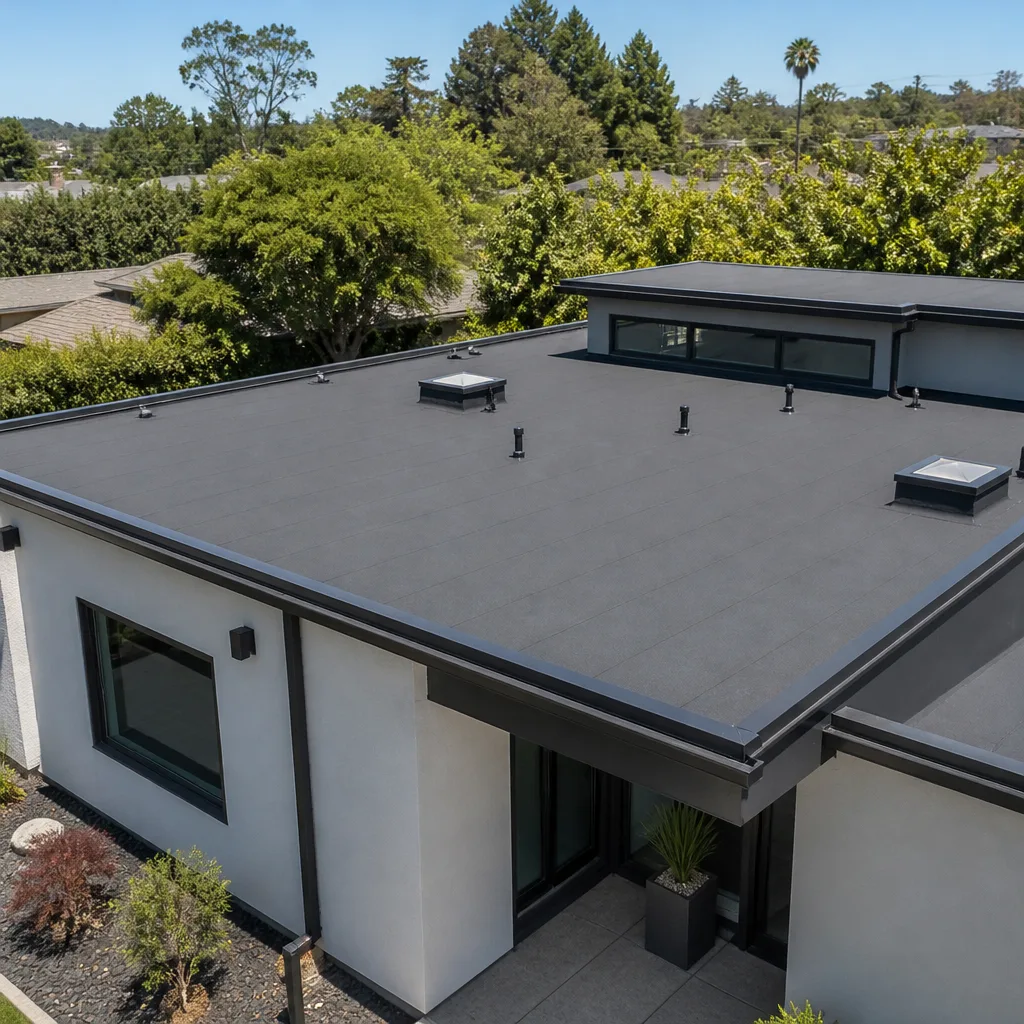 Flat & low-slope
Free roof inspection with deck photos before we talk money - GAF and Owens Corning certified installation
Styles & brands we work with
- Architectural shingles
- Metal roofing
- Tile roofing
- GAF
- Owens Corning
- Flat & low-slope
See the difference
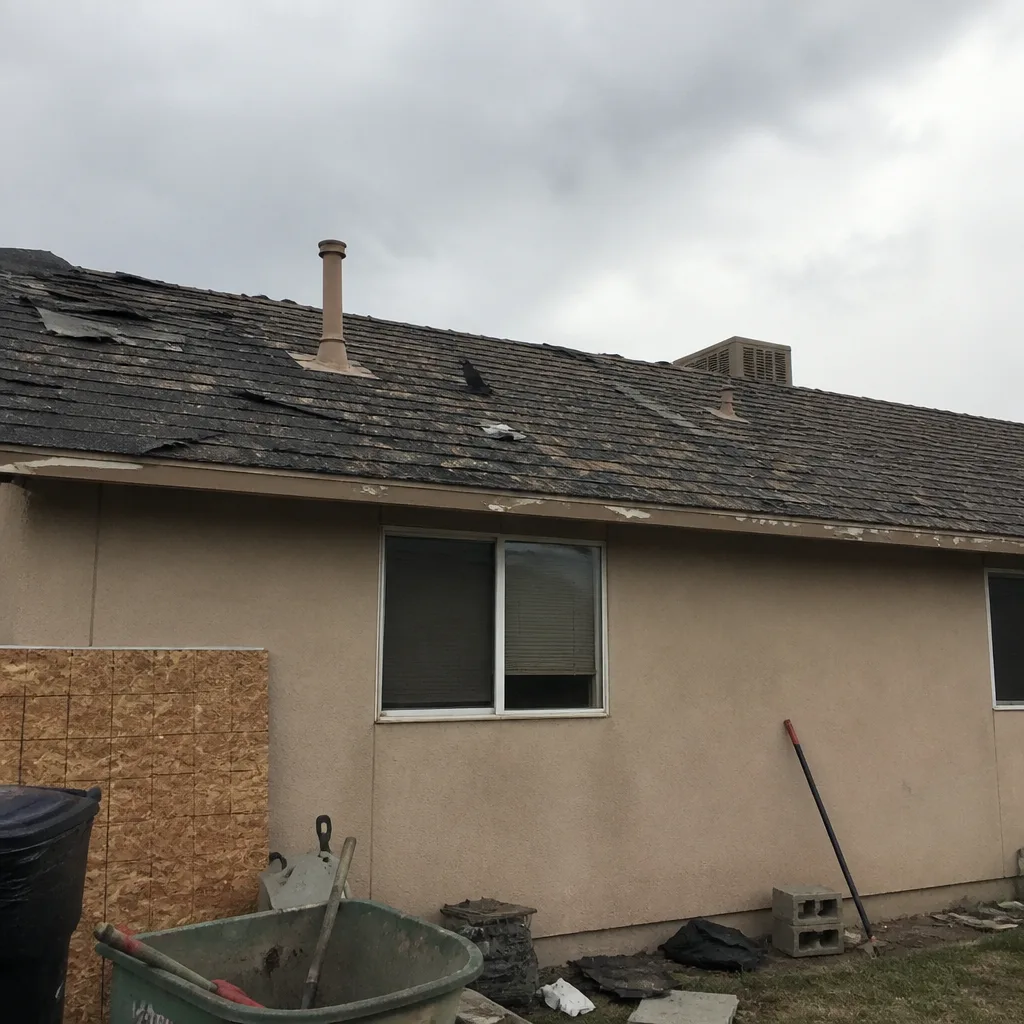 Before
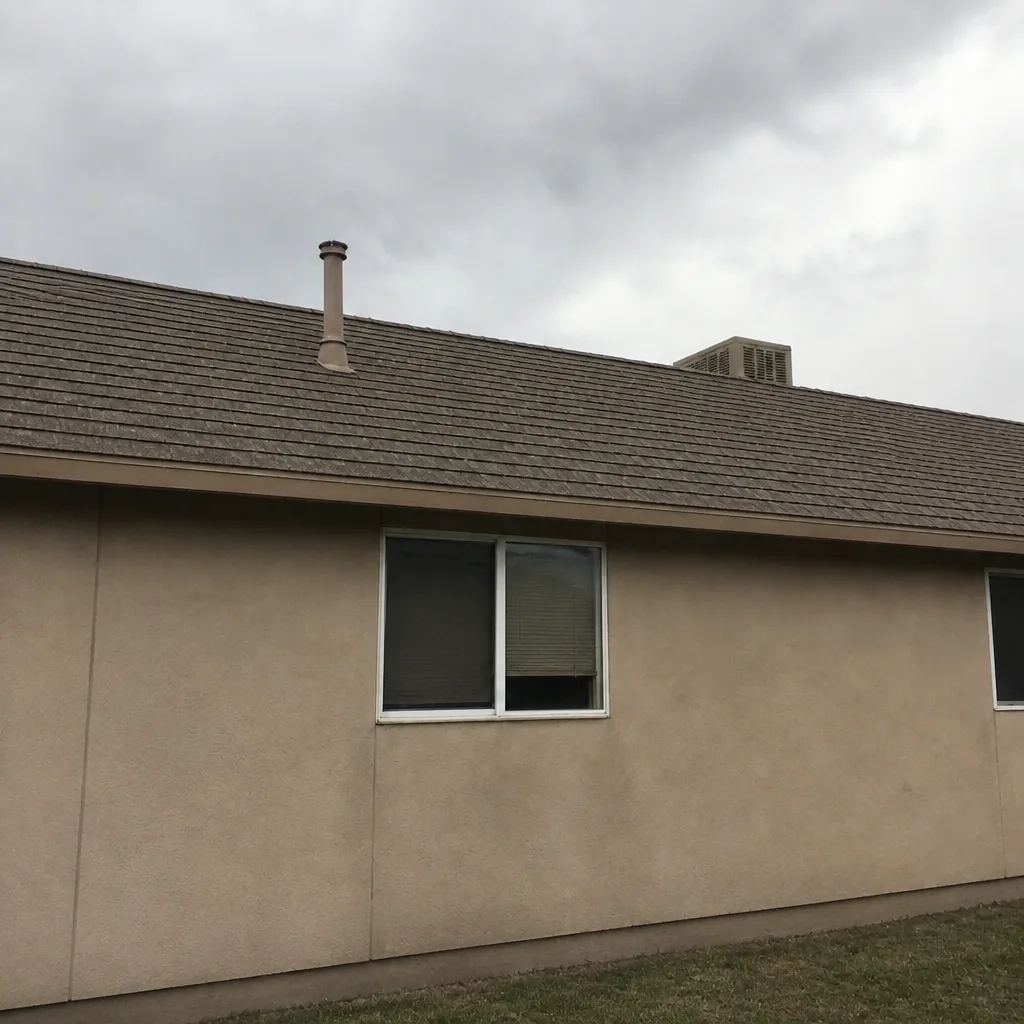 After
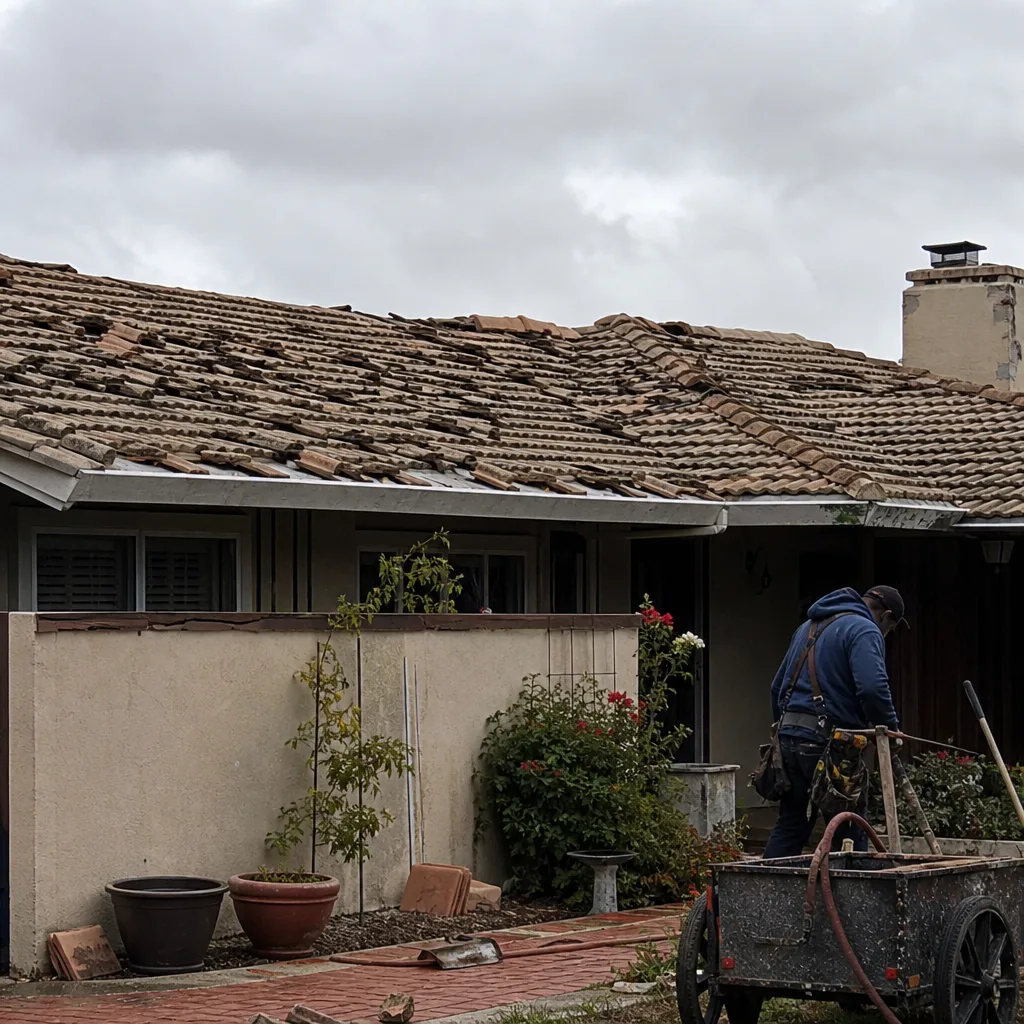 Before
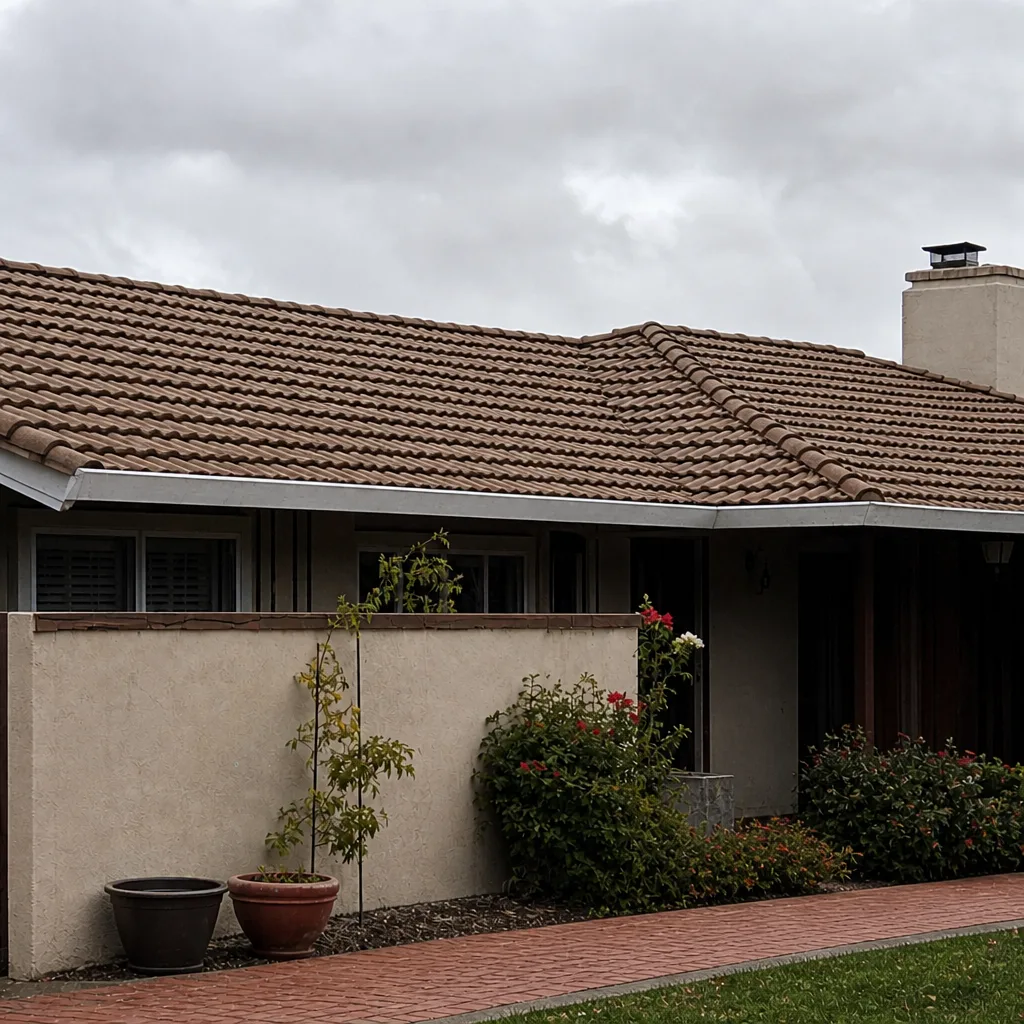 After
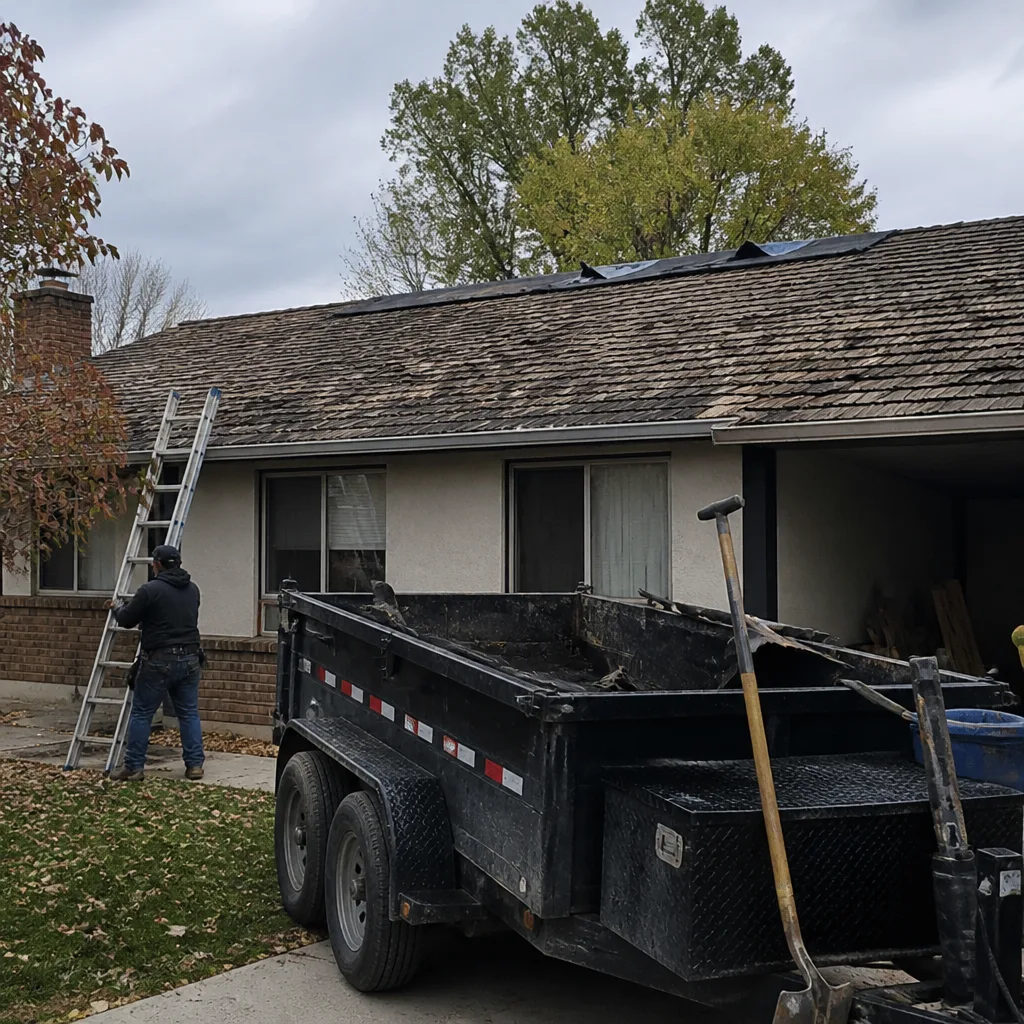 Before
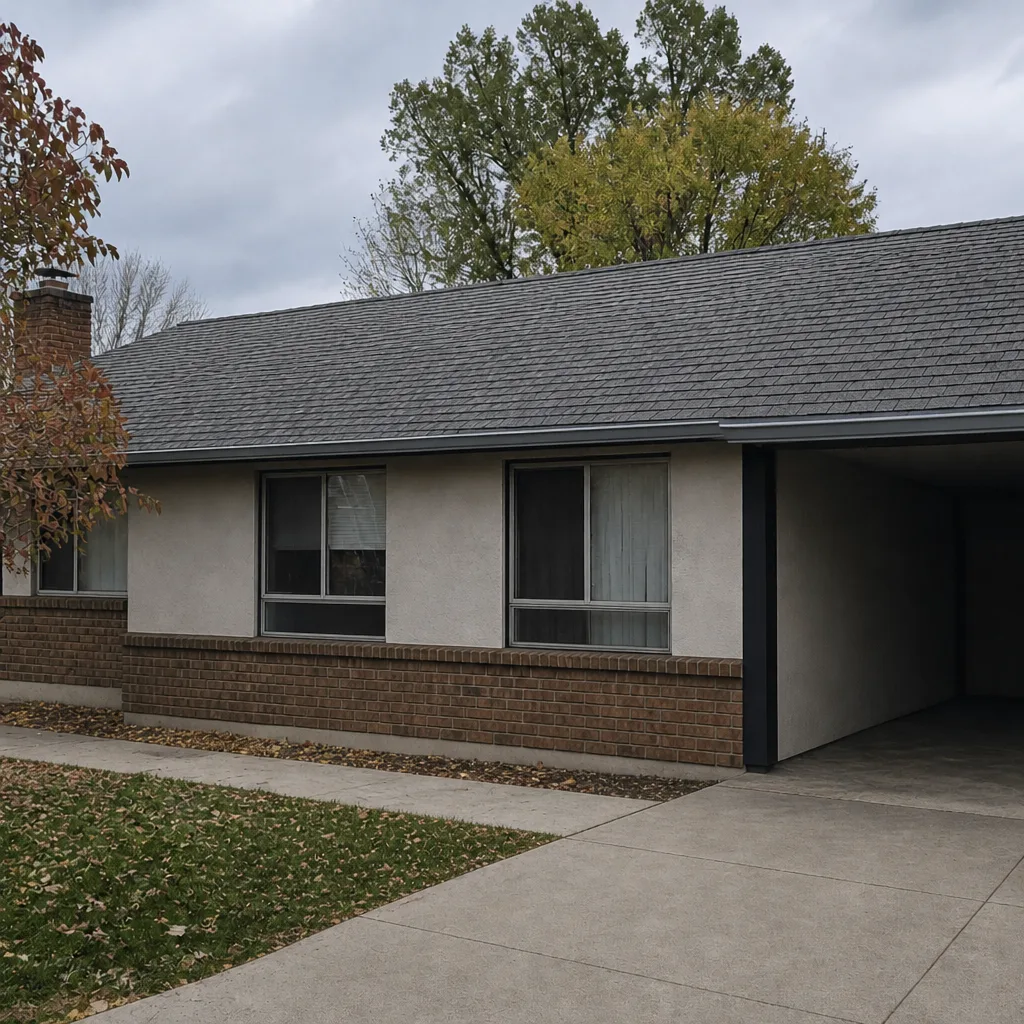 After
Clay vs Concrete Roof Tiles in Winchester, NV: Which One Belongs on Your House?
For most Winchester homes, choose concrete tile unless your framing has been assessed and cleared for the extra weight, or you’re set on clay’s color permanence and willing to pay for it. Clay tile runs 20-25% heavier per square than concrete, and both products will outlast the house by decades. The comparison that actually decides this isn’t lifespan. It’s what each tile does to the rafters underneath and what Winchester’s desert dust does to the mortar holding the ridge caps down. Call (844) 797-8167 and we’ll walk your roof with you before anyone quotes a number.
What Winchester’s Climate Does to a Tile Roof
Start with the ground your house sits on. Winchester is overwhelmingly 1980s to 1990s single-story tract housing, wood-frame with stucco cladding, original builder-grade 3-tab shingles on low-pitch roof lines. Those houses were framed for shingle weight, not tile weight. That’s the first thing we check and the first thing most tile bids skip.
Then add the sky. Summer days over 100°F bake a roof, spring and monsoon gusts funnel off the Sheep Range at 40-60 mph and carry sand and gravel with them, and annual rainfall is close to nothing. Here’s the counterintuitive part: because it almost never rains, wind-created breaches go unnoticed for months until a rare storm finds them. Stucco cracks show up before the leak does.
Winchester’s roofing story is also a timing story. The 1987-1997 building boom across the 89110, 89142, and 89156 zips produced tens of thousands of tract homes whose shingles all hit their 20-25 year lifespan in roughly the same window. That concentrated wave of tear-offs is why tile conversations have picked up in these neighborhoods, and why so many of them start with a neighbor’s HOA-approved reroof.
How Much Extra Weight Does Clay Tile Put on Winchester Rafters?
Clay tile adds roughly 20-25% more weight per square than concrete tile, and that difference lands on framing that was engineered for asphalt shingles. On a 1990 Winchester tract home, that’s not a small footnote. We’ve pulled deck photos on houses in 89110 where the trusses were spaced and sized for exactly what the builder hung on them, nothing more.
That’s why a structural engineer’s load assessment belongs in the budget before you pick a tile. On a typical Winchester single-story, plan on $300-$500 for that assessment. It’s the cheapest line item on the job and the one that protects the rest of it. If the engineer says the framing is marginal, concrete tile gives you more headroom for the same finished look. If the framing needs reinforcement, you’ll know the real number before the pallets arrive, not after.
This is where we part ways with a lot of tile comparisons. Ask any bidder how many squares they counted and whether they pulled the engineer’s report. The weight load matters more than the glaze.
What Nobody Tells You About Caliche Dust and Ridge Cap Mortar
Ridge caps on both clay and concrete tile are mortar-bedded. In Winchester, airborne caliche and alkaline dust settle into that mortar and accelerate carbonation. What we see in the field is ridge cap mortar starting to crumble and pull away somewhere around year 10 to 15 on roofs in this valley’s dust.
You won’t find that in a manufacturer’s warranty, and it doesn’t show up on a spec sheet written for a Florida test sample. It’s a maintenance cost, and in Winchester it’s a real one. Plan on a ridge cap re-mortar somewhere in that 10-15 year window. It’s not a structural emergency, but it will let go faster here than the product literature implies, and once a ridge cap lifts in a monsoon gust, the tile underneath is exposed.
What we check when we’re up there:
- Mortar joints along every ridge cap, looking for cracks and soft spots
- Lifted or slipped tiles after a wind event, especially on west-facing slopes
- Dust and grit accumulation in the valleys where it holds moisture when a storm finally comes
- Surface abrasion on concrete tile from sand and gravel carried by 40-60 mph gusts
- Flashing and penetration seals, including evaporative cooler lines
If you want the full picture on what a tile assembly involves, our Tile Roofing page covers materials and installation details, and there’s more on Tile Roofing in Winchester if you’re comparing bids right now.
Clay vs Concrete Roof Tiles: The Side-by-Side
Here’s how the two actually stack up for a Winchester house, without the brochure language.
| What you’re comparing | Clay tile | Concrete tile |
|---|---|---|
| Weight per square | 20-25% heavier | Lighter, closer to what 1980s framing tolerates |
| Color over time | Through-body color, holds truer under 100°F UV | Surface pigment fades, drifts visually in 10-15 years |
| Wind-driven sand and gravel | Harder surface, resists abrasion better | Abrasions show sooner in sustained gust exposure |
| Ridge cap mortar in caliche dust | Same maintenance window, year 10-15 | Same maintenance window, year 10-15 |
| Lifespan | Outlasts the house | Outlasts the house |
| Load assessment needed first | Almost always, on pre-2000 tract framing | Recommended on pre-2000 tract framing |
Notice what doesn’t separate them: how long they last. Both will be there when your grandkids are arguing over the house. The weight and the color are what you’re actually choosing between, and both are decided the day the submittal goes in.
Why HOA Color Approval Changes the Math
Most Winchester tracts are HOA-governed, and those HOAs require architectural approval for roof color and material changes. The color you choose at submittal is the color you live with, matched against neighboring homes you may not control. That’s where clay’s through-body color earns its premium: it stays truer under the valley’s UV, so your approved color match doesn’t drift against the houses next door. Concrete’s surface pigment fades faster, and at year 10 to 15 the visual drift becomes noticeable on a street where every house was matched on purpose.
We spend about as much time assembling HOA submittal packets as we do on the roof itself, and we build the job plan around debris containment. In these tracts, a tear-off that scatters grit into a neighbor’s yard can draw an HOA fine over $500.
What to Look for in a Winchester Tile Bid
The bid tells you more than the brand name. When you’re weighing clay versus concrete here, look for:
- A squares count you can verify, with the math shown
- The engineer’s load report, or a bidder who insists on one
- A line item, or at least an honest conversation, about ridge cap re-mortar at year 10-15
- The nailing pattern and underlayment spec spelled out, since that earns the wind rating, not the shingle wrapper
- HOA submittal support and a debris containment plan written into the scope
- Products from name brands we install, including Boral, IKO, Atlas, and Tamko
Shepherd & Sons Roofing Winchester has been on Winchester roofs since 1996, same address the whole time, and we’ve watched first-generation tile from the 1990s boom age in this exact climate. We can show you photos of what the mortar and the tile surface actually look like at year 20 in 89110. Years of experience on our crew runs up to 30, and every job carries our written 90-Day Done Right Promise. Start with your home and the roof over your head, and we’ll take it from there.
FAQs
Concrete tile is usually the structurally safer choice for Winchester’s 1980s single-story wood-frame tract homes because clay runs 20-25% heavier per square, and that older framing was engineered for 3-tab asphalt shingles. Clay can still be the right call if an engineer’s load assessment clears the framing and you want the color permanence. Either way, budget $300-$500 for that assessment first. Call (844) 797-8167 for a free second opinion on any tile bid.
A full tile reroof in Winchester generally runs $1,100 to $2,200 per square depending on tile type, underlayment, ridge detailing, and whether framing reinforcement is needed, and a structural load assessment adds $300-$500. Concrete typically lands on the lower end, clay on the upper, because clay tile itself costs more and pushes more load onto the framing. Call (844) 797-8167 for a no-trip-charge estimate inside our county, so you know the number before anyone touches your roof.
Yes, plan on it. Winchester’s airborne caliche and alkaline dust accelerates mortar carbonation, and ridge cap mortar on both clay and concrete tile starts to crumble around year 10 to 15 on this valley’s roofs. That maintenance isn’t covered by a manufacturer’s warranty and doesn’t appear on a spec sheet. Call (844) 797-8167 and we’ll tell you where your ridge caps stand.
Clay tile will hold its approved color closer than concrete, because clay’s through-body color resists UV fading while concrete’s surface pigment fades faster. On a Winchester street where every home was matched at submittal, that drift shows in roughly 10-15 years on concrete. Call (844) 797-8167 and we’ll help you weigh color permanence against weight load before you file the submittal.
If you’d rather have it looked at, Shepherd & Sons Roofing Winchester offers a no-pressure assessment in Winchester. Call (844) 797-8167 and a live person picks up, including nights and weekends after a storm. Free estimates, upfront pricing, and $40 off any repair over $200.
Written by the team at Shepherd & Sons Roofing Winchester, serving Winchester, NV.