
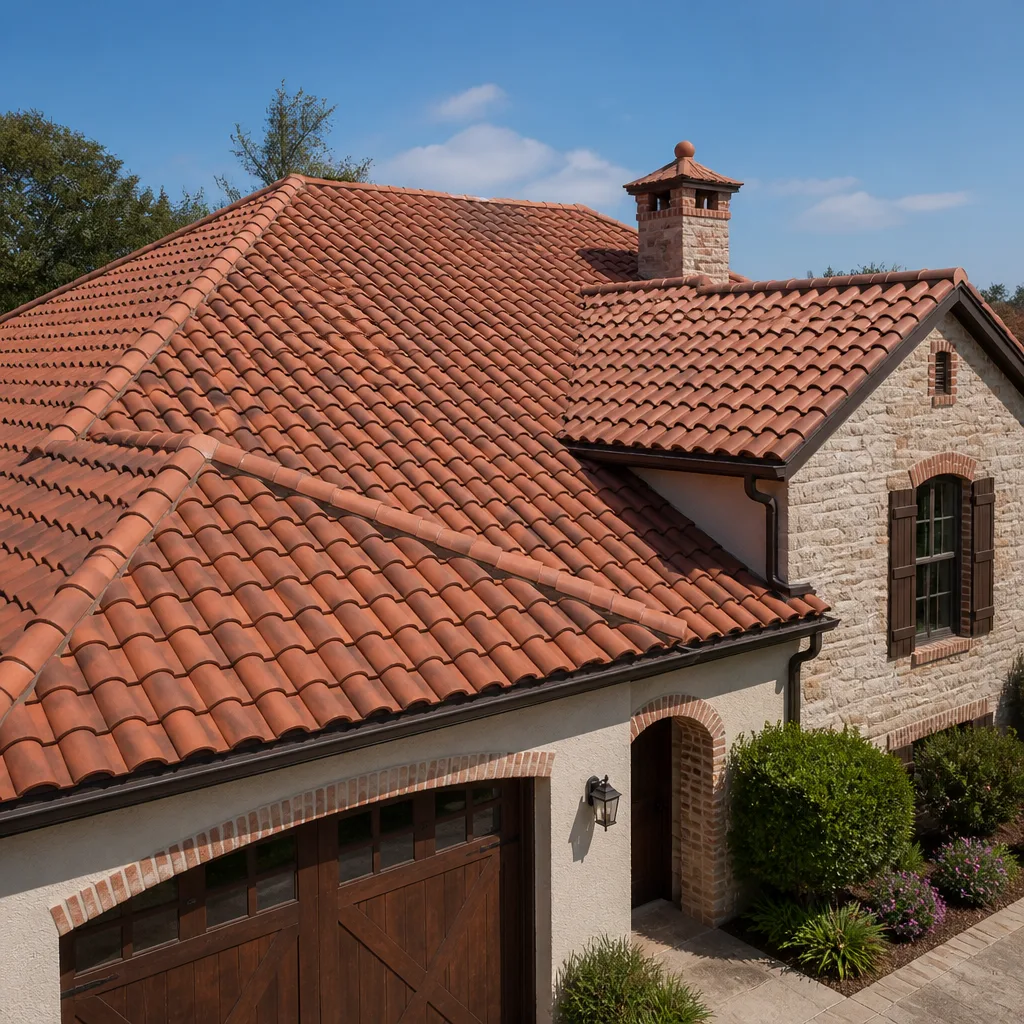
 Tile roofing
 Architectural shingles
 Metal roofing
 GAF
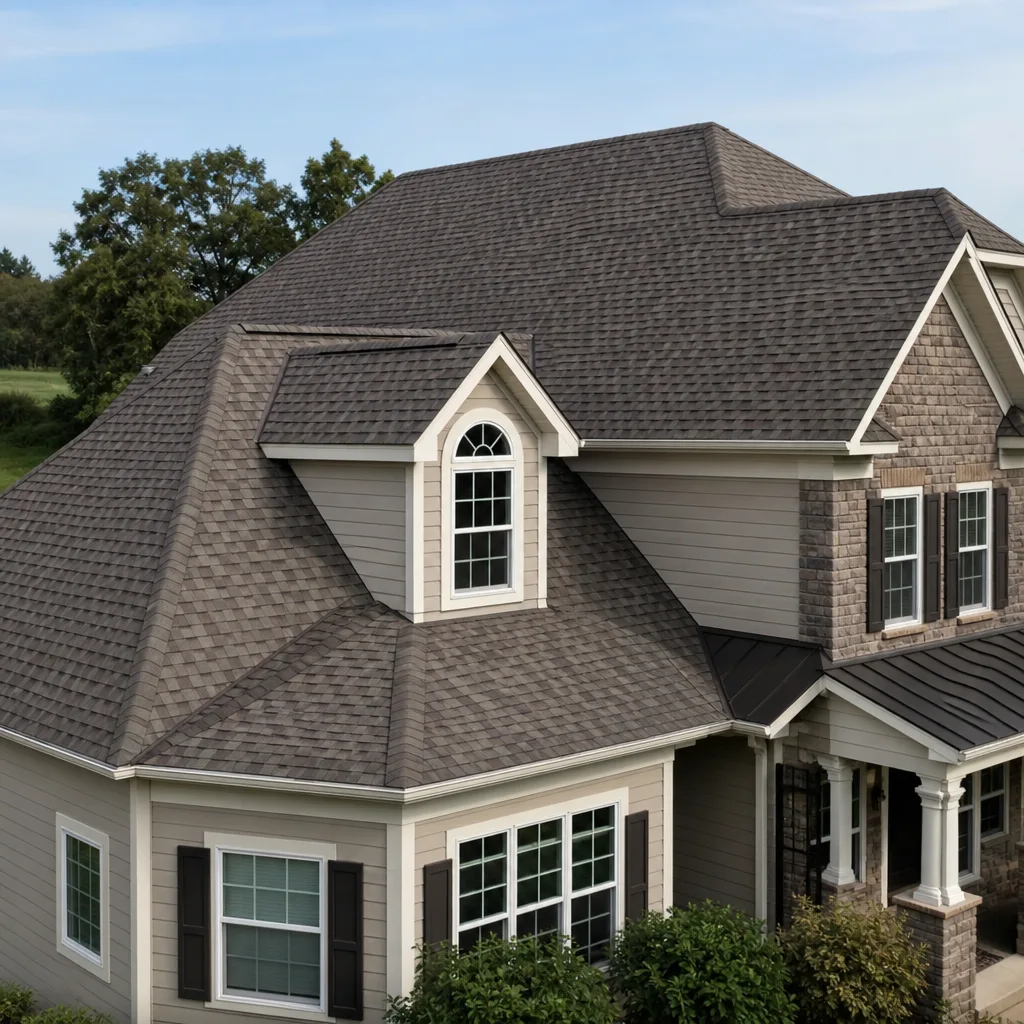 Owens Corning
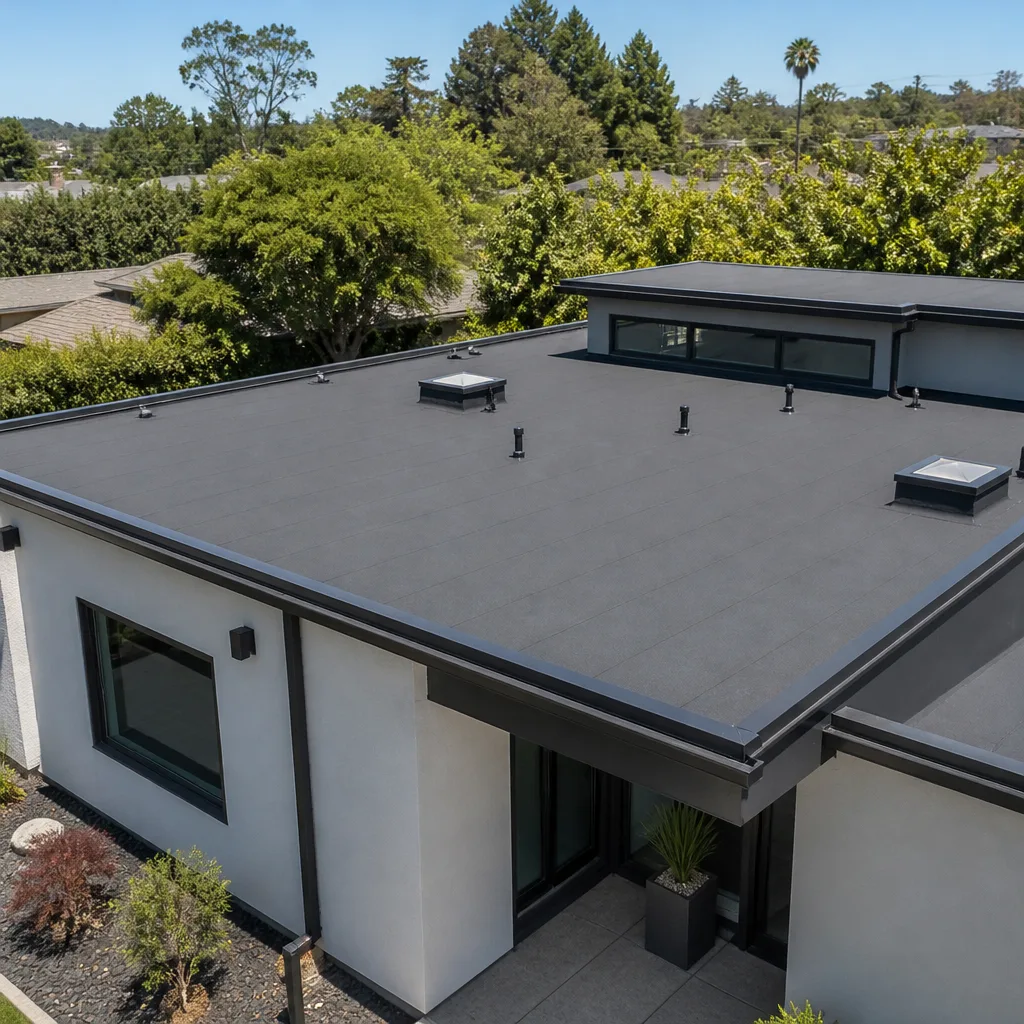 Flat & low-slope
Free roof inspection with deck photos before we talk money - GAF and Owens Corning certified installation
Styles & brands we work with
- Architectural shingles
- Metal roofing
- Tile roofing
- GAF
- Owens Corning
- Flat & low-slope
See the difference
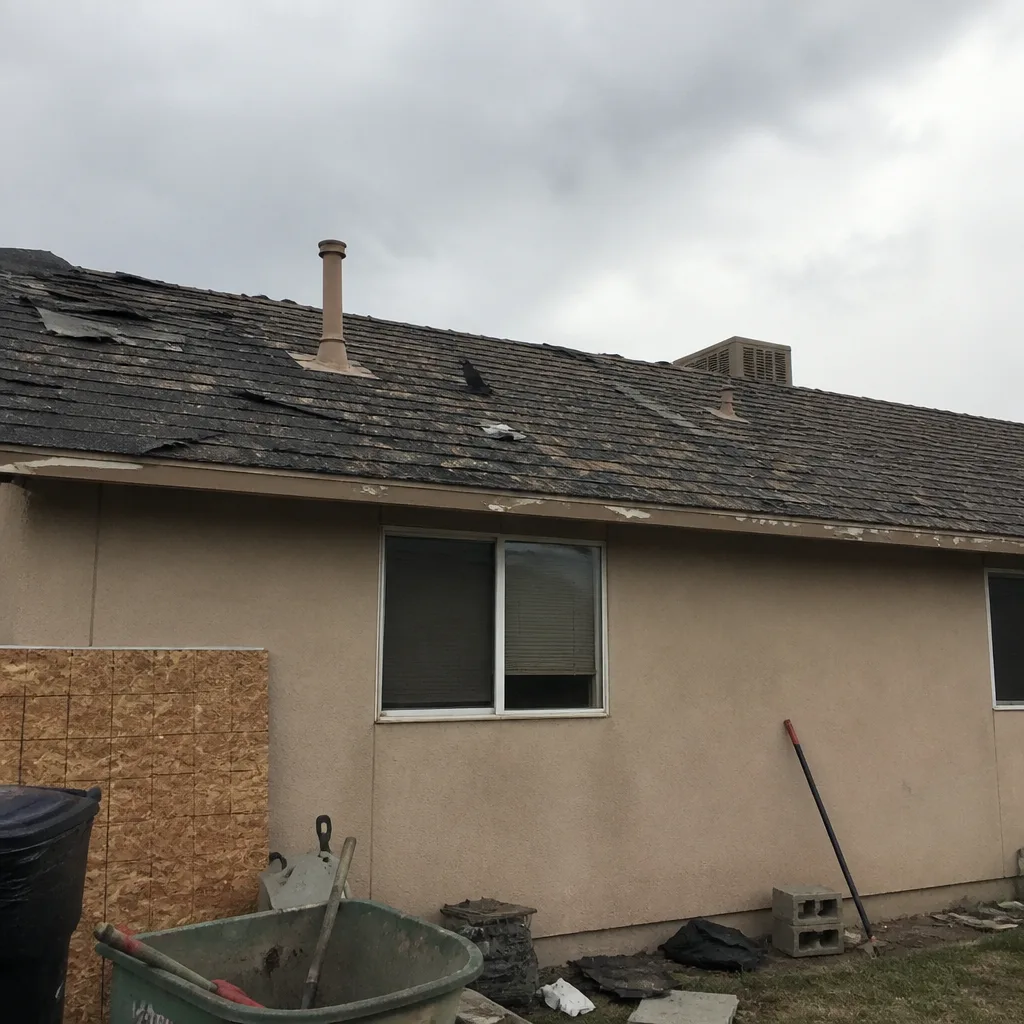 Before
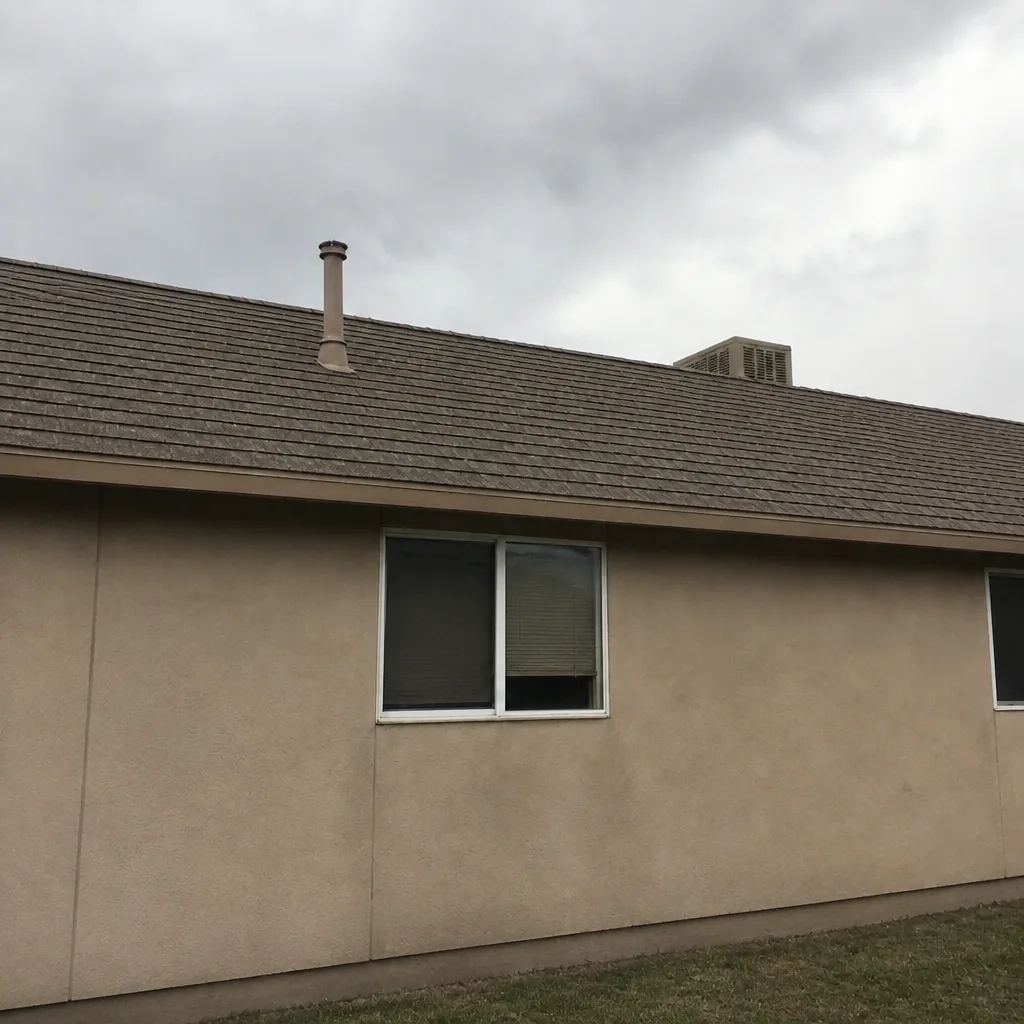 After
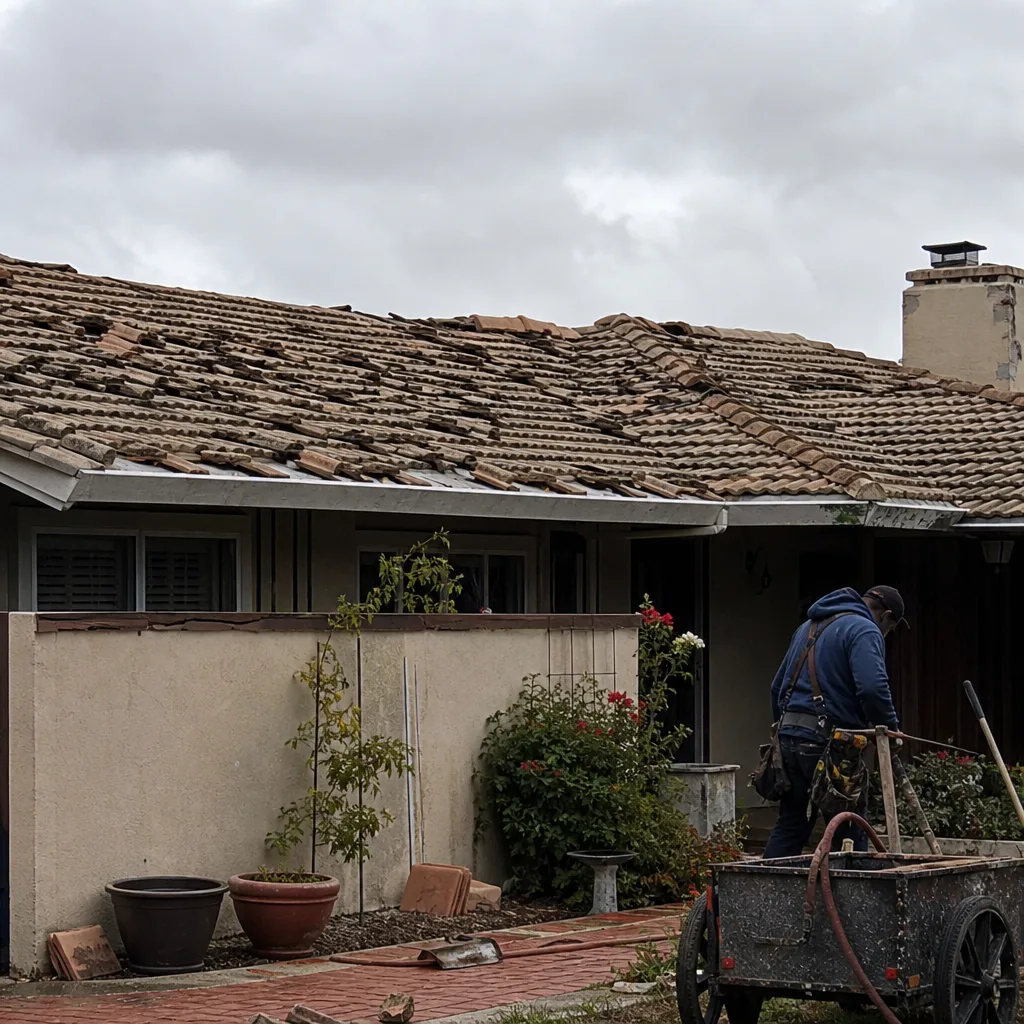 Before
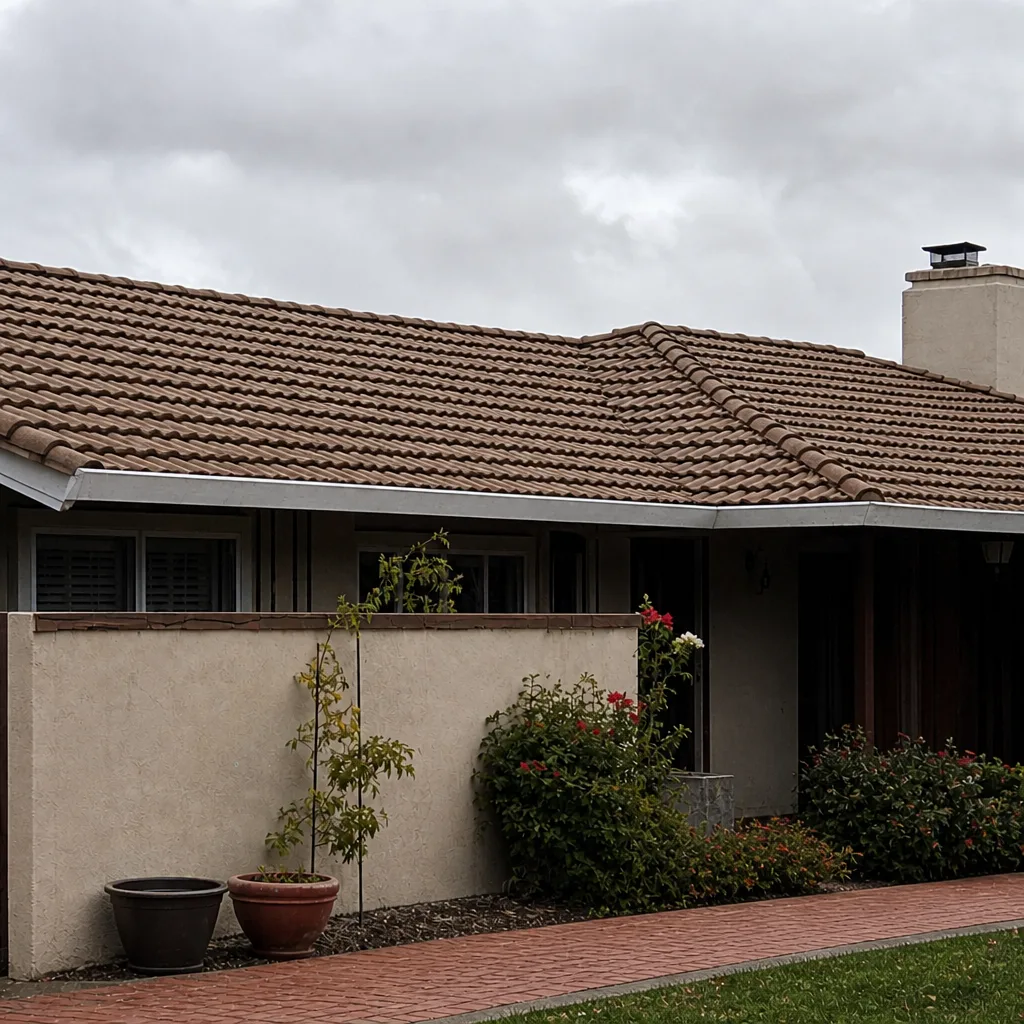 After
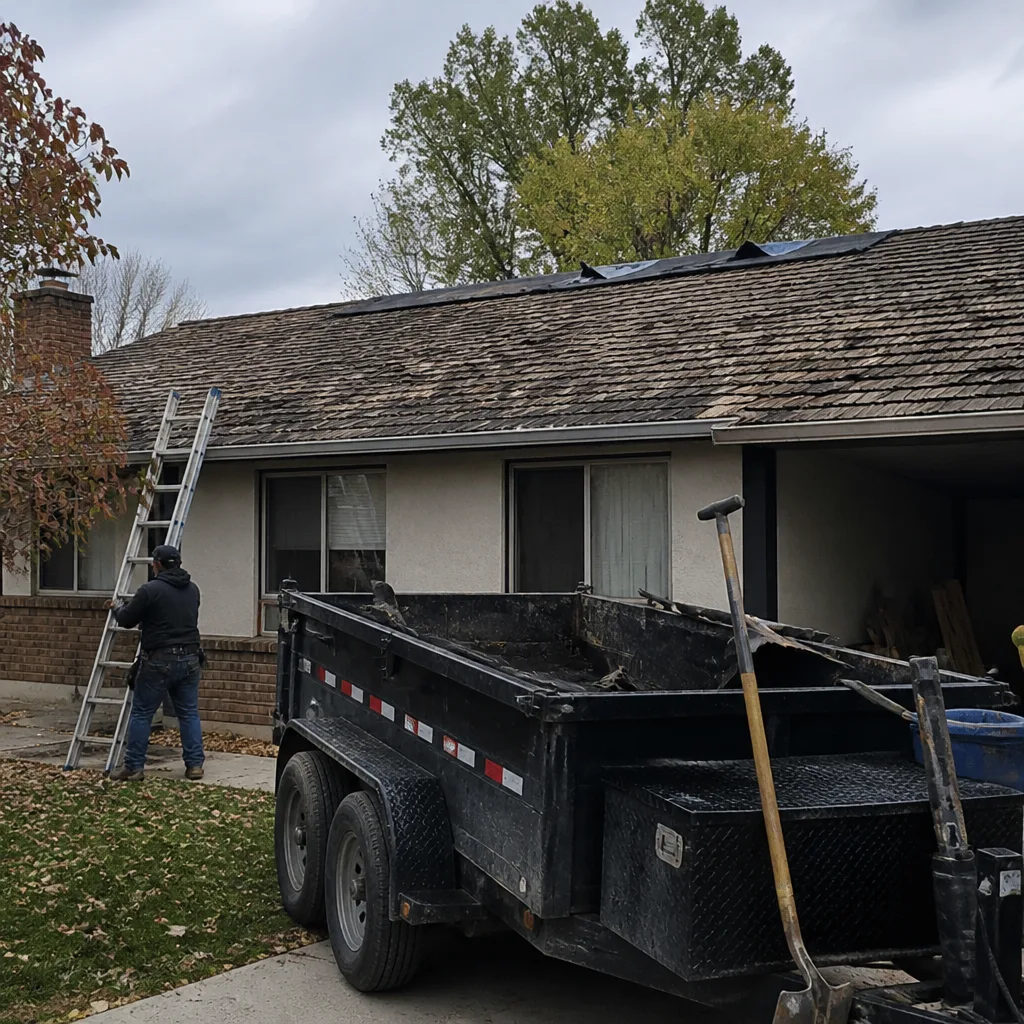 Before
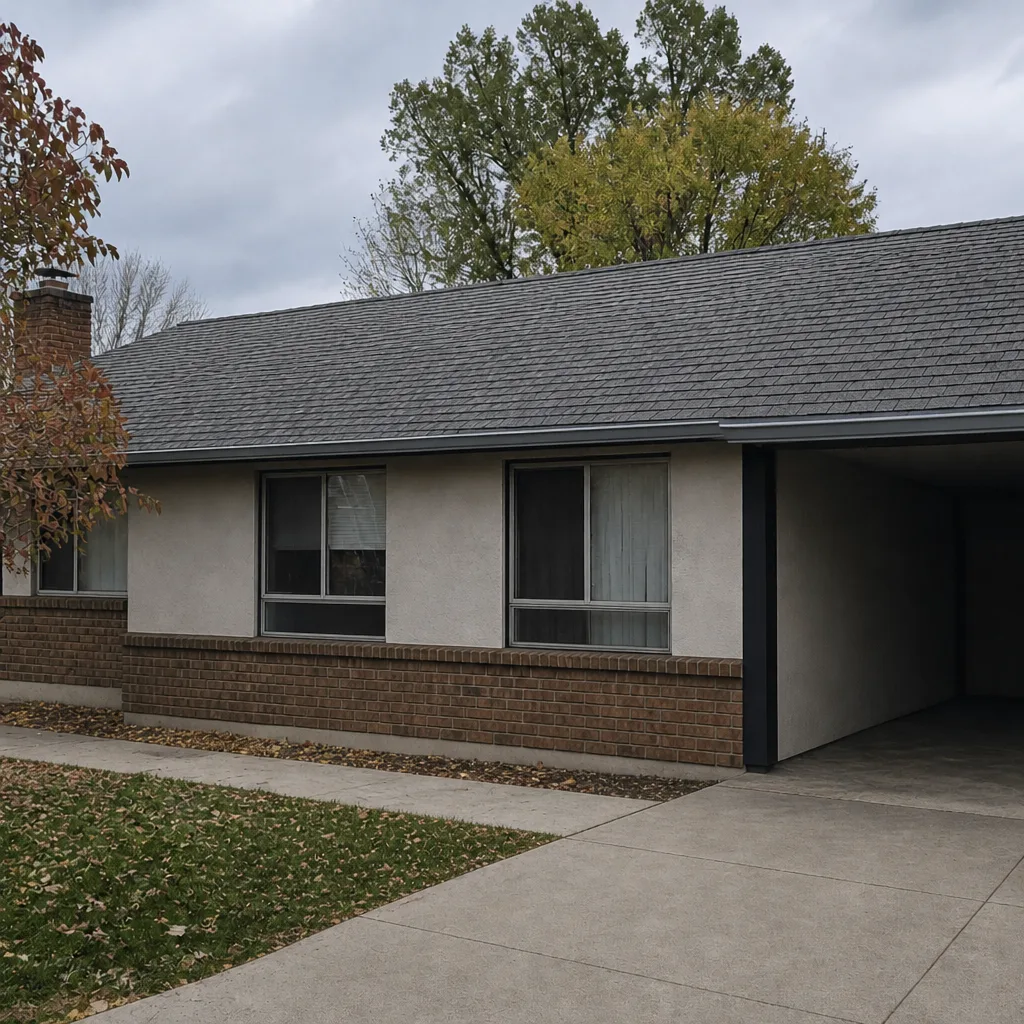 After
# How Long Does a Tile Roof Last in Winchester, NV?
A concrete or clay tile roof in Winchester, NV lasts at least 50 years, and often 75 to 80? but only the tile body lasts that long, not the waterproofing under it. The felt underlayment beneath a tile roof has a much shorter life, so the honest answer to how long a tile roof lasts in Winchester is: the tile tops 50 years, but the underlayment under it may need replacing around 20 to 25 years. If your home was built in the 1990s, that clock is either up or close to it.
## Why Your 1990s Winchester Tile Roof Is Older Than It Looks
The tile on a Winchester home built in the 1990s is probably still fine. Most of it is. Give it a good look on a summer afternoon and you’ll see what we see: the concrete tiles are intact, the color has faded a little, some corners have chipped. That’s normal.
What’s not fine is the layer you can’t see. Under every tile sits a felt underlayment, and on most of the original tract homes in the 89110 and 89142 zips, that underlayment is a Type 30 felt. It’s rated to do its job, but in a desert it lives a hard life. Those tiles sit directly on top of it, baking in 100°F-plus summers, and the felt underneath can easily top 150°F on the hottest afternoons. That constant heat cycling is what breaks it down. In this climate, a Type 30 underlayment is a 20- to 25-year material, not a 50-year one.
So here’s the part most lifespan articles skip: the tile is the armor, but the underlayment is what actually keeps water out. When the felt fails, you own a tile roof with no waterproofing. That’s why “how long does a tile roof last” has two answers, and only one of them gets printed on the tile wrapper at the supply house.
## The Hidden Failure Mode in Winchester’s Housing Stock
Winchester’s near-zero rainfall is a strange advantage and a real hazard at the same time. A tile roof here almost never gets tested by water. At most, the local records show a handful of rainy days a year, often clustered into a few summer monsoon weeks.
That means a felt underlayment that’s been quietly deteriorating for a decade can go completely unnoticed, because nothing is putting water on it. Then one monsoon afternoon comes through, and a homeowner in a 1990s tract home discovers a ceiling stain that turns out to be a twenty-year problem surfacing all at once. We’ve walked into exactly those situations more times than we can count. The tile looked fine from the street. The decking underneath was already showing water damage.
If you own a Winchester tract home with its original tile, here’s the honest approach: treat the underlayment age, not the tile condition, as your lifespan clock.
– Bought a built-in-1995 home in the 89110 or 89142 zips? Your underlayment is 28 to 30 years old. That’s past its useful life in this heat, even if the tile looks untouched.
– Built in the late 1990s or early 2000s? You have maybe a few years of buffer before the felt becomes a real risk.
– Tile body condition is a separate check. Chipped or cracked tiles are mostly a cosmetic and wind-lift concern. They don’t tell you anything about whether the waterproofing under them still works.
## What Replacing an Underlayment Actually Involves
This is the part that surprises people, and it’s why we always explain it before we ever talk about price.
You can’t replace the felt underlayment without lifting and removing every tile on the roof. The tiles are laid over the top of the waterproofing layer, so a re-covering job means taking the whole system apart, stripping the deck, and setting the tile back down. It’s a full tear-down and re-lay, even though you’re keeping the tiles.
On most Winchester tile roofs in these tracts, that job also runs into the HOA. Most of these neighborhoods have architectural review rules for roof work, and a project that removes and re-lays tile can trigger a submittal packet and a review waiting period. In our experience, that administrative process becomes the longest stretch of the job, not the roofing work itself. Bill builds that into the timeline from the first visit, so you know up front what the HOA review will add.
To keep all of this in perspective, here’s how the numbers typically break down in this market:
| Item | Typical range in Winchester |
| - | - |
| Concrete or clay tile body lifespan | 50+ years |
| Type 30 felt underlayment lifespan in this climate | 20-25 years |
| Underlayment replacement (lift and re-lay every tile) | Major project – comparable to a full roof replacement in scope, priced per square after the deck is inspected |
| Ridge cap mortar inspection | Year 10-12 |
| Ridge cap repointing | Year 15-20 |
Bring us any written estimate and we’ll give you a free second opinion, no-hassle, and if we come out to your home you won’t see a trip charge inside our own county.
## The Maintenance Item That Doesn’t Show Up on Any Warranty
Ridge caps – the tiles running along the peak of the roof – sit on a bed of mortar, and in this environment that mortar takes a beating. The desert’s alkaline dust and constant heat cycling wear it down faster than people expect. We recommend inspecting the ridge at year 10 to 12, and repointing the mortar around year 15 to 20.
Skipping it is how water gets in under the tile during the rare rains we do get. And no manufacturer’s warranty covers mortar maintenance. The tile warranty covers the tile. It doesn’t cover what holds the tiles in place or what sits under them. That’s on the homeowner, which is why we walk the ridge on every tile roof we’re called out to inspect.
## What a Real Tile Roof Check Looks Like
If you’re buying a Winchester home with a tile roof, or you’re not sure where your own roof stands, here’s what a careful inspection covers:
– The age of the underlayment, based on what’s visible at the edges and at any valleys where decking is exposed
– Ridge cap mortar condition and any lifting or crumbling
– Tile body condition, including cracked or slipped tiles
– Decking pulled back where the underlayment looks suspect, so we can see the wood
– Any swamp cooler penetrations and the moisture cycling around them, common in these valley homes
Bill has been standing on Winchester tile roofs since the late 1990s, and most of the work he does now is on the same original installation jobs he watched go on in these streets, seen aging in real time. He can tell you, from actual photos taken on actual 89110-zip roofs, what the underlayment looks like at year 25 in this climate before anyone talks about price. If you’d like a closer look at what we do with tile, our Tile Roofing in Winchester page covers it, along with the standard Tile Roofing we install across the area – brands like Boral, GAF, and CertainTeed, whichever fits your existing tile and HOA’s approved list. Our crews bring up to 30 years of experience, and every job is backed by the written 90-Day Done Right Promise.
## FAQs
### How long does a tile roof last on a Winchester home?
A tile body lasts at least 50 years in most of Winchester, but plan for an underlayment replacement around year 20 to 25. The felt under the tile is the actual waterproofing layer, and desert heat cycling breaks it down long before the tile wears out. Call us at (844) 797-8167 for an honest look at your roof’s age.
### Is replacing the underlayment on a tile roof as expensive as a new roof?
It’s close – you’re paying to remove and re-lay every tile, so the scope is a full roof tear-down even though the tile stays. The good news is you keep the tile and only replace the failing layer. Bring us any bid for a free second opinion, and we’ll give you a straight number.
### How often should a tile roof be inspected in Winchester?
Every two to three years, with a closer look at the ridge cap around year 10 to 12. Winchester’s dry climate hides underlayment problems until a monsoon exposes them, so scheduled inspections catch the issue before it gets expensive. Call (844) 797-8167 to set one up.
### Does a clay or concrete tile roof ever need to be replaced completely?
Mostly the tile itself doesn’t, but the roof system underneath may. If the tile has been cracked, lifted by wind, or the deck shows damage, a partial replacement may make more sense than repointing. Either way, we’ll give you the honest answer before we quote a price.
If you’d rather have it looked at, Shepherd & Sons Roofing Winchester offers a no-pressure assessment in Winchester – call (844) 797-8167. We’ve kept the same address since 1996, a live person answers the phone around the clock, and you can always ask for the owner by name. For a look at everything we do, visit our home page.
Written by the team at Shepherd & Sons Roofing Winchester, serving Winchester, NV.