
Last updated November 17, 2026
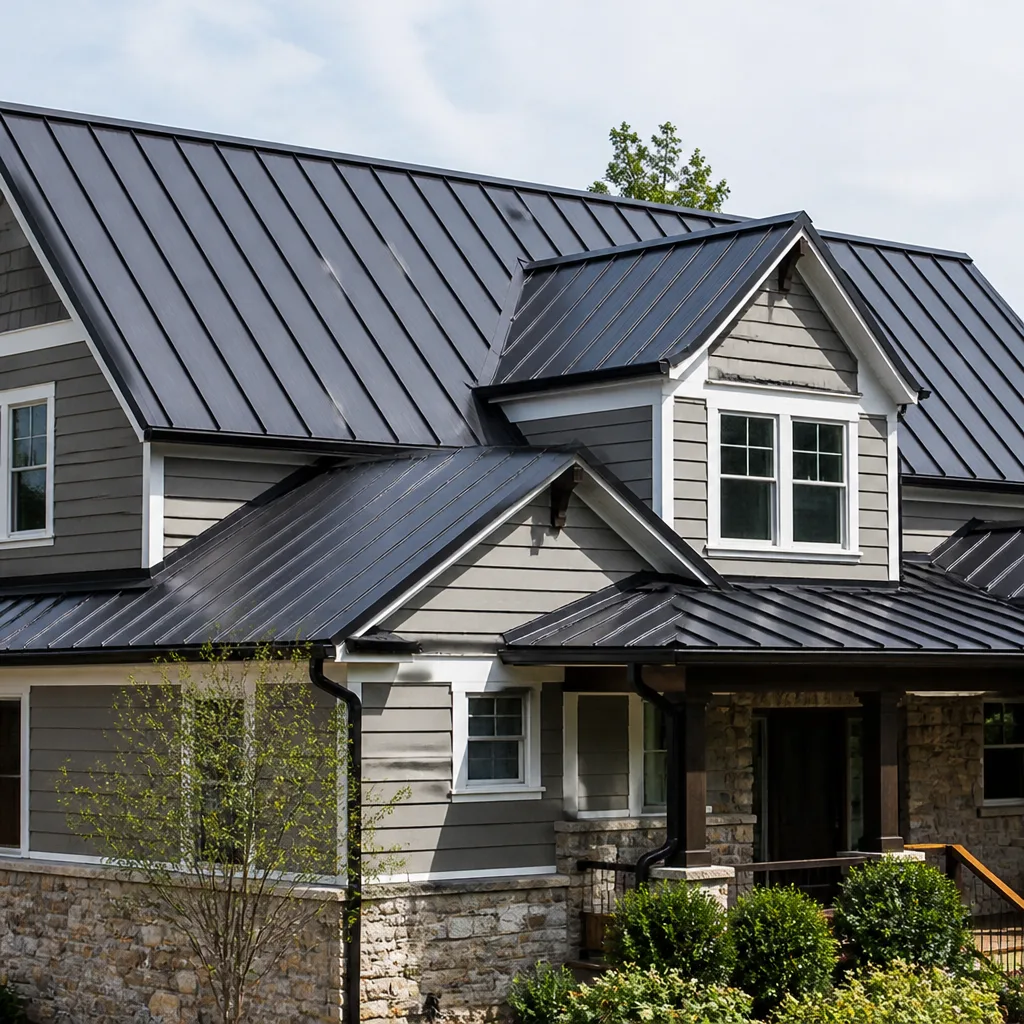 Metal roofing
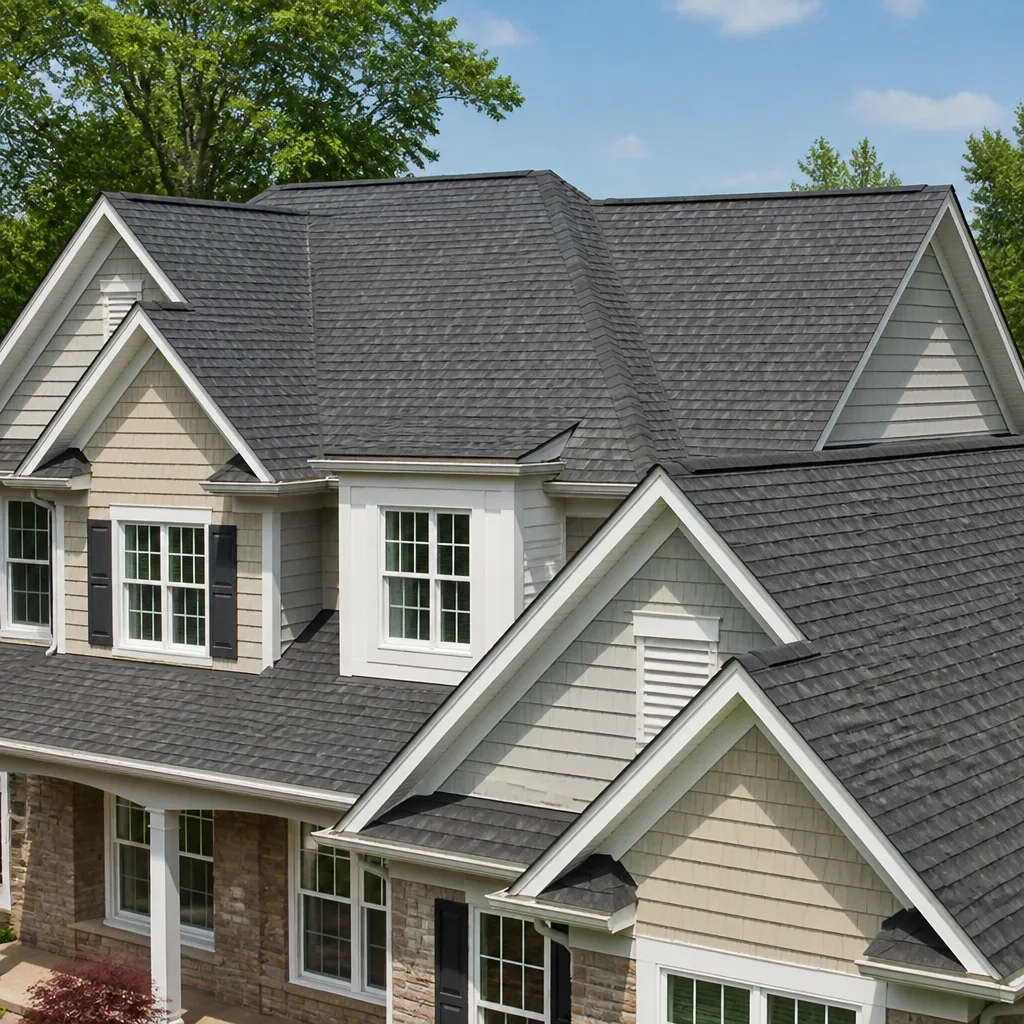 Architectural shingles
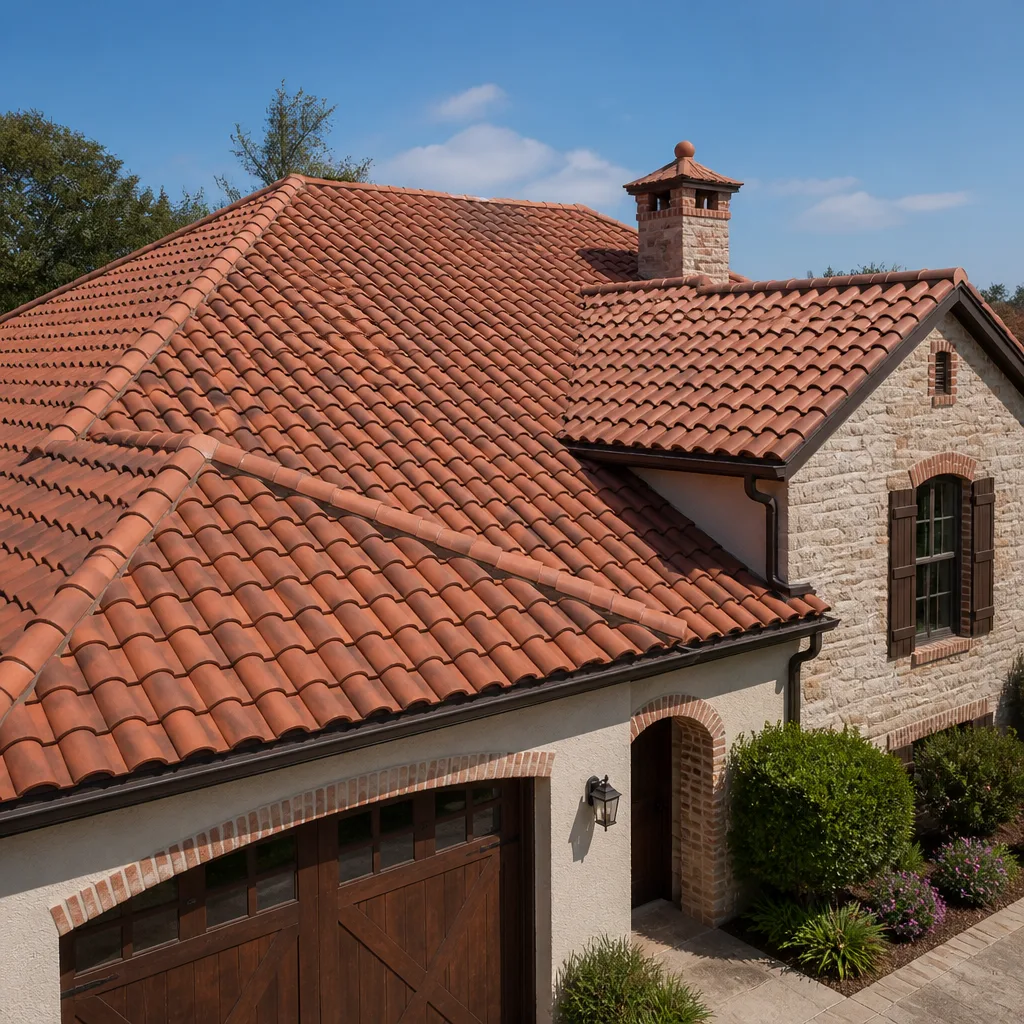 Tile roofing
 GAF
 Owens Corning
 Flat & low-slope
Free roof inspection with deck photos before we talk money - GAF and Owens Corning certified installation
The Complete Metal Roofing Guide for Winchester Homeowners
Winchester gets roughly 294 days of sun a year. A dark asphalt roof in that environment isn’t just an aesthetic choice – it’s a heat load your HVAC is fighting every afternoon from May through October. Most metal roofing advice you’ll find online was written for coastal buyers worried about rain, and it misses the three things that actually matter here in the high desert: radiant heat rejection, wind uplift, and UV degradation. This guide covers how metal roofing performs in Winchester’s climate, what standing seam and exposed-fastener panels really cost, how Clark County’s wind zone shapes the spec, and where metal over an existing asphalt roof makes sense versus where it’s a shortcut that hides a problem.
Quick Answer
Metal roofing in Winchester typically runs $12,000 to $28,000 for a standard single-family home, depending on panel type, roof complexity, and whether the old roof comes off. Standing seam costs more than exposed-fastener panels but earns its price in a high-desert climate through radiant heat rejection, wind uplift resistance, and not powdering away under UV the way asphalt does. A metal roof is a 40-plus-year investment here; a 30-year architectural shingle often lasts closer to 18 to 22 years in Winchester’s sun.
Styles & brands we work with
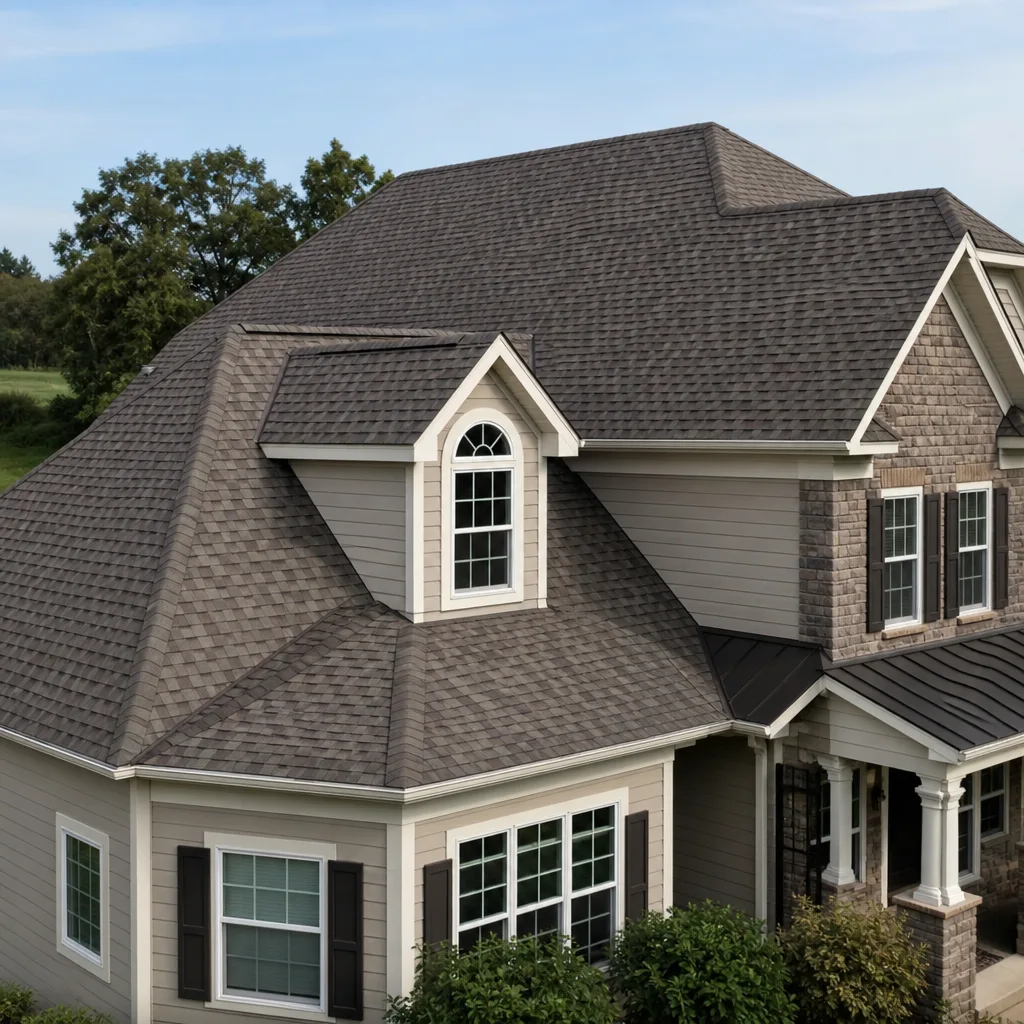
- Architectural shingles
- Metal roofing
- Tile roofing
- GAF
- Owens Corning
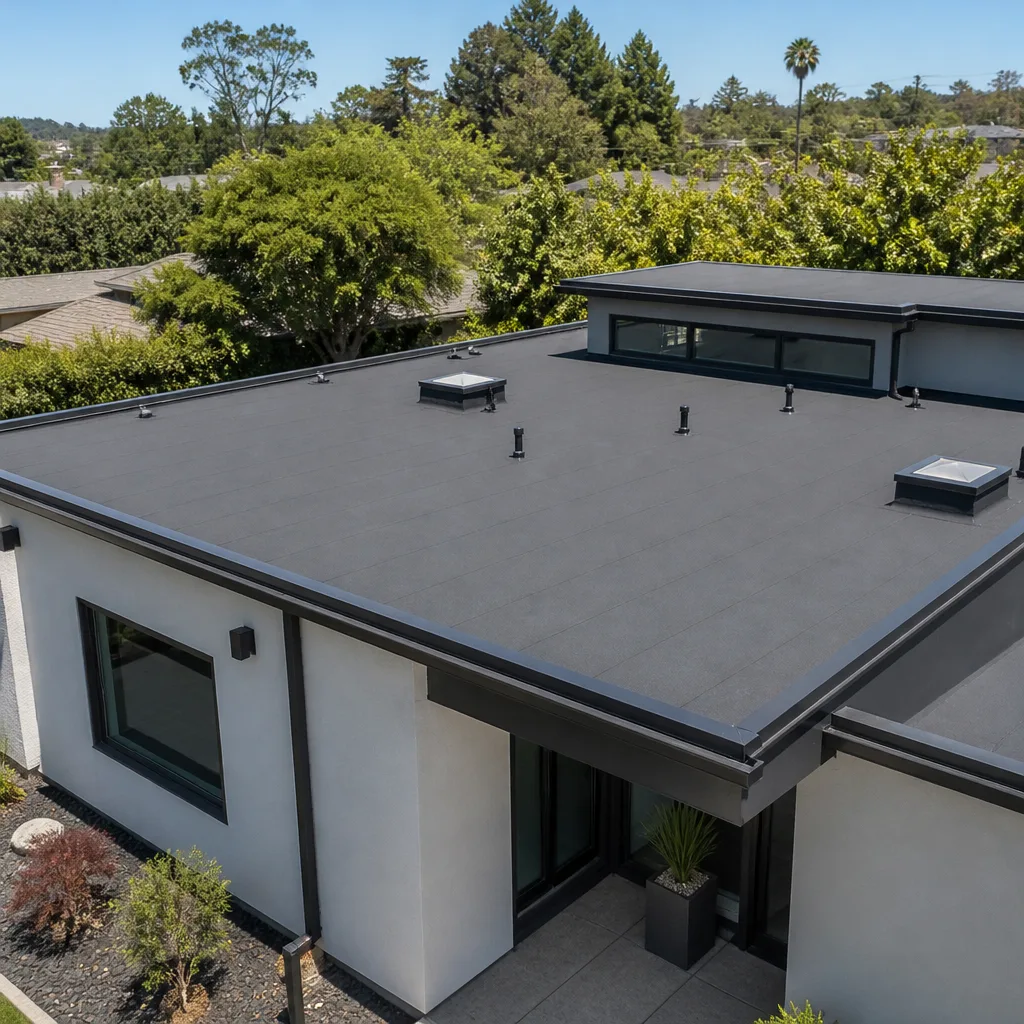
- Flat & low-slope
Table of Contents
- How Solar Reflectance Actually Plays Out in a Nevada Energy Bill
- Standing Seam vs. Exposed-Fastener Panels: Which We Recommend
- Wind Uplift Ratings and Clark County’s Wind Zone
- Metal Over an Existing Asphalt Roof: Smart or Shortcut?
- The 20-Year Cost Comparison Against Architectural Shingles
- Common Mistakes We See in Winchester
- What You Can Check Yourself (And What You Shouldn’t)
- What We See on Winchester Roofs Every Summer
How Solar Reflectance Actually Plays Out in a Nevada Energy Bill
A manufacturer spec sheet tells you a metal roof has a solar reflectance index of 0.75. What it won’t tell you is what that number does to your attic temperature on a Tuesday in July in Winchester. That’s the part that matters, and it’s the part most roofers skip when they hand you a brochure.
Here’s the plain version. SRI measures how well a surface reflects solar energy and releases what it absorbs. A dark asphalt shingle sits around 0.05 to 0.10. A light-colored metal panel rated for cool-roof performance can hit 0.65 to 0.85. The gap is enormous, and it doesn’t stay on the surface – it moves into your attic.
On a Winchester roof under direct afternoon sun, an asphalt surface can reach 160 to 180 degrees. Attic air above an asphalt roof commonly climbs 25 to 40 degrees hotter than outside air. Metal with proper underlayment and ventilation tends to run cooler, and the attic follows. We’ve had homeowners tell us their upstairs rooms stopped baking by 4 p.m. the summer after the switch. We don’t promise a specific dollar figure on an energy bill – nobody honest can, because it depends on your insulation, your HVAC, and how much shade you have – but the direction is real and consistent.
Two things make the SRI number work harder in Winchester than it would in a wetter climate:
- You get far more sun-hours for the reflectance to matter. 294 days is a lot of afternoons.
- The heat buildup is dry heat. There’s no regular rain to cool the surface between cycles, so the roof runs hot more often.
If your goal is a real cool-roof benefit, the panel color matters as much as the material. A dark charcoal standing seam still beats asphalt on durability but gives back most of the reflectance advantage. In a desert, a lighter color is the honest choice for the energy argument. If you’re shopping, ask the bidder for the actual SRI and the atticside heat data, not just “it’s a cool roof.”
For a broader look at the roof system as a whole, our Shepherd & Sons Roofing Winchester home page lays out the full scope of what we install.
Standing Seam vs. Exposed-Fastener Panels: Which We Recommend
For a residential roof in Winchester, we recommend standing seam for most homes. Exposed-fastener panels are a real option and often the right one, but you need to know exactly what you’re trading before you sign.
Standing seam panels fasten with concealed clips, so no screw head ever penetrates the roof surface. The seams are raised and crimped or snapped together. That design is why standing seam is the default choice on desert roofs where thermal movement is constant – a roof that swings from 40 degrees in January to 170 on the surface in July will expand and contract dozens of times a year, and a concealed fastener system handles that movement better than a field of screws going through the panel.
Exposed-fastener panels (often called through-fastened or corrugated panels) screw straight through the metal, with the screw head sealed by a washer. They cost less up front, they’re faster to install, and on the right building they last decades. The trade is that the gasketed screws become the weak point. In Winchester, UV breaks down the neoprene washers over time, and the repeated thermal cycling backs screws out slightly. That’s not a reason to avoid them – it’s a reason to know the maintenance cycle going in.
How we decide, in plain terms
- Roof complexity. Lots of hips, valleys, and dormers favor standing seam, which forms and runs long lengths cleanly. Simple gable roofs can go either way.
- Home value and how long you’ll stay. If this is the last roof you’ll buy, standing seam returns the durability. If it’s a shop building or a rental, exposed-fastener can pencil out.
- Color and reflectance goal. Both come in cool-roof rated finishes, but standing seam holds a clean look longer in a dusty environment.
- Wind zone. More on this next, but the fastener pattern and panel gauge you need can push the decision.
We set panels from Boral and comparable manufacturers, and we’ll name the profile and gauge before you commit. If you want the full product picture, our Metal Roofing in Winchester page covers finish options and panel profiles in more detail.
Wind Uplift Ratings and Clark County’s Wind Zone
A roof’s wind rating is earned by its nailing or fastening pattern, not by the shingle or panel wrapper. That’s the sentence most homeowners never hear, and it’s the one that decides whether a metal roof stays put in a Winchester microburst.
Clark County sits in a wind zone that demands real attention to uplift. Around Winchester, you’re exposed to gusts off the open desert, and late-summer storms can bring sudden downdrafts. Building code in the area references design wind speeds that a roof assembly has to withstand, and the way you meet that number is through the fastener schedule – how many, how far apart, how deep into the deck.
What to specify
- Panel gauge. For residential metal in this wind zone, a heavier gauge panel resists oil-canning and uplift better than a lighter one. Ask the exact gauge and don’t accept “standard.”
- Fastener pattern. Standing seam clips are spaced according to the engineer’s uplift calculation, and wide panels at high wind speeds need closer clip spacing at the perimeter and corners.
- Edge and ridge attachment. Uplift concentrates at the perimeter. The eave, rake, and ridge fastening matter as much as the field.
- Deck attachment. The panel is only as strong as what it’s screwed to. We check deck nailing before we ever talk panels.
Here’s the part competitors miss: a manufacturer’s wind rating is tested on a specific assembly. Change the clip spacing or the deck attachment and you’re off the tested assembly. That’s why we count and document the fastening pattern on every metal job, and why we won’t let a bidder quote a wind rating that doesn’t match what they plan to install.
Metal Over an Existing Asphalt Roof: Smart or Shortcut?
Going over an existing asphalt roof with metal is sometimes smart and sometimes a shortcut. The difference comes down to the deck, and we run a deck condition test before we ever recommend it.
The upside of a metal-over-asphalt install is real. You avoid a full tear-off, you save on disposal fees, and the old shingles add a layer of underlayment. On a solid deck with a single layer of asphalt, that can be a sensible, money-saving path. Metal panels are light enough that the added dead load usually isn’t a problem.
The downside is what gets buried. A second layer traps heat and moisture against the deck. If the deck is soft, if there’s a leak you don’t know about, or if the existing roof has two or more layers, going over it hides a problem instead of fixing it.
The deck condition test we run first
- Walk the deck. We check for soft spots at the eaves, valleys, and around penetrations. Spongy deck means no overlay.
- Count the layers. One existing layer is a maybe. Two or more and you’re tearing off – no exceptions.
- Probe the wood. We pull a section to check for rot, delamination, and old water staining. Photos go to you before we talk money.
- Check the penetrations. Vents, chimneys, and skylights need to be flashed correctly with the new panel system, not just covered.
- Ventilation. A metal roof over asphalt changes the attic’s heat profile. We confirm you have adequate intake and exhaust before we cover anything.
In Winchester, we regularly see spring failures on older overlay attempts – the freeze-thaw cycle we get in the high desert plus the summer heat cracks the older shingles and the trapped moisture shows up as a stain on a ceiling. If we find that, we tell you. Our Roof Repair in Winchester page covers what a mid-life repair looks like versus a full replacement.
The 20-Year Cost Comparison Against Architectural Shingles
A 30-year architectural shingle roof sounds cheaper than metal until you run the numbers over 20 years. Here’s a realistic comparison for a standard single-family Winchester home, including the maintenance delta that most quotes leave out.
| Line Item | 30-Yr Architectural Shingles | Standing Seam Metal |
|---|---|---|
| Installed cost (standard home) | $9,000 – $15,000 | $16,000 – $28,000 |
| Expected service life in Winchester sun | 18 – 22 years | 40+ years |
| Maintenance over 20 years | Granule loss, occasional repairs, possible re-flash | Minimal; visual checks |
| Heat load on HVAC (higher is worse) | Higher | Lower with cool-roof color |
| Second replacement within 20 years | Likely near the end | No |
The math isn’t close when you look past the sticker. An architectural shingle roof in Winchester’s sun rarely hits its “30-year” label – UV and heat age it faster than a milder climate would. You’re likely budgeting for a second roof inside the first one’s advertised life. Metal doesn’t powder away under UV, and it doesn’t shed granules into your gutters.
Two numbers to keep in your pocket when you’re pricing:
- Ask every bidder how many squares they counted. A square is 100 square feet. If two bids differ wildly, the square count or the panel gauge is the reason.
- Ask for the warranty terms in writing – both the manufacturer’s finish warranty and the installer’s workmanship. They’re separate things.
Our Roof Replacement & Installation in Winchester page shows how we build the quote as line items, so you can see exactly where the money goes.
Common Mistakes to Avoid
- Buying the wind rating, not the fastener pattern. A panel’s tested rating means nothing if the installer doesn’t match the clip spacing and deck attachment that earned it. Ask for the fastening schedule in writing.
- Overlaying a two-layer roof. Going over a single layer of asphalt can be smart. Going over two traps heat and moisture against the deck and hides rot you’ll pay for later. We’ve seen this fail in Winchester within a couple of summers.
- Choosing a dark color for a cool-roof goal. A charcoal panel is durable but gives back most of the reflectance. If you want the energy benefit, pick a lighter finish and ask for the actual SRI number.
- Skipping the deck inspection. A metal roof on a soft deck is a problem covered with an expensive lid. Insist on a deck check and photos before the panel goes on.
- Ignoring attic ventilation. A metal roof changes the heat profile of the attic. Without adequate intake and exhaust, the cooler surface is wasted.
- Hiring the storm chaser with no local address. Ask where the shop is and look up the license. If the answer is vague after a hailstorm, that’s your answer.
- Signing before you have line-item pricing. A single number on a card tells you nothing. Get the panels, the underlayment, the tear-off, and the flashing priced separately.
See the difference
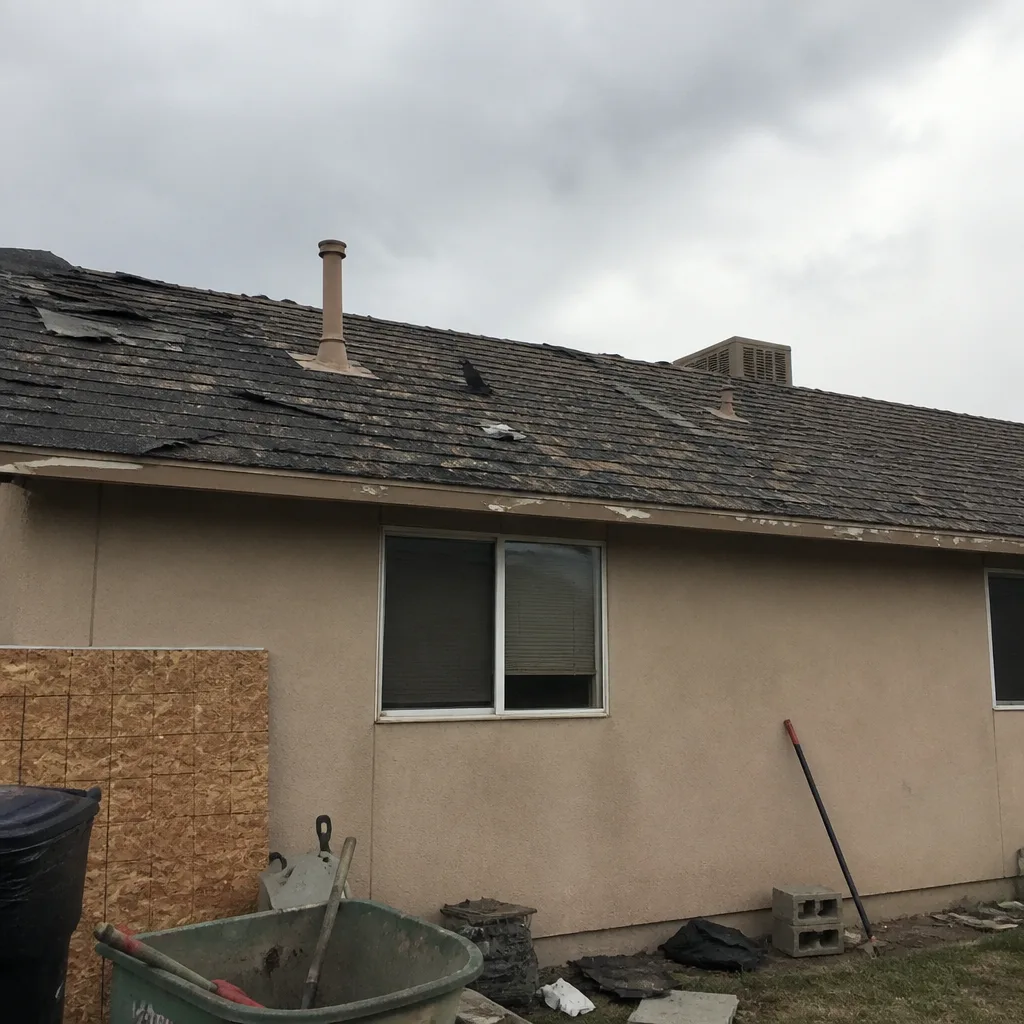 Before
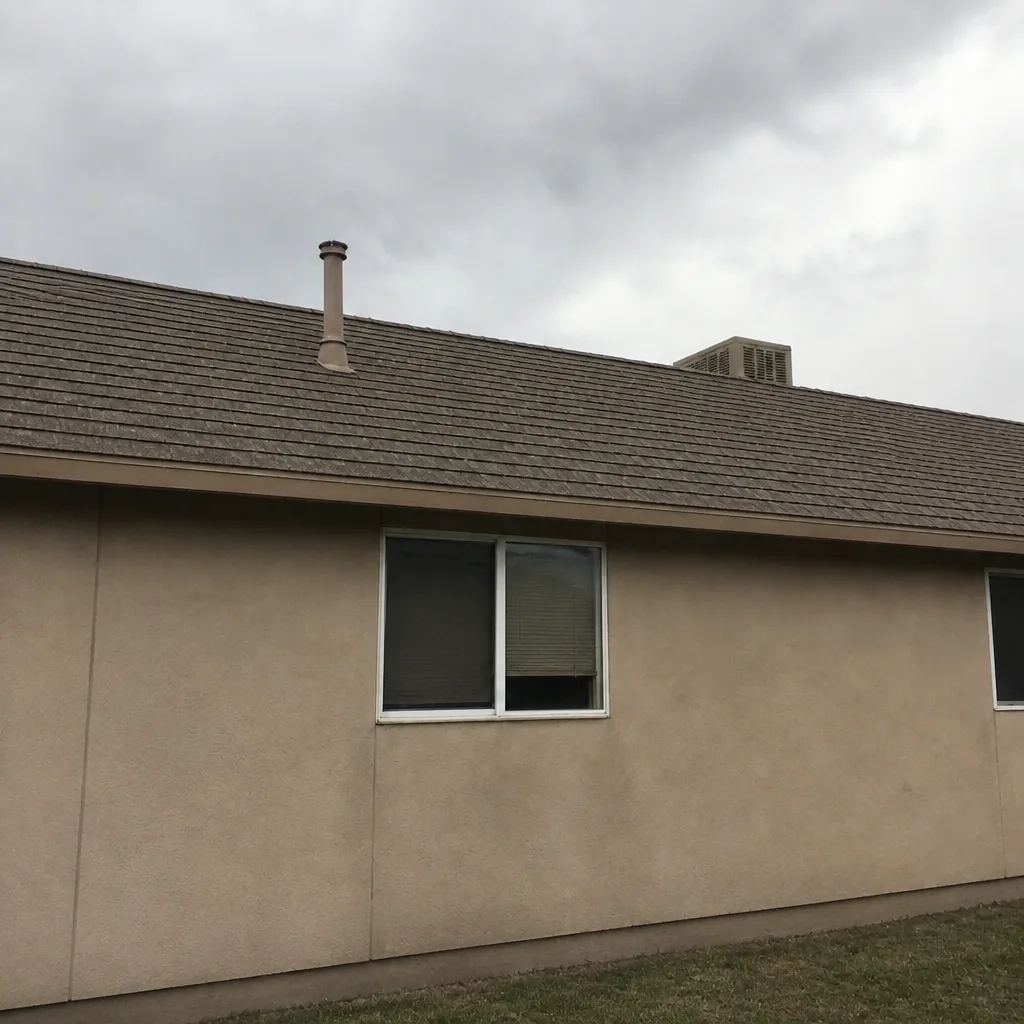 After
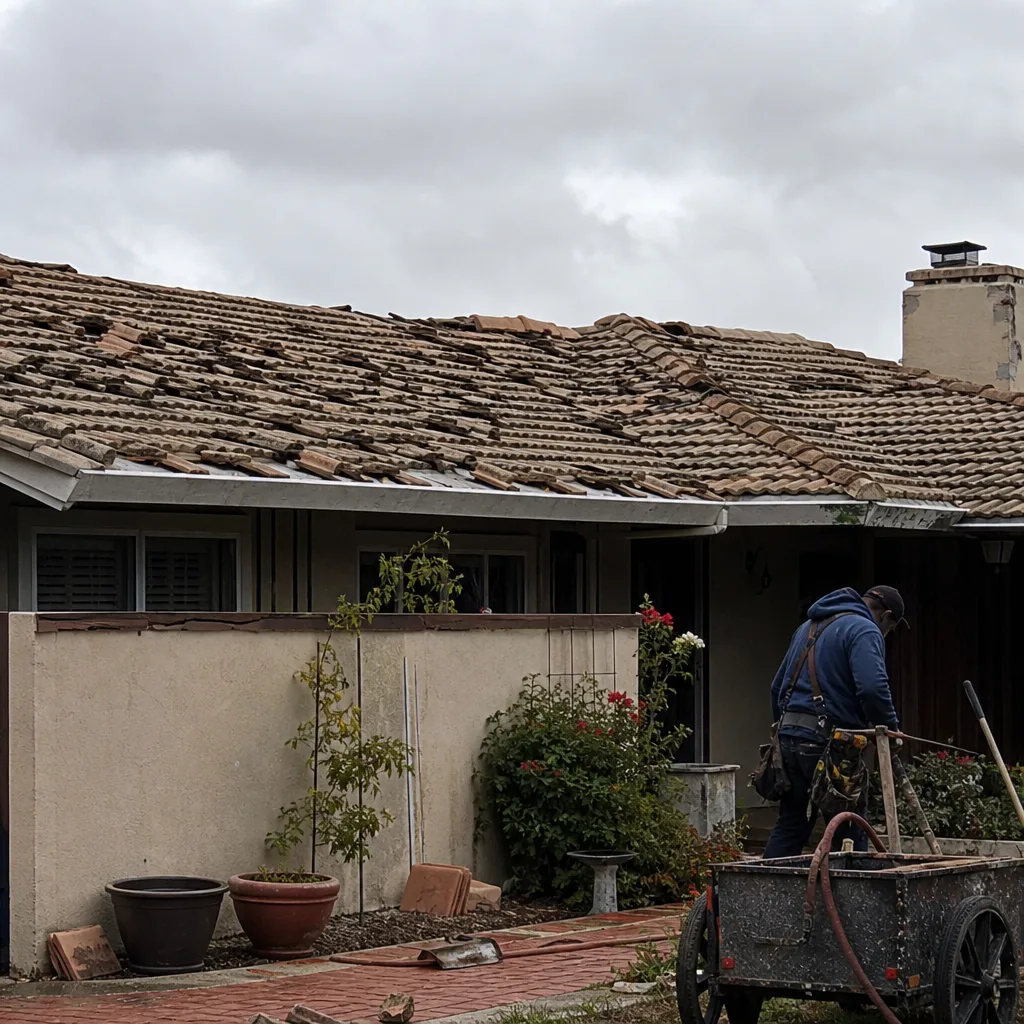 Before
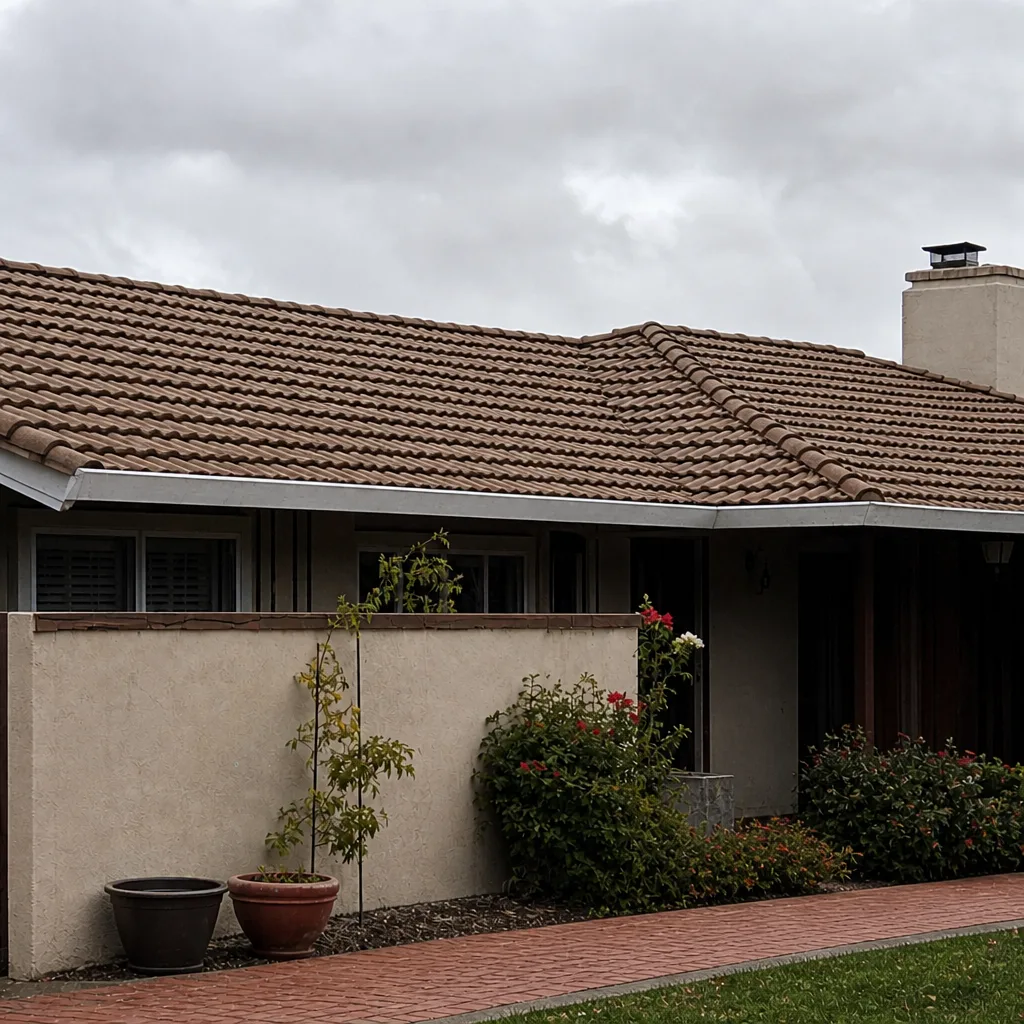 After
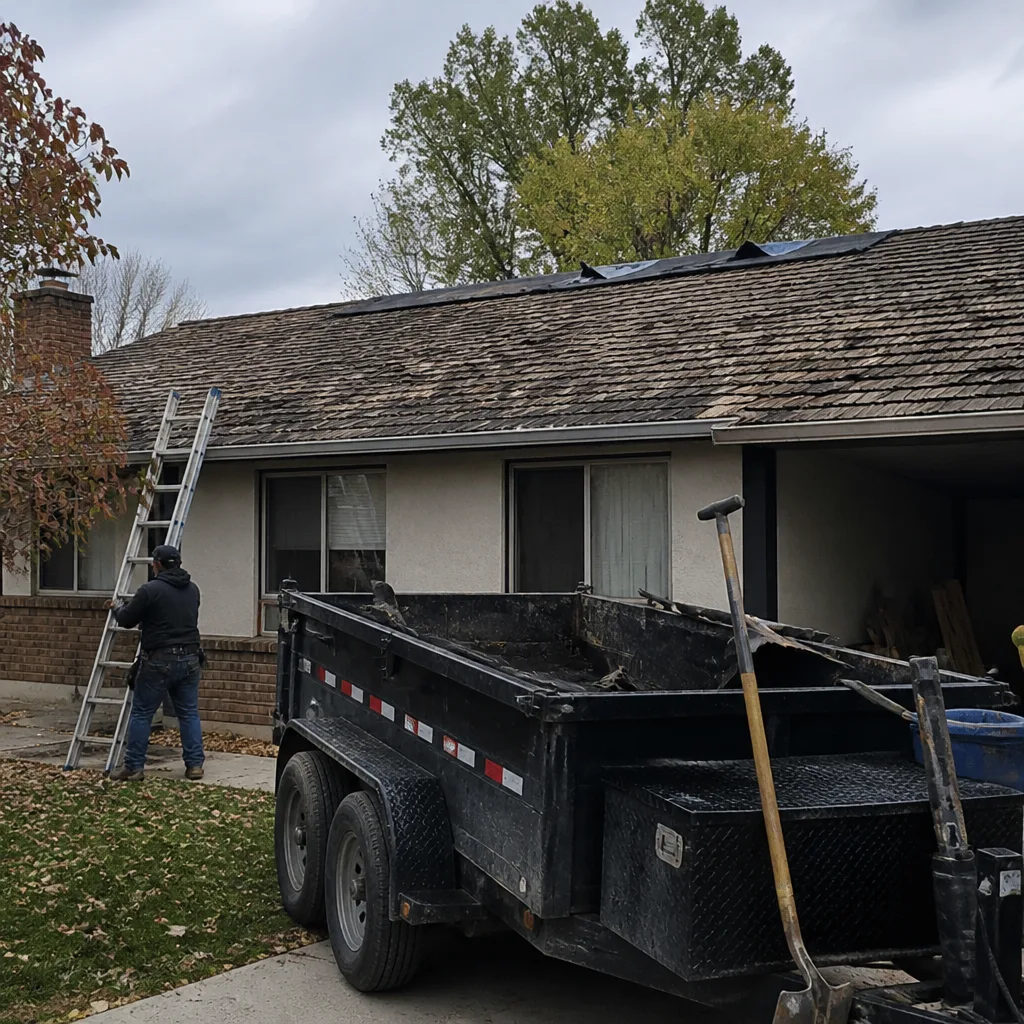 Before
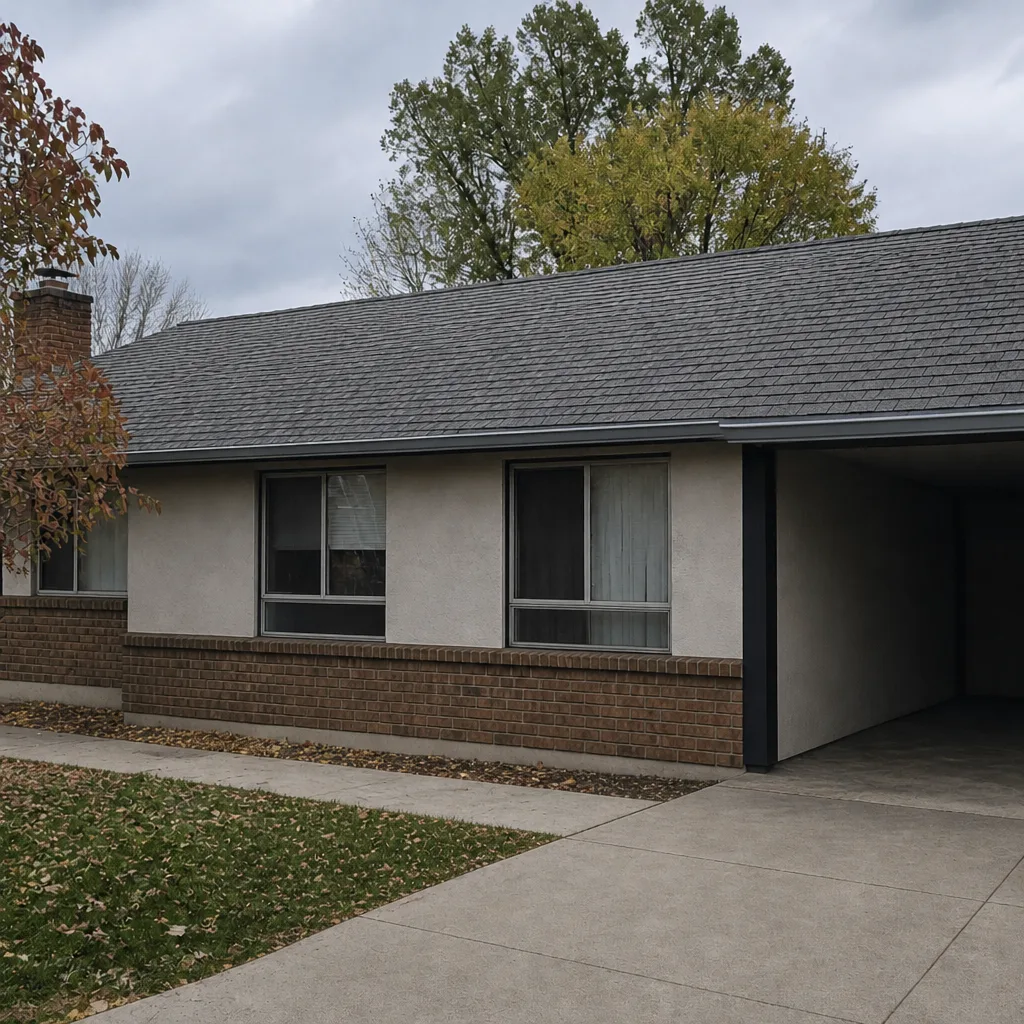 After
When to Call a Professional
Some things you can look at yourself. Some will hurt you. Call a professional if you see granule pileup in your gutters after a shingle roof ages, water staining on a ceiling after a storm, popped or backed-out screws on an existing metal roof, or any soft spot when you walk the roof from a ladder at the eave. Call, too, if an overlay was done years ago and you’re now seeing a stain on the ceiling below it – that’s the trapped-moisture failure that overlay shortcuts cause, and it needs a real inspection, not a patch. Metal panels carry an electrical and fall risk during work, and a roof and a ladder in the desert heat is a bad combination for an afternoon DIY project. Shepherd & Sons Roofing Winchester offers free estimates in Winchester – call (844) 797-8167. We’ll show you the deck photos before we talk money.
What You Can Check Yourself (And What You Shouldn’t)
You can and should do a visual check twice a year – spring before the heat and fall after the monsoon season. Here’s what that looks like safely, from the ground or a ladder at the eave.
- From the ground: look for lifted or wavy panels, popped screws, dents, rust streaks, or debris caught against the panels.
- From a ladder at the eave: check for loose flashing at the eave, gaps at the rake, and anything loose at the ridge.
- In the attic: look for daylight or water staining on the deck and around penetrations. Check that vents aren’t blocked.
What you shouldn’t do: climb onto a metal roof in the heat, walk near the ridge, or try to re-screw or re-seal panels yourself. Metal panels are slick when dust-coated and hot enough to burn through a thin sole. A missed fastener or a bad seal can leak into the deck for a year before you notice. That’s a job for the crew.
What We See on Winchester Roofs Every Summer
We’ve been on a lot of Winchester roofs, and the patterns repeat. In the older neighborhoods, we see asphalt roofs that are granule-starved by year 16 and homeowners surprised they’re looking at a replacement. On the newer builds, we see metal systems installed with a lighter gauge panel and a fastener pattern that didn’t match the wind zone – the panel is fine, the attachment was the shortcut. In Natomas-adjacent and rural fringe properties, we routinely find overlay attempts from a previous owner where the trapped moisture is only now showing up as a ceiling stain.
That’s the reason we do the deck check and the fastener count on every bid. A metal roof is a 40-year decision in Winchester’s sun, and the details that earn that life aren’t on the brochure – they’re in the panel gauge, the clip spacing, the underlayment, and the condition of the deck underneath. We repair, replace, and install, back every roofing job with our written 90-Day Done Right Promise, and we’ll give you a free second opinion on any written estimate you’ve already got. Same address since 1996, name on the truck, name on the license.
Frequently Asked Questions
Metal roofing in Winchester typically runs $12,000 to $28,000 for a standard single-family home, with standing seam at the higher end and exposed-fastener panels at the lower end. Roof complexity, panel gauge, and whether the old roof is torn off all move the number. Call (844) 797-8167 for an exact quote – estimates are free.
It can, but the honest answer depends on your panel color, underlayment, attic ventilation, and insulation. A lighter cool-roof metal panel reflects far more solar energy than dark asphalt, which lowers attic temperature through the hot months. Nobody can promise a specific dollar figure without inspecting your home, and any roofer who does is guessing.
For most residential homes in Winchester, we recommend standing seam because the concealed clips handle the constant thermal expansion and contraction of high-desert temperature swings better than exposed screws. Exposed-fastener panels are a real option and can pencil out on simpler roofs or outbuildings, as long as you plan for the washer maintenance cycle.
Sometimes. It’s a sensible path when you have a single layer of asphalt and a solid deck with no soft spots or hidden leaks. It’s a shortcut if the deck is failing, if there are two or more layers, or if the penetrations aren’t flashed correctly – and a shortcut we won’t take. We run a deck condition test and show you the photos before recommending overlay.
Not if the deck is what we inspected. We build the quote as line items after the deck check and walk-through, and we put it in writing. If we open the roof and find something the inspection couldn’t see, we stop and talk to you before doing anything that changes the number. That’s what a written quote and the 90-Day Done Right Promise are for.
A properly installed metal roof should last 40 years or more in Winchester, provided the panel gauge and fastener pattern match Clark County’s wind zone and the deck underneath is sound. A 30-year architectural shingle often lasts closer to 18 to 22 years here because UV and heat age it faster than a milder climate would.
Yes. Roof replacements and installations that require permits get pulled, and we handle the inspection. We do the work under a published address and license number, so you know who’s accountable. Call (844) 797-8167 to talk through your project – estimates are free.
The Bottom Line
Metal roofing is the right call for a lot of Winchester homes, but not for the reason the coastal brochures give. In a high-desert climate with 294 days of sun, the value is in radiant heat rejection, wind uplift resistance, and not breaking down under UV the way asphalt does. Standing seam handles thermal movement better than exposed-fastener for most houses here. The fastener pattern and panel gauge earn your wind rating, not the label. And the deck underneath decides whether an overlay is smart or a shortcut. Get a line-item quote, ask for the square count and the gauge, and insist on deck photos before money changes hands. If your current roof is aging out, our team can inspect it and lay out your options in plain language. Call (844) 797-8167 for a free estimate.
Written by the team at Shepherd & Sons Roofing Winchester.