
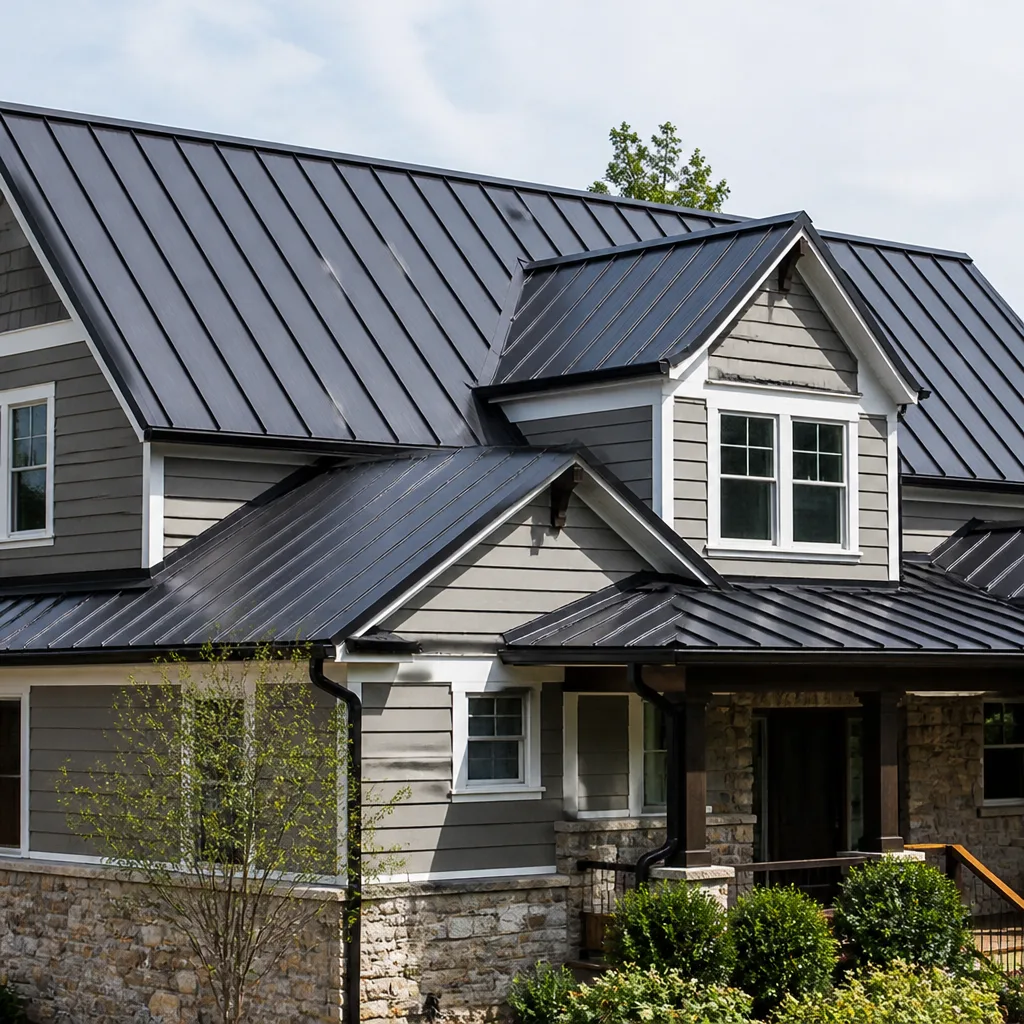
 Metal roofing
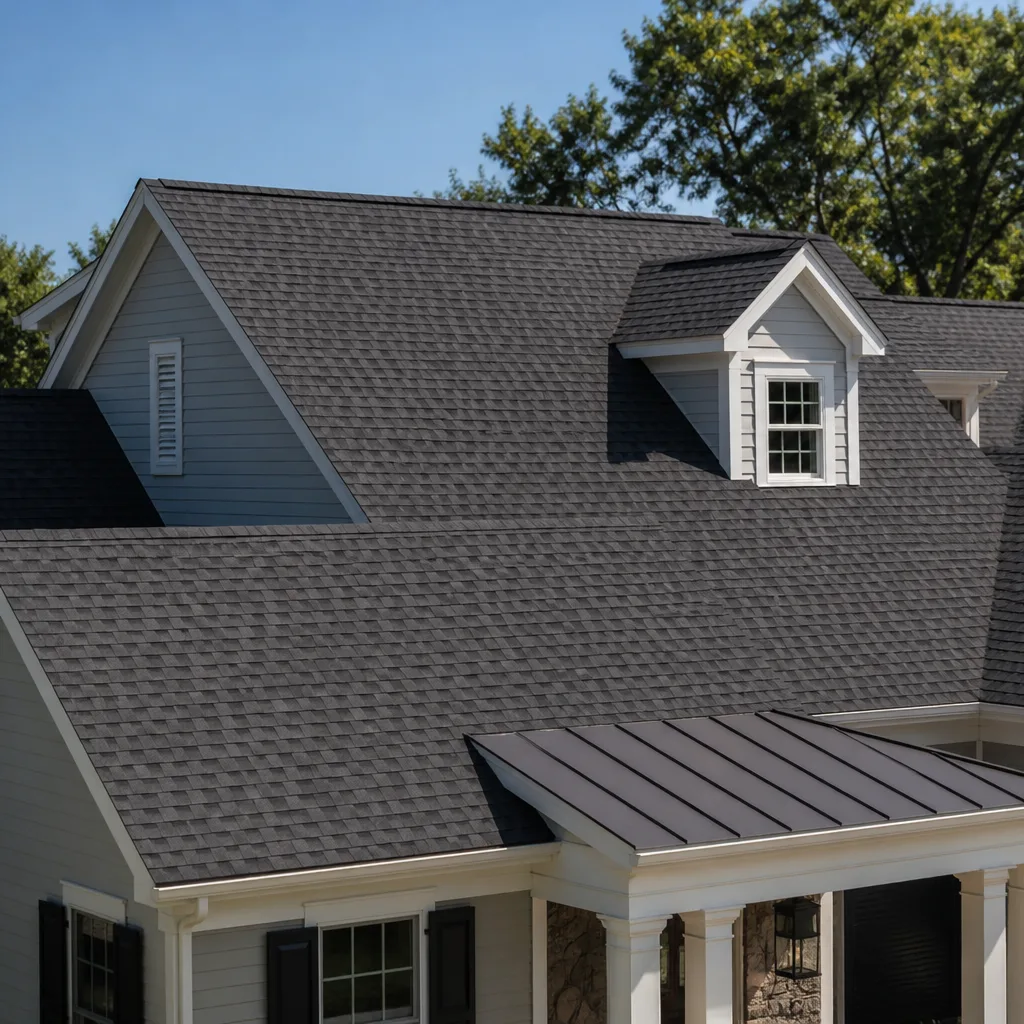
 Architectural shingles
 Tile roofing
 GAF
 Owens Corning
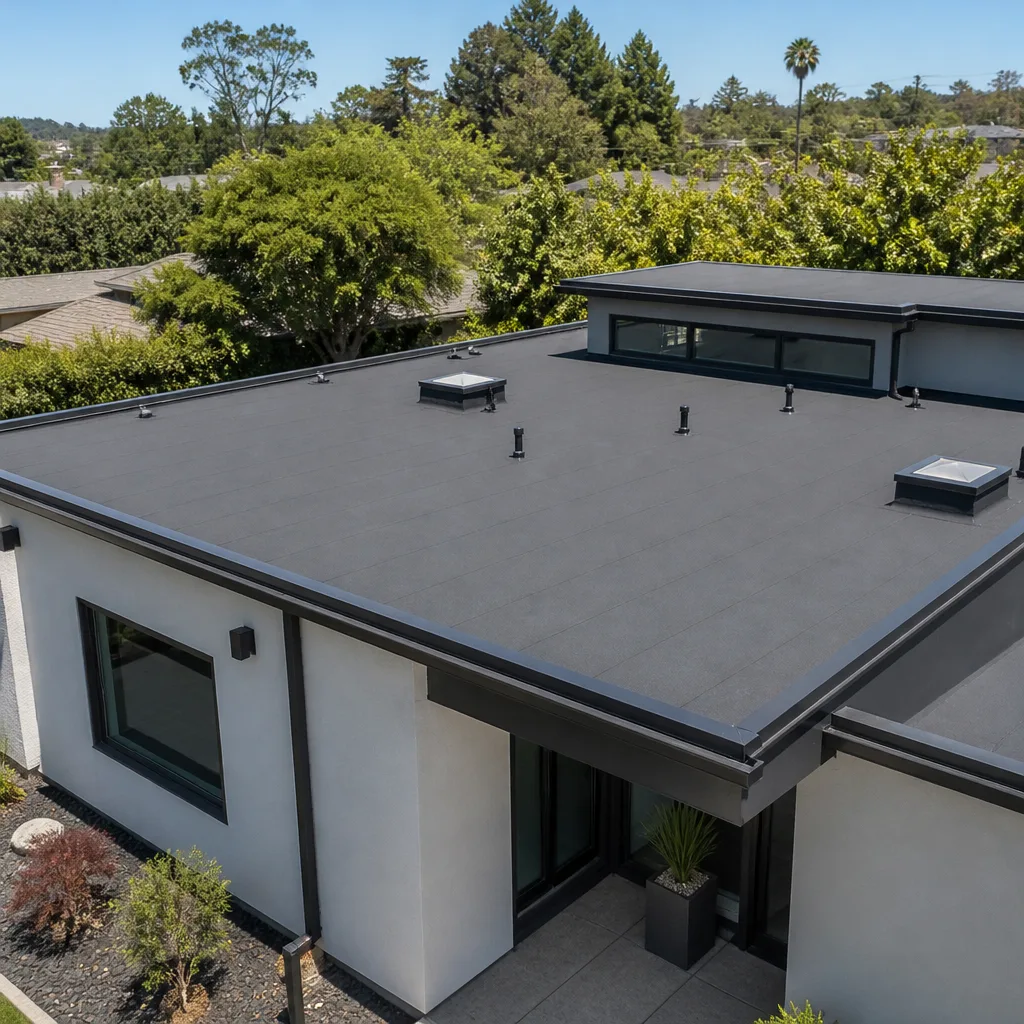 Flat & low-slope
Free roof inspection with deck photos before we talk money - GAF and Owens Corning certified installation
Styles & brands we work with
- Architectural shingles
- Metal roofing
- Tile roofing
- GAF
- Owens Corning
- Flat & low-slope
See the difference
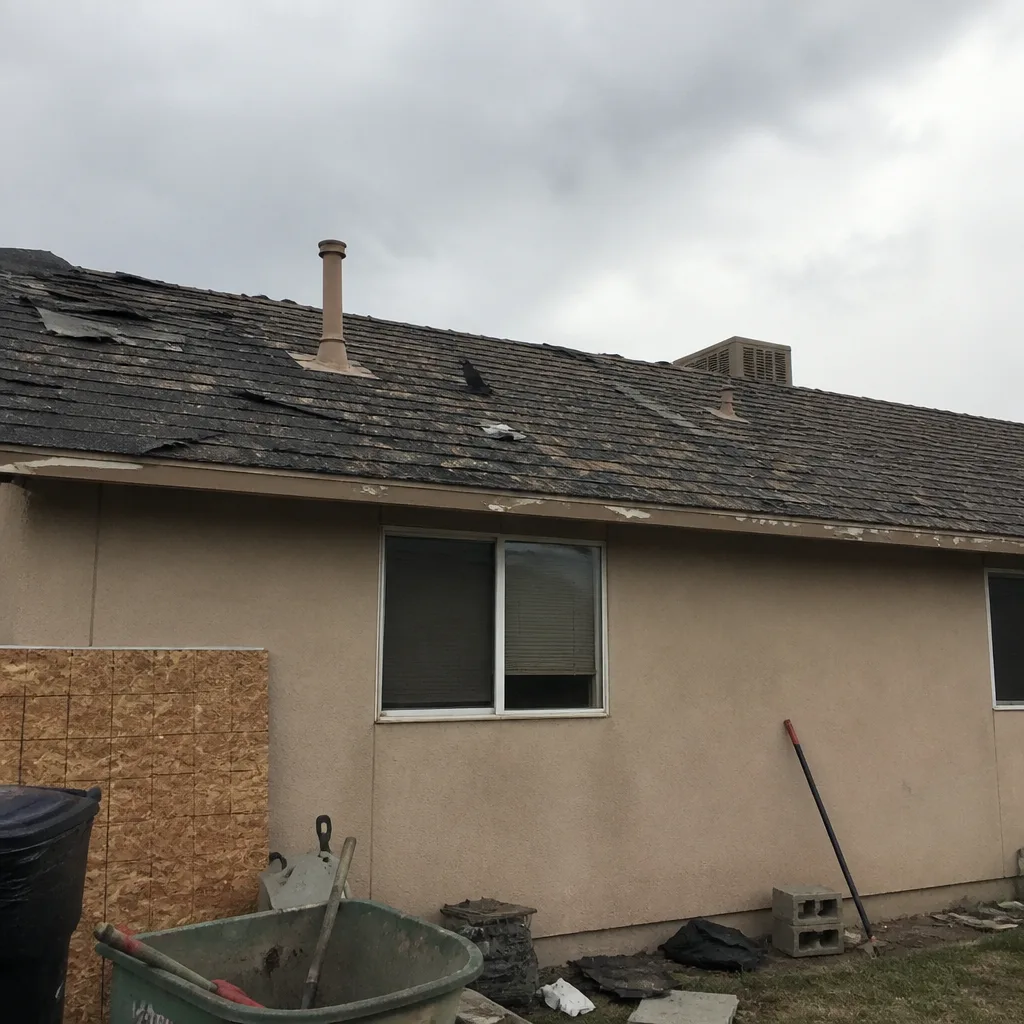 Before
 After
 Before
 After
 Before
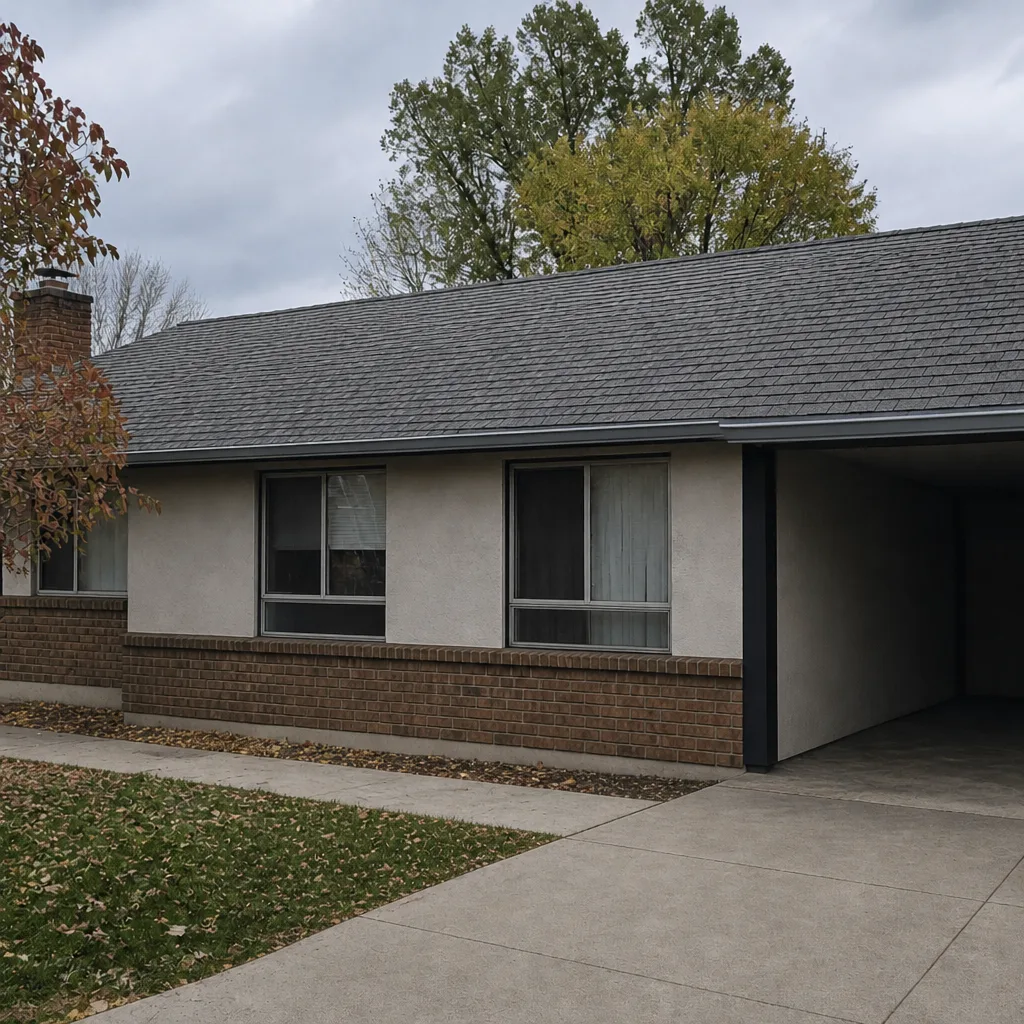 After
Roof Hail Damage Signs in Winchester, NV: What to Look For Before the Next Storm Finds You
The signs of roof hail damage are granule loss in your gutters and downspouts, dents or soft spots on shingles, bruised mat under the granules, and cracked or exposed fiberglass – not the dent you can see from the driveway. In Winchester, that damage can sit quietly for 12 to 18 months because we get almost no rain to test it. If a rare monsoon finally finds the bruise before you do, you’ll be calling us on a wet roof instead of a dry one. Call (844) 797-8167 and we’ll take a look while things are still dry and documentable.
Most homeowners here find out they have hail damage the hard way: a monsoon shows up six months after the hail did, and suddenly there’s a water stain on the ceiling that wasn’t there last week. Here’s how to catch it first.
Why hail damage in Winchester stays hidden so long
Our desert does something to roof damage that wetter climates don’t. Hail bruises the shingle mat and knocks the granules loose, but with near-zero annual rainfall, nothing forces the failure into the open. There’s no steady drizzle soaking through the bruise, no drip in the hallway reminding you to call somebody. The damage just waits.
That’s the part storm-chasers don’t explain when they knock on your door three days after a hailstorm. A bruised shingle in Winchester can look fine for over a year, then fail all at once during the first real rain. By then the evidence on the roof may have weathered into something an adjuster can argue about. That’s why catching the signs early – while the granules are still fresh in your gutters and the bruises are still soft – matters more here than it does almost anywhere else.
The first sign you’ll actually notice: granules in the wrong place
You don’t need to climb a ladder to find hail damage in Winchester. You need to look at what’s washing off your roof. In a desert with this little rain, any real accumulation of dark granules in these spots is telling you something:
- Your swamp cooler drain line. Evaporative coolers cycle water off the roof constantly, and that runoff carries loose granules with it. A sudden surge of dark grit in the drain line or the pan is one of the earliest signs we see on Winchester roofs, and it’s the one almost nobody thinks to check.
- Gutter downspouts. Pull the bottom of a downspout and look at what’s piled up. Fresh dark granules after a hailstorm mean the shingle surface above them got sandblasted loose.
- The base of your downspout splashes. Dark grit staining the stucco or the concrete below a downspout is the same story told from a different angle.
One word of caution: some granule loss is normal wear, especially on the builder-grade 3-tab shingles that went up on most of these tract homes. A steady trickle of grit is age. A sudden burst of it after a storm is damage. If you can’t tell which one you’re looking at, that’s exactly the kind of thing we look at for free.
Hail bruise vs. heat crack: why the difference decides your claim
This is where Winchester roofers earn their keep, and where a lot of insurance claims get denied. Hail and our extreme summer heat leave two very different marks, and adjusters know the difference. If a roofer (or a homeowner) calls a thermal crack hail damage, the claim has a problem.
- Hail bruises are soft, roughly circular spots where the mat underneath the granules got crushed. They often show exposed mat in the middle, and the surrounding granules look knocked loose. They tend to cluster on the slopes that face the weather.
- Thermal cracks come from 100°F-plus summers baking the asphalt. They show up as straight-line splits or spider-web cracking, often across a whole slope, and they don’t have the soft, crushed center a hail bruise has.
Mixing the two up can sink an otherwise legitimate claim, and it can also lead you to replace a roof for heat damage you might have handled with a repair. When we’re up there, we photograph what we find – the deck, the bruising, the granule loss – and we show you the pictures before we talk about money. That way you’re looking at the same evidence the adjuster will see.
What to look for on the roof itself (from safely on the ground)
We won’t ask you to walk a roof. A single-story stucco tract home in Winchester is still a fall hazard, and the shingles are slippery when they’re baked. Here’s what you can spot without getting up there:
- Shingles that look dull, grainy, or darker in patches compared to the rest of the slope
- Lifted or curled edges, especially on the west-facing slopes where our spring winds hit hardest (gusts off the Sheep Range regularly reach 40 to 60 mph)
- Any softness you can feel by pressing gently upward on the underside of an eave or overhang
- Staining on the ceiling or walls after a rare rain – but by then the breach has been there a while
- Granules collecting in one concentrated band on the roof’s lower edge
If you see any of that, get it looked at. A bruise caught early is often a repair. A bruise caught after a monsoon is often a bigger job.
The HOA wrinkle in 89110 and 89142
Winchester’s tract neighborhoods come with an extra step that catches people off guard. Filing a claim and getting an adjuster-approved replacement is only half the job – the HOA still has to approve your roof color and material before anyone puts a shingle down. In these zips that means a submittal packet, and it means a wait. A lot of storm-chasing crews don’t mention that, and homeowners get caught stalled mid-claim.
We build the HOA approval into the timeline from the start and note it in writing so you’re not surprised. It’s part of why we answer the phone at night after a storm – we’ve been pulling these submittal packets in the same Winchester neighborhoods since 1996, and we’d rather walk you through it than let it derail your claim.
What hail damage repair costs in Winchester
Cost depends on how much of the roof is affected, the shingle type, and whether insurance is involved. Here are rough ranges based on what we see in the Winchester market:
| Job | Typical range |
|---|---|
| Spot repair of a few bruised shingles | $250 – $500 |
| Larger repair (one slope or section) | $500 – $1,200 |
| Full tear-off and replacement (mid-size tract home) | $9,000 – $16,000 |
| Insurance adjuster inspection (your call, no cost to you) | Free |
Those are ballpark numbers, not a quote. A roof is measured in squares – ask any bidder how many they counted, and the honest ones will tell you before they give you a number. We offer $40 off any repair over $200, and there’s no trip charge inside our own county. If a storm chaser already told you the whole roof is totaled, get a free second opinion on any written estimate before you sign anything.
For active leaks, missing shingles, or storm damage that needs immediate attention, our Emergency & Storm Damage in Winchester team is who you call.
FAQs
The first sign most Winchester homeowners notice is a sudden surge of dark granules in the gutter downspouts or the swamp cooler drain line, followed by dull or grainy patches on the shingles. Because we get so little rain, these signs show up long before any leak does. If you’re seeing granules come off in a burst rather than a steady trickle, call (844) 797-8167 for a free look.
Yes – it commonly does. With near-zero annual rainfall, a hail-bruised shingle has no water pushing through it, so the damage can sit quietly for 12 to 18 months until a rare monsoon finally finds the breach. That’s why checking for granules and soft spots after any hailstorm matters more here than in wetter places. Call us while the evidence on the roof is still fresh.
A hail bruise is a soft, roughly circular spot with crushed mat and exposed granules in the middle; heat cracking is a straight or spider-web split with no soft center, caused by the 100°F-plus summers. Mixing them up can get a legitimate claim denied, or pay for a replacement when a repair would do. If you’re unsure which you’re looking at, we’ll take a look and show you the photos – (844) 797-8167.
In most of Winchester’s HOA tracts – especially the 89110 and 89142 neighborhoods – yes, you do. Even after your adjuster approves the claim, the HOA has to sign off on the roof color and material before work begins. We build that approval into the timeline and note it in writing so your claim doesn’t stall. Call (844) 797-8167 and we’ll walk you through the submittal.
If you’d rather have it looked at, Shepherd & Sons Roofing Winchester offers a no-pressure assessment in Winchester – we’ll check the granules, photograph what we find, and give you a straight answer before anybody talks money. Call (844) 797-8167 for a free estimate, and if the phone rings after dark, a real person picks up.
Written by the team at Shepherd & Sons Roofing Winchester, serving Winchester, NV.