
Last updated November 17, 2026
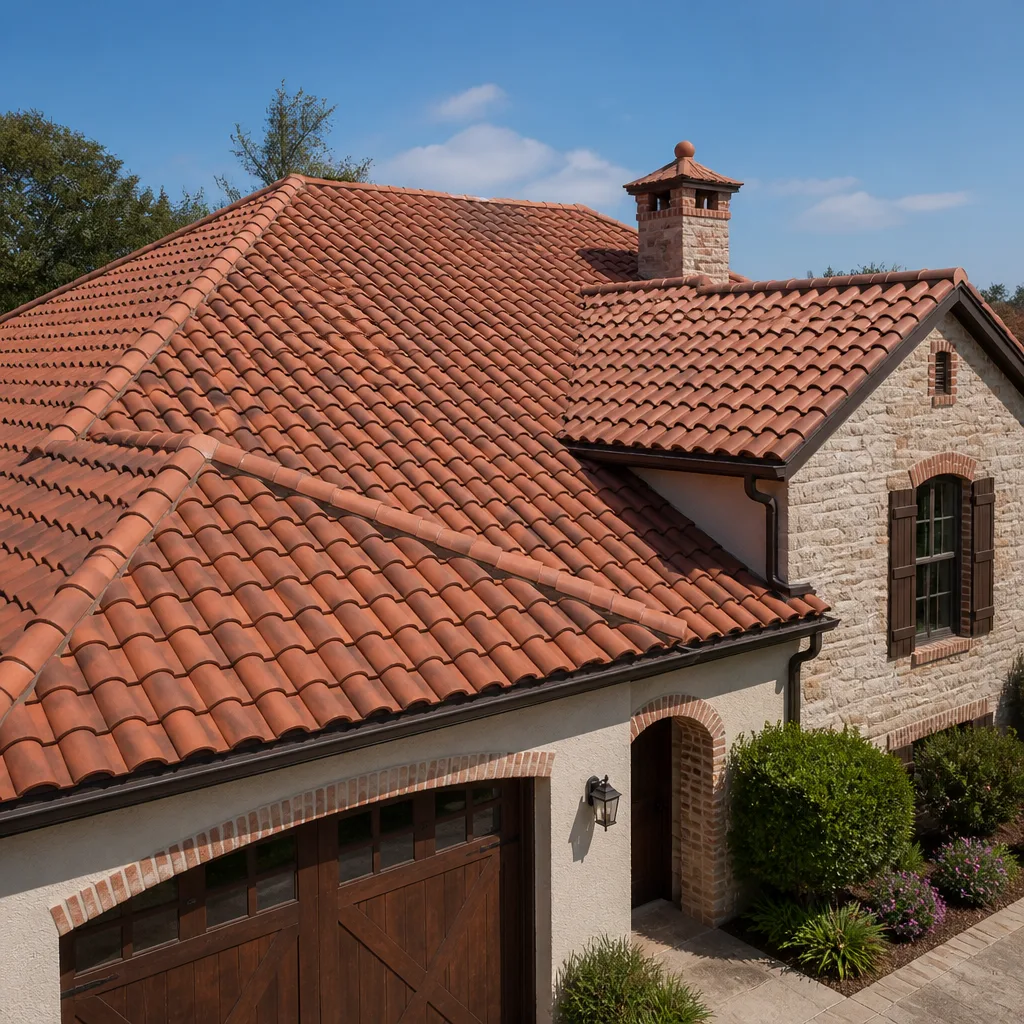 Tile roofing
 Architectural shingles
 Metal roofing
 GAF
 Owens Corning
 Flat & low-slope
Free roof inspection with deck photos before we talk money - GAF and Owens Corning certified installation
DIY vs Professional Tile Roofing: What’s Safe to Do Yourself
A single cracked field tile isn’t a disaster. But here’s what most guides don’t tell you: the crack you caused walking across the roof to fix something else can let water sit under the tile for two years before you ever see a stain on your ceiling. We’ve pulled tiles off Winchester roofs and found the wood beneath them soft as a sponge, with a homeowner standing six feet away wondering why. Tile punishes do-it-yourselfers not through bad workmanship but through body weight. This guide is about where to put your feet, what’s genuinely safe to touch, and where the smart money says stay off entirely.
Quick Answer
Only a narrow set of tile roof tasks is genuinely safe for a homeowner: clearing debris from the roof surface and gutters, checking flashing from the ground with binoculars, and replacing a single broken field tile on a low, accessible roof with the right tools. Everything else, from re-nailing ridge caps to resealing flashing to anything touching a valley, belongs to a trained roofer. The main danger isn’t skill, it’s the fact that tile will crack underfoot even when you think you’re being careful, and those hidden cracks cause slow water damage that shows up in six months to two years.
Styles & brands we work with
- Architectural shingles
- Metal roofing
- Tile roofing
- GAF
- Owens Corning
- Flat & low-slope
Table of Contents
- Why Tile Punishes Walkers More Than Asphalt Does
- The Safe Walking Routes on a Tile Roof
- What You Can Actually Do Yourself
- Tasks That Look Simple But Cost Thousands
- Tools a Homeowner Needs vs. What a Roofer Brings
- Warranty and Liability If You DIY
- Common Mistakes to Avoid
- Frequently Asked Questions
Why Tile Punishes Walkers More Than Asphalt Does
Asphalt shingles forgive a misplaced foot. Tile does not. A clay or concrete tile is a brittle plate held on a batten, and it fails under point load the same way a dinner plate fails when you step on its center. The visible crack across the top is only half the story. The real problem is flex: when a tile bends under your weight and springs back, it often flexes the underlayment beneath it just enough to open a small breach. Water gets in and can’t get out. It sits against the deck, and in the dry Winchester climate the moisture cycle is slow enough that the first leak stain on a ceiling shows up two full heating seasons later.
Winchester homes on the older side carry tile roofs laid decades ago, which means the underlayment is well into or past its service life. On a newer tile roof, a small crack may stay cosmetic for years. On a 25-year-old tile roof, that same crack becomes a leak because there’s no backup layer left to catch what gets past it. This is the single biggest reason a homeowner who “just walked up to fix one tile” ends up calling us for a full valley repair three winters later.
There’s also the load problem. Tile is roughly three times heavier per square foot than asphalt, and it was engineered for the specific weight of the tiles already on your roof. When you add a body to that load while walking the field, you’re adding concentrated weight to a structure designed for evenly distributed dead load, not live load on a 20-square-inch contact patch. That’s why a tile roof walk should follow the structure underneath, not the layout on top.
The Safe Walking Routes on a Tile Roof
There are three walkable zones on most tile roofs, and knowing them is the whole ballgame. We walk these roofs every week in Winchester, and the routes haven’t changed because the framing hasn’t.
- Along the ridge. The ridge is the strongest point on any roof, and if your ridge has a ridge vent or is a hip design, there’s usually a spot to plant a foot on the ridge cap rather than the field tiles. This is your only safe travel corridor from one side of the roof to the other.
- Over exterior walls. Directly above a load-bearing wall, the roof deck is stiffest. If you must cross the field, walk in the straight line above the wall below, staying low.
- In the valleys. Valleys are the low point where two roof planes meet, and they sit over solid structure. A valley offers a flat, supported surface, but only if you don’t disturb the valley flashing. Cross valleys on hands and knees with weight on the flashing, not the tiles beside it.
What’s not safe: any tile field in the middle of a roof plane, any hip junction, and any area over a span between walls. Those are where the tiles break and where the deck is weakest under a concentrated load. A homeowner with average balance can carefully navigate the ridge. A homeowner hopping between tiles on a field plane is asking to crack three tiles per step.
The other rule we tell every Winchester homeowner: never walk the tile when it’s wet, frozen, or covered in pine needles, and never when the temperature is below about 40 degrees. Cold tile is brittle tile. A tile that flexes slightly in July can shatter in January under the same footstep.
What You Can Actually Do Yourself
There’s a real list of tasks that make sense for a homeowner with a decent ladder, a stable footing, and patience. These tasks won’t put you on the tile field, and none of them requires cracking a single tile.
- Clearing debris from the roof and gutters. Pine needles, leaves, and blown shingle grit pile up in valleys and at the roof-to-gutter line. Clearing them stops water from damming up and backing under the tile. Reach gutters from a ladder and blow off debris from the ridge with a leaf blower fitted with a strap, never by walking down the field.
- Checking gutters and downspouts from the ground. Binoculars and a walk around the house during a rainstorm tell you more about your drainage than climbing ever will.
- Replacing a single broken field tile on a low slope. If a tile is already cracked and sitting on a 4/12 or lower roof within reach of a ladder, a homeowner with care can lift and replace it. The trick is never prying on the adjacent tiles. You break the neighbors if you do. This is a careful, low-speed job that takes about 20 minutes for one tile.
- Inspecting attic-side for leaks. A flashlight in the attic during or after a rainstorm is one of the best leak detection tools a homeowner has. You can see water making its way onto the deck before it ever reaches a ceiling.
- Photographing problem areas from the ground. A zoomed photo of the flashing or valley from a ladder is enough to have a roofer give you a free second opinion without anyone walking the roof.
That’s the whole safe list. Everything below this line is genuinely risky money.
Tasks That Look Simple But Cost Thousands
These are the jobs homeowners in Winchester most often call us about after they’ve tried them. Each one looks reasonable from the ground. Each one has a failure mode that costs multiples of what a professional repair would have.
Re-nailing ridge caps. A loose ridge cap looks like one nail. In practice, a ridge cap is nailed through a batten and into the far side of the ridge, and to nail it correctly you have to remove the surrounding caps first. A homeowner popping the cap off and driving a nail into the visible hole drives it through the tile, and you get a new crack from the impact. That single “fixed” nail is often the start of a slow leak that shows up at the ceiling ridge two years later. On top of that, ridge caps are where the wind load is highest, so anything less than a fully re-nailed and mortar-set cap will blow off in a Winchester windstorm.
Resealing flashing. Flashing around a chimney, a skylight, or a plumbing vent is where 90% of tile roof leaks start. The flashing is installed in layers under the tile, and resealing it requires lifting the tiles above and beside it, applying the correct membrane or metal, and re-setting the tile. A tube of roofing sealant smeared on top of the flashing buys you one season at best. Water gets behind the sealant bead and sits under the tile. This is one of the most common expensive DIY mistakes we see. For the full repair scope, see our Roof Repair in Winchester page.
Anything near a valley. Valleys carry the biggest water volume on the roof, and the tile layout in a valley is a specific cut-and-lay pattern designed to channel water without crossing seams. A homeowner lifting a valley tile to clean beneath it almost always breaks the water channeling pattern. Water then crosses the valley onto the adjacent plane and finds the deck. Valley repairs done wrong show up as ceiling stains a room away from the actual leak, which makes them the hardest to diagnose and the most expensive to fix. If your valley is leaking, call a pro. Our Roof Replacement & Installation in Winchester page covers when a valley replacement becomes part of a larger re-roof scope.
Tools a Homeowner Needs vs. What a Roofer Brings
The gap between what a homeowner has in the garage and what a roofing crew brings to a Winchester job is bigger than most people realize. It’s not about the number of tools. It’s about the tools that make the difference between a safe walk and a broken tile.
What a homeowner actually needs:
- A sturdy extension ladder with a stabilizer that sits against the gutter, not the tile
- A soft-soled roof shoe (sneakers work; work boots with hard treads punch tile)
- A leaf blower or soft-bristle broom for debris
- Safety glasses and gloves
- A pair of tile nippers or a small pry bar for one-tile replacement
- A tube of polyurethane sealant rated for exterior
What a professional crew brings that changes the job:
- Roof jacks. These spread weight across two or more tiles behind the walker, turning point load back into distributed load. Most cracked-tile-from-walking cases simply wouldn’t happen if the walker had used roof jacks.
- Walk boards. A plank laid across two roof jacks gives you a flat, supported walkway. A homeowner doing tile work without walk boards is one wrong step from a two-tile replacement, minimum.
- Chicken ladders and ridge anchors. Temporary ladders strapped to the ridge give the crew a place to steady themselves at every point on the roof. This is why a pro can walk a tile slope and a homeowner can’t.
- Matched replacement tile. A pro carries the same profile and color. A homeowner buying a single tile from the box store usually gets a close match at best, and it’s visible from the street for the life of the roof.
- The right materials at the right layer. The underlayment, batten, and flashing details reroofers use come from brands like Owens Corning, IKO, and Atlas, and they’re rated for the specific tile profile and slope.
If you’re considering a bigger tile project, our Metal Roofing in Winchester page covers a lighter-weight alternative worth understanding, and our Roof Replacement & Installation in Winchester guide walks through how a full tile re-roof is scoped. If you’re starting from scratch on roof basics, our Shepherd & Sons Roofing Winchester home page is the place to start.
Warranty and Liability If You DIY
Here’s the part homeowners in Winchester ask us about after the fact: what happens to the warranty if I do the work myself?
Most manufacturer warranties on tile and underlayment are void on anything the homeowner touches. If the manufacturer later inspects and finds a homeowner-caused crack has let water into the underlayment, the underlayment warranty is denied, and any resulting deck damage isn’t covered. On top of that, most homeowner insurance policies won’t pay for damage caused by the homeowner’s own work. If your DIY flashing reseal lets water into a ceiling, the insurer can identify the source and deny the interior damage claim.
There’s a quieter problem too: a future buyer. When a home inspector sees a tile roof with new-looking tiles that don’t match the surrounding field, they flag it, and a buyer’s agent will ask for documentation of who did the work. If the answer is “the previous owner did it,” an offer often comes back lower or falls through. A homeowner who does it once and does it right is fine. A homeowner who does it once, cracks a tile alongside it, and hides it under a nearby ridge cap inherits a problem more expensive than the original repair.
Professionally installed roofing from Roof Repair in Winchester gets you a paper trail. If it’s not done right, we make it right, and that’s written down. Our tile work is backed by the 90-Day Done Right Promise on every job, and our Shepherd & Sons Roofing Winchester home page has the details.
Common Mistakes to Avoid
- Walking the field plane in the middle of the roof. Even for a single tile fix, most homeowners step off the ridge onto a field of tiles that only looks solid. Two steps in, they hear the first crack and keep going because they’re already there.
- Using work boots on tile. The hard tread of a work boot concentrates body weight onto two small heel and toe patches, which is the fastest way to crack a concrete or clay tile. Soft, flexible soles spread the load.
- Trying to reseal flashing with a tube of caulk. This is the single most common DIY mistake in Winchester, and it’s the one that turns a $300 flashing repair into a $2,000 valley and ceiling repair when the water finally finds a way through.
- Replacing a broken tile by prying on its neighbors. A homeowner replacing one tile often cracks two more because they lifted the surrounding tiles hard enough to flex them. A pro lifts carefully with a tile lifter designed for the job.
- Sealing the roof with a surface coating to “stop leaks.” Roof coatings on tile trap moisture under the tile and seal in the very water the tile was designed to shed. This is the most expensive DIY mistake in the guide.
- Climbing the tile after a freeze. Cold tiles are brittle. A single walk on a morning that dropped below 40 degrees can crack three tiles that would have been fine in July.
- Waiting until the ceiling stains to call. A cracked tile underlayment in Winchester can leak for two winters before the stain shows. If you’ve cracked a tile, have a roofer look at it before the next rainy season.
See the difference
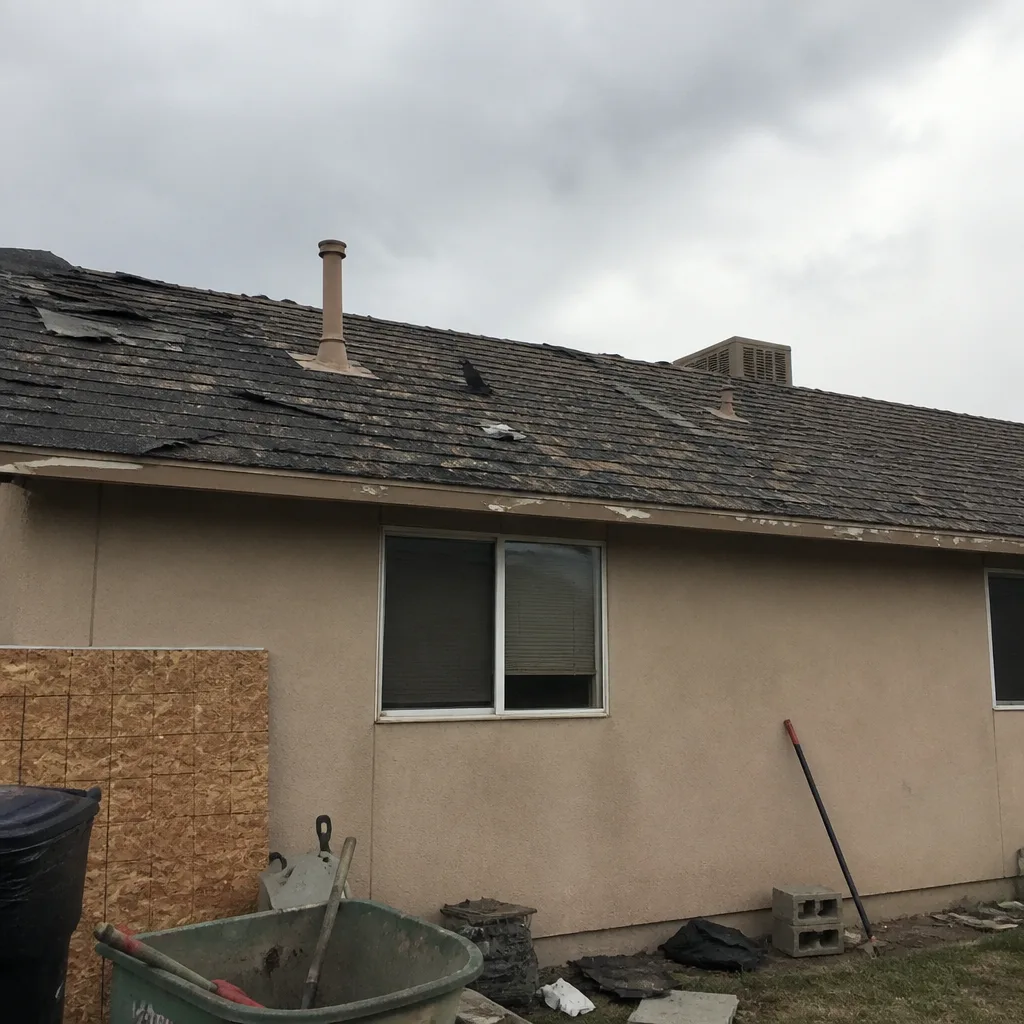 Before
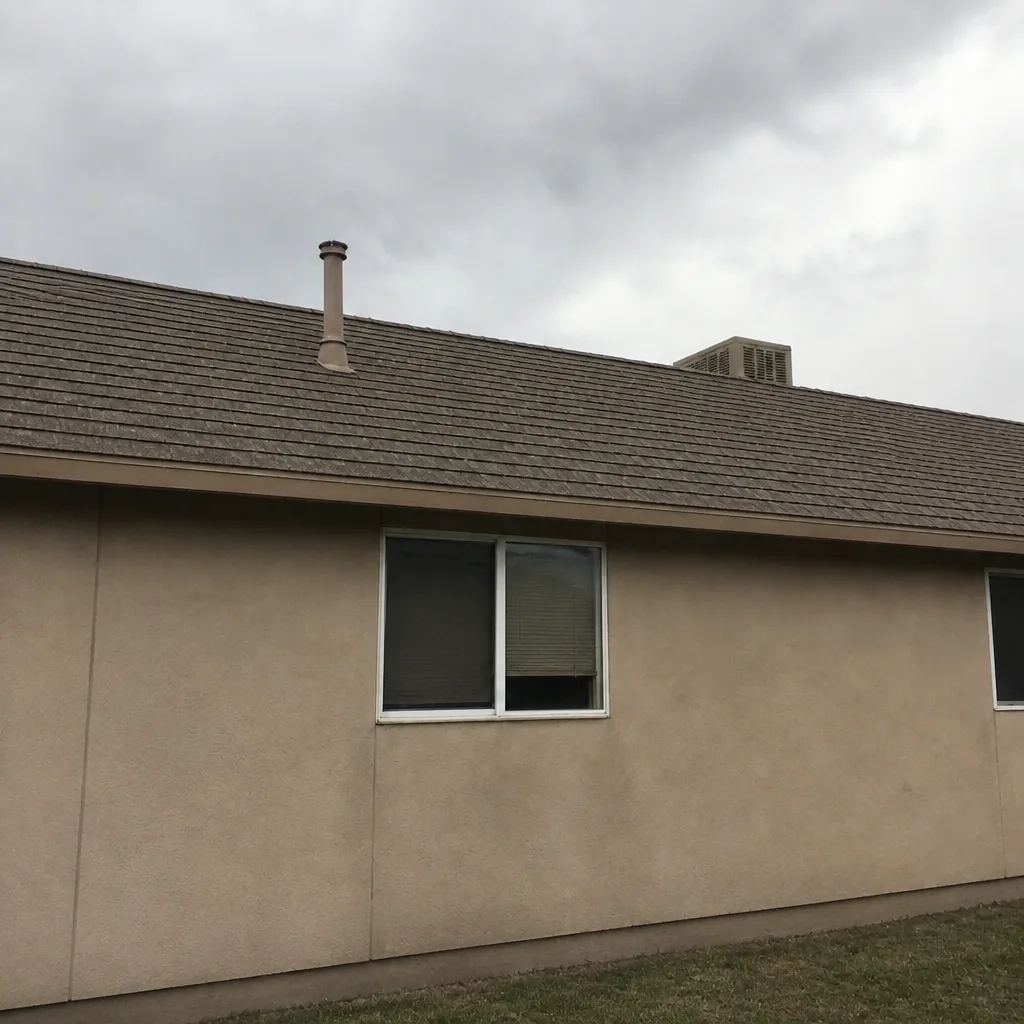 After
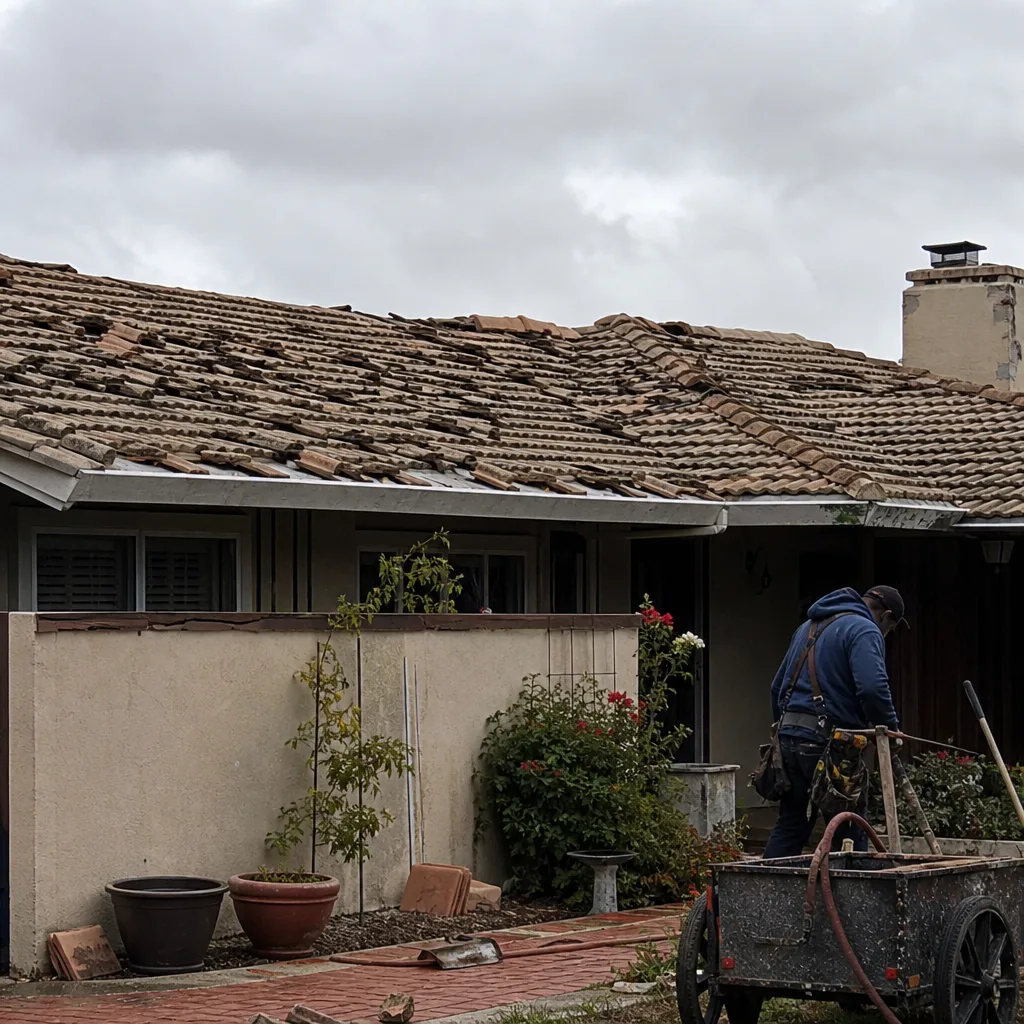 Before
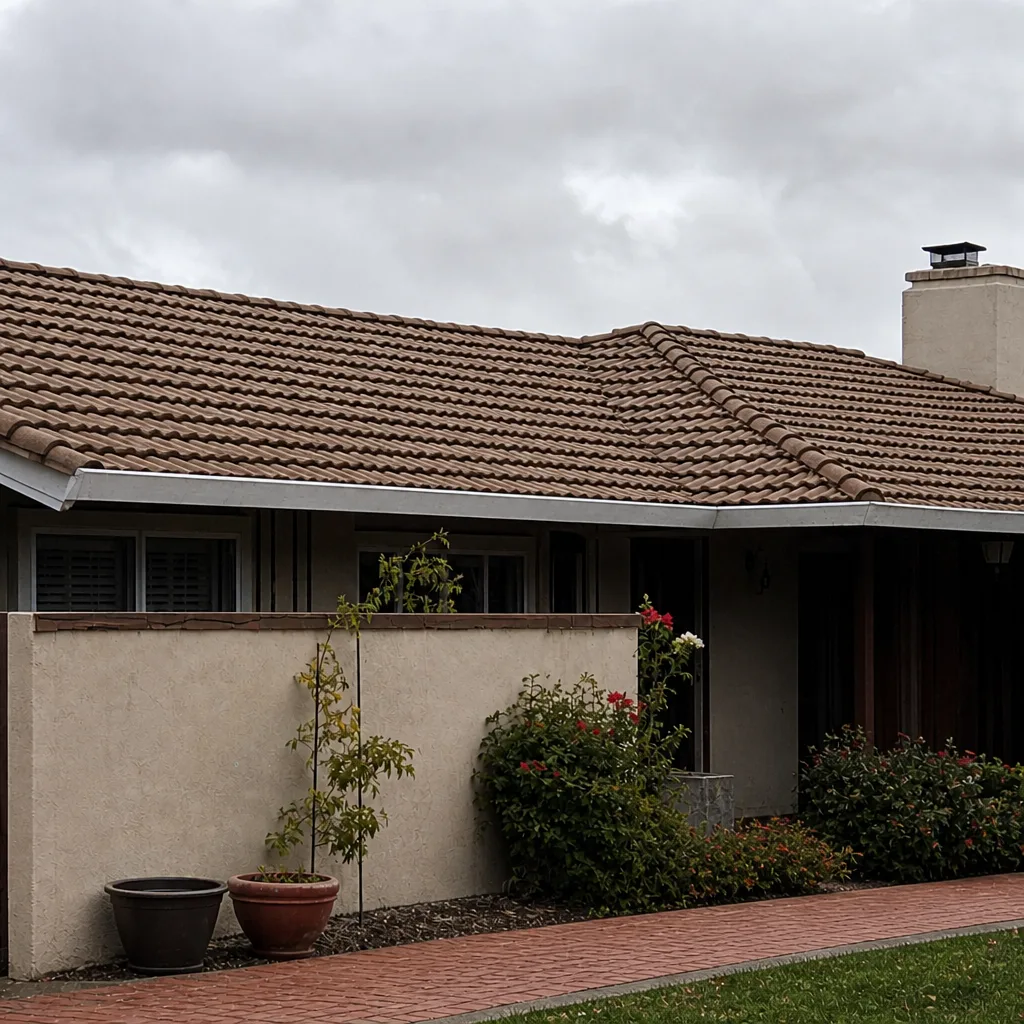 After
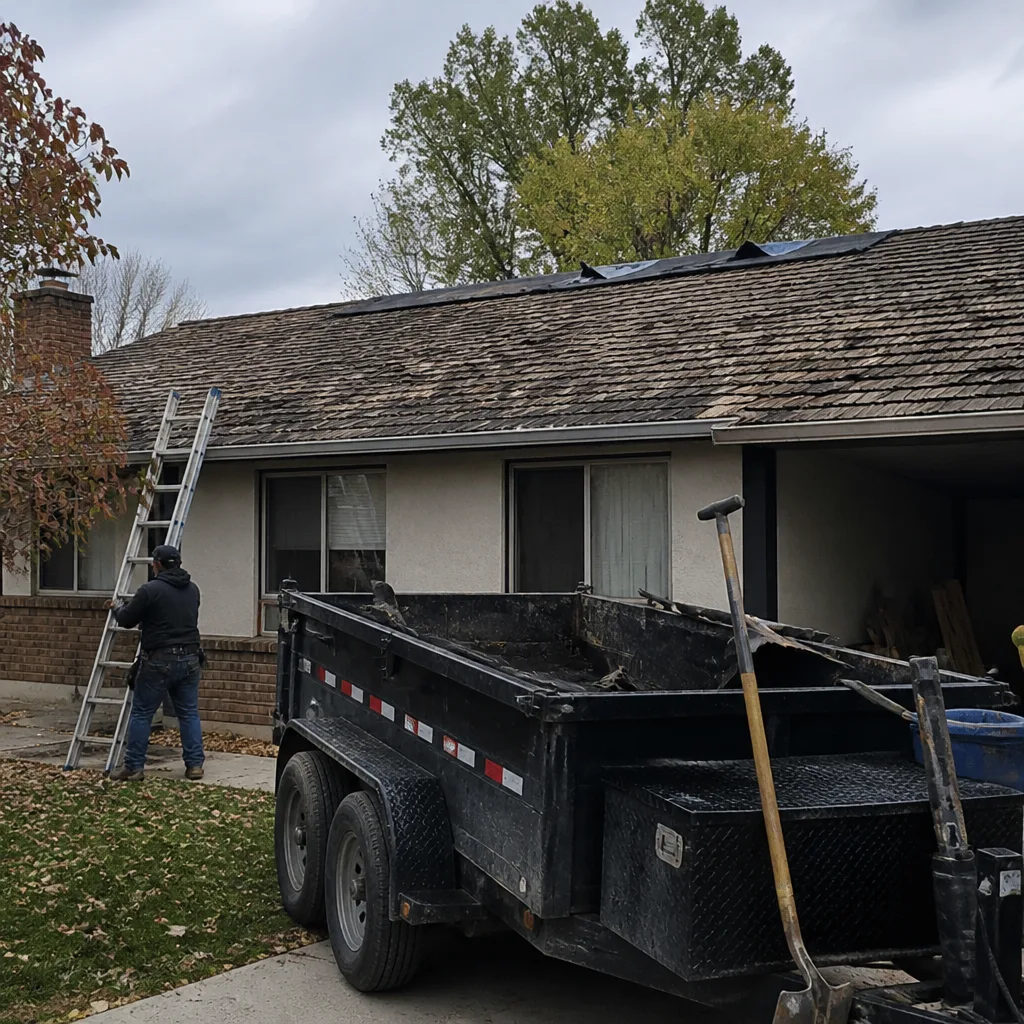 Before
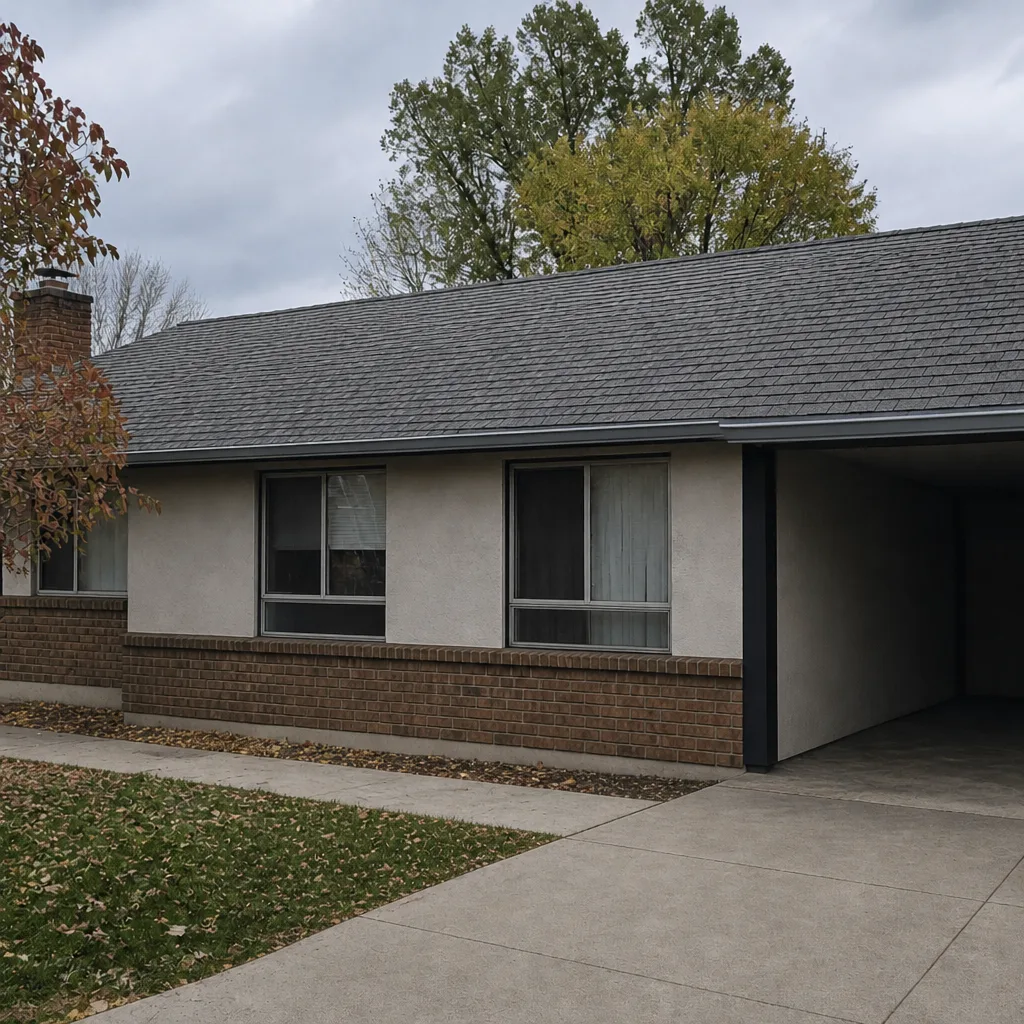 After
When to Call a Professional
Call us when any of these are true: a tile is cracked on a roof steeper than a 4/12 pitch, any leak is showing on a ceiling, any flashing or valley area needs work, ridge caps are loose or missing, or you have no safe way to reach the tile field from a ladder. We’ll show up, look, and tell you straight whether it’s a $300 repair or something bigger. On a tile roof, walking it is half the job, and knowing where not to walk is the other half. If a homeowner has already been up there, we’ll walk the route you took and find the cracks you can’t see from the ground, because the crack you caused is the one we’ll find.
Shepherd & Sons Roofing Winchester offers free estimates in Winchester – call (844) 797-8167. A live person answers day or night, and we’ll schedule a time to look at the roof without a trip charge inside our own county.
Frequently Asked Questions
Only for a narrow set of tasks: clearing debris and gutters, checking flashing from the ground, and replacing one broken field tile on a low roof with the right tools. Walking a tile field, resealing flashing, re-nailing ridge caps, and anything near a valley are not safe for a homeowner because tile cracks under point load and the crack often lets water sit under the tile for months before a leak shows inside. If you’re not sure, call for a free estimate before you step on the tile.
Only along the ridge, over exterior walls, or on hands and knees in a valley. Never cross the middle of a field plane, and never walk tile that’s wet, frozen, or under 40 degrees. Most cracked tiles on older roofs trace back to a homeowner or handyman walking the wrong path, so if you can’t reach the tile from a ladder without crossing the field, that single repair is a pro job. Call (844) 797-8167 for a free look.
Most single-tile replacements and small flashing repairs in Winchester run in the few-hundred-dollar range, and anything touching a valley or ridge cap runs higher because the surrounding tile has to come up and be re-set. We quote in writing before we start and give a free second opinion on any written estimate you already have. Call (844) 797-8167 for an exact number for your roof.
Yes, especially on an older tile roof. The tile itself is the visible barrier, but the underlayment under it is the real waterproofing layer. Once a crack or a flexed tile opens the underlayment, water sits against the deck and only shows up as a ceiling stain after the moisture has had time to soak through, often two winters. That’s why we walk the route a homeowner took, not just the tile they fixed.
Usually, yes. Most manufacturer warranties exclude damage from homeowner work, and most homeowner insurance policies exclude damage caused by the homeowner’s own repair. If you later file a claim or sell the house, that history becomes a problem. A written, licensed repair with a 90-Day Done Right Promise and a live person on the phone after the job keeps your paper trail intact.
Yes, for a simple tile replacement we can usually get to it the same week you call in Winchester. Anything involving flashing, a valley, or a ridge cap gets scoped into a written estimate first, and we’ll tell you honestly on the phone whether it’s a quick repair or a bigger job. Call (844) 797-8167 and a live person will pick up, day or night.
The Bottom Line
Tile roofing rewards restraint. The tasks that are genuinely safe for a Winchester homeowner are small and short: clear the gutters, blow off the debris, check the flashing from the ground, and replace one broken field tile on a low, accessible roof. Everything else, from re-nailing ridge caps to resealing flashing to anything near a valley, is a professional’s job because the failure mode isn’t bad workmanship. It’s body weight cracking tile and water sitting under the tile for years before you ever see a stain. If you’ve been up on the tile, we’d rather look at the roof now than come back in two winters for a ceiling repair. A free second opinion on any written estimate, a written 90-Day Done Right Promise, and a live person on the phone around the clock, that’s what we stand behind in Winchester.
Call Shepherd & Sons Roofing Winchester at (844) 797-8167 to schedule your free estimate. We’ll look at the roof, tell you straight what’s safe to handle yourself and what isn’t, and give you a written number before anyone touches a tile.
Written by the team at Shepherd & Sons Roofing Winchester.