
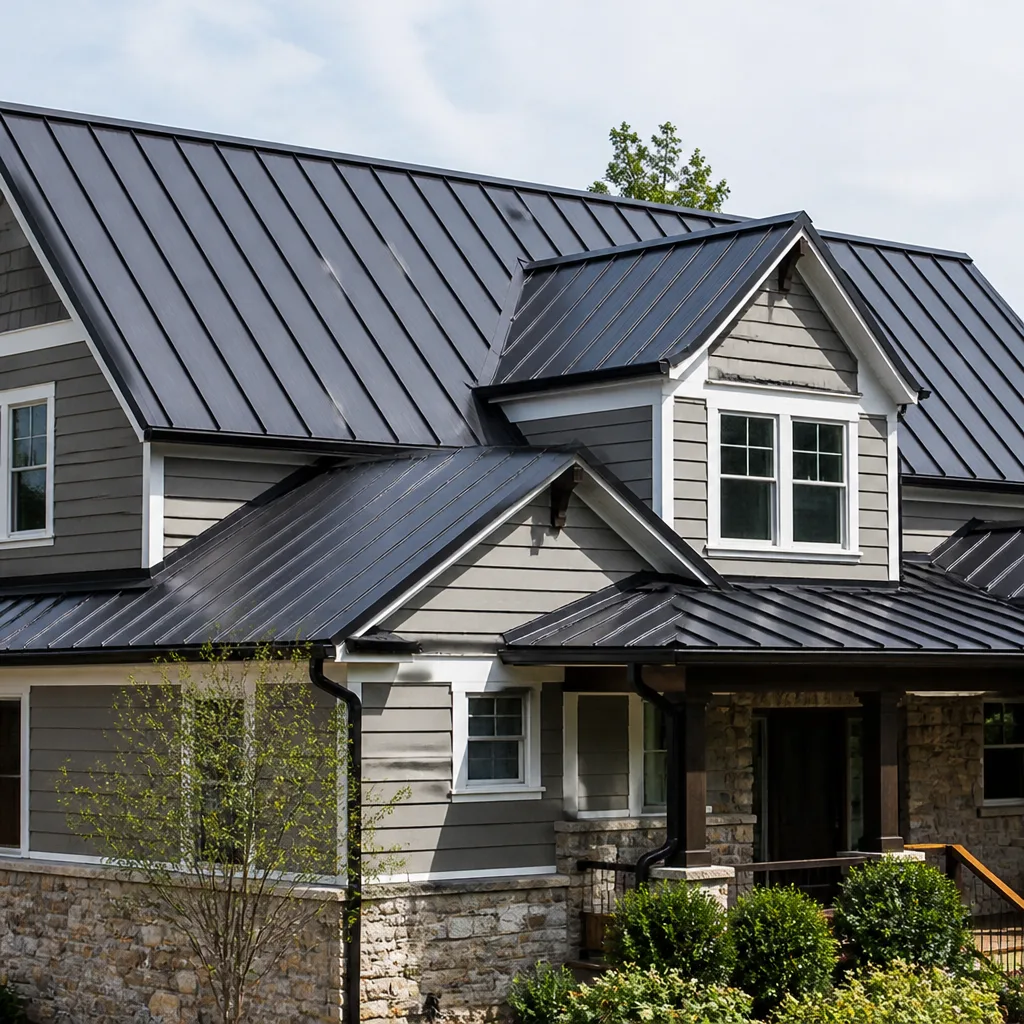
 Metal roofing
 Architectural shingles
 Tile roofing
 GAF
 Owens Corning
 Flat & low-slope
Free roof inspection with deck photos before we talk money - GAF and Owens Corning certified installation
Styles & brands we work with
- Architectural shingles
- Metal roofing
- Tile roofing
- GAF
- Owens Corning
- Flat & low-slope
See the difference
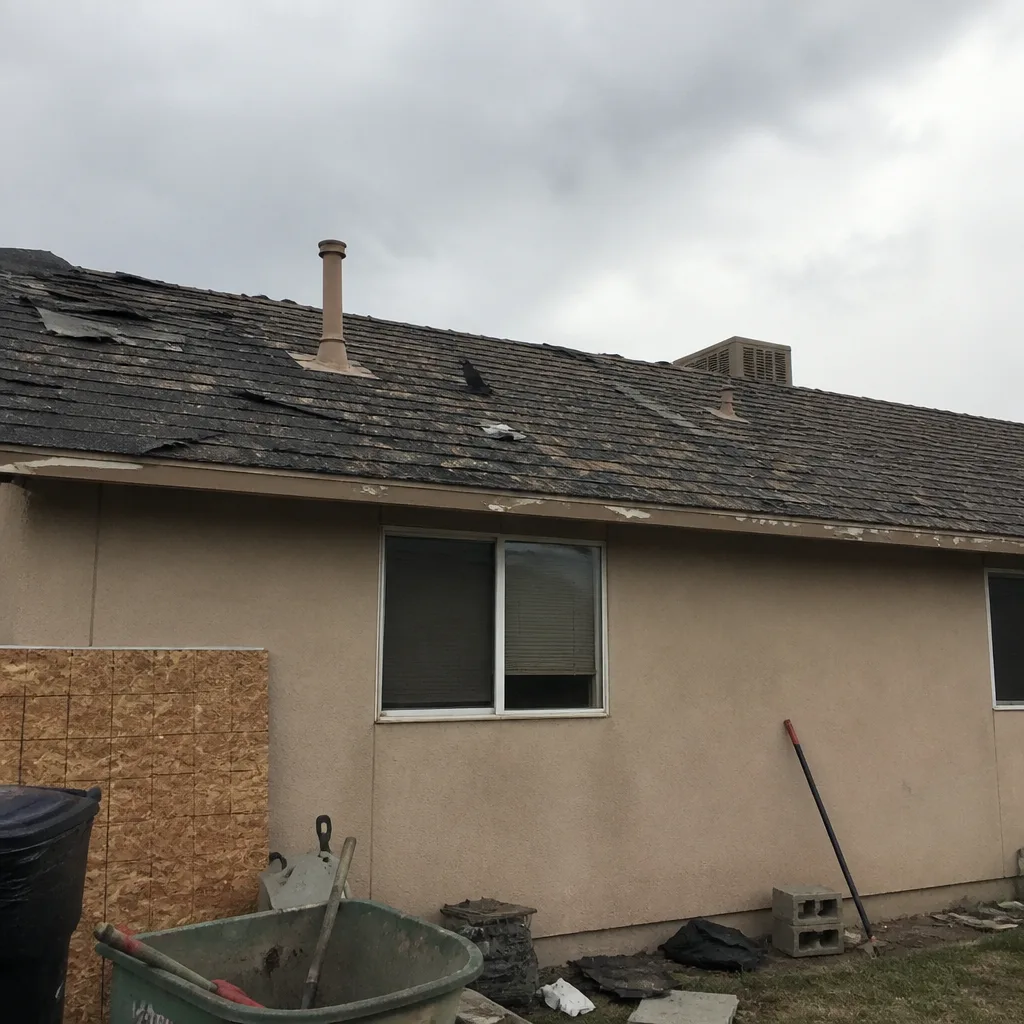 Before
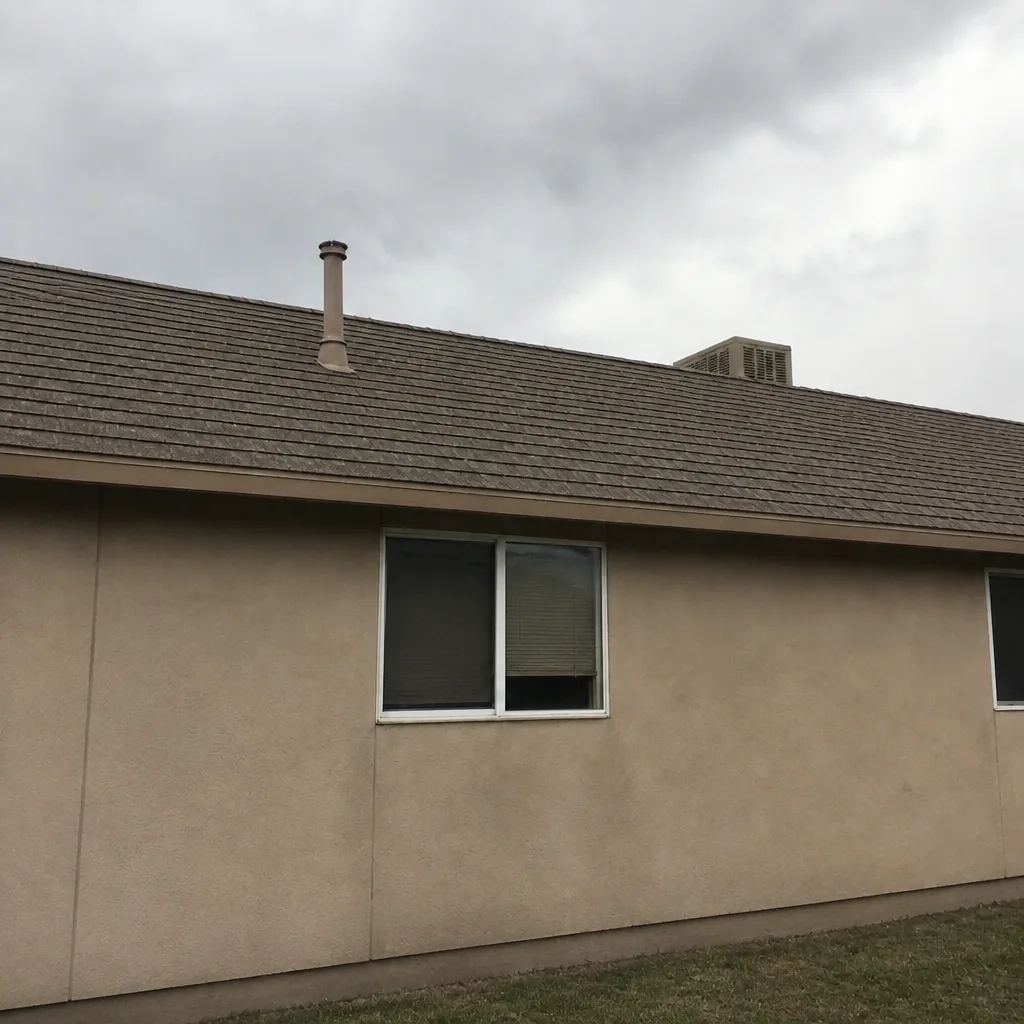 After
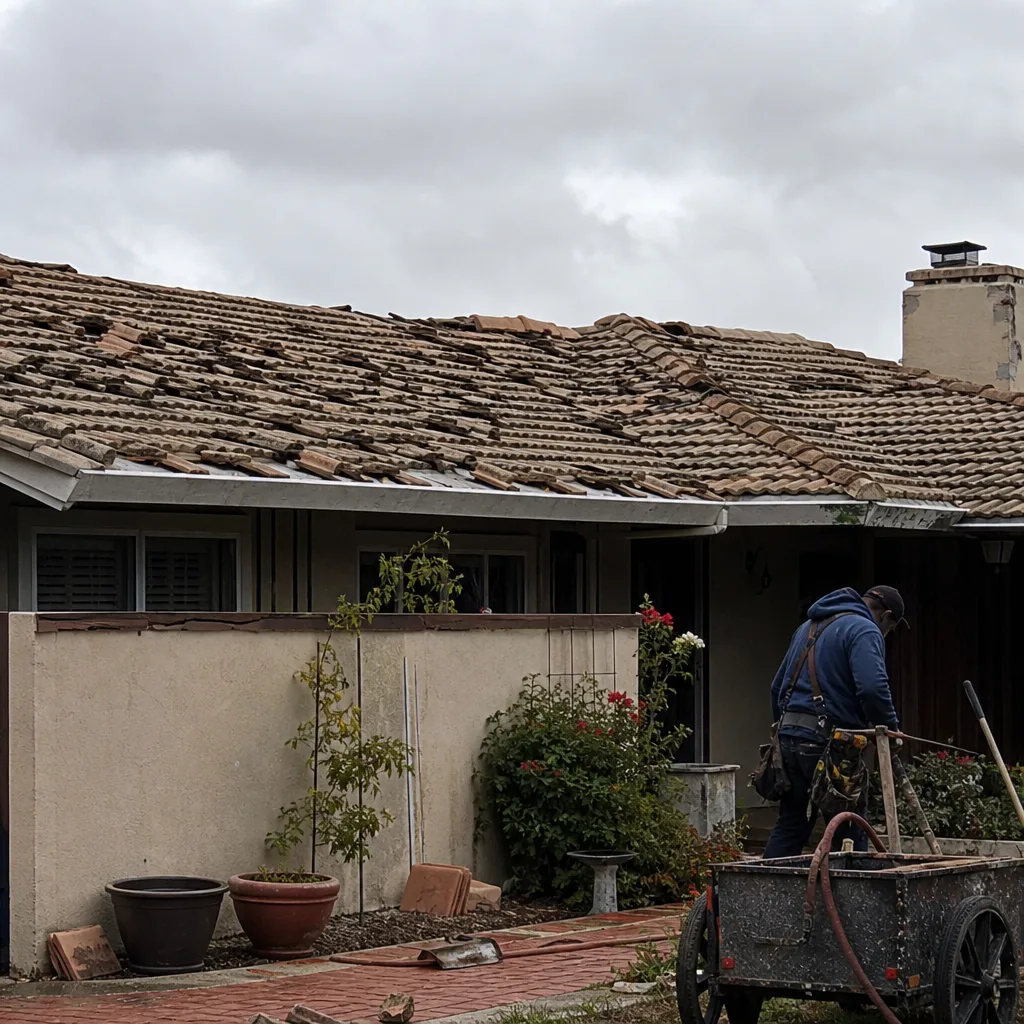 Before
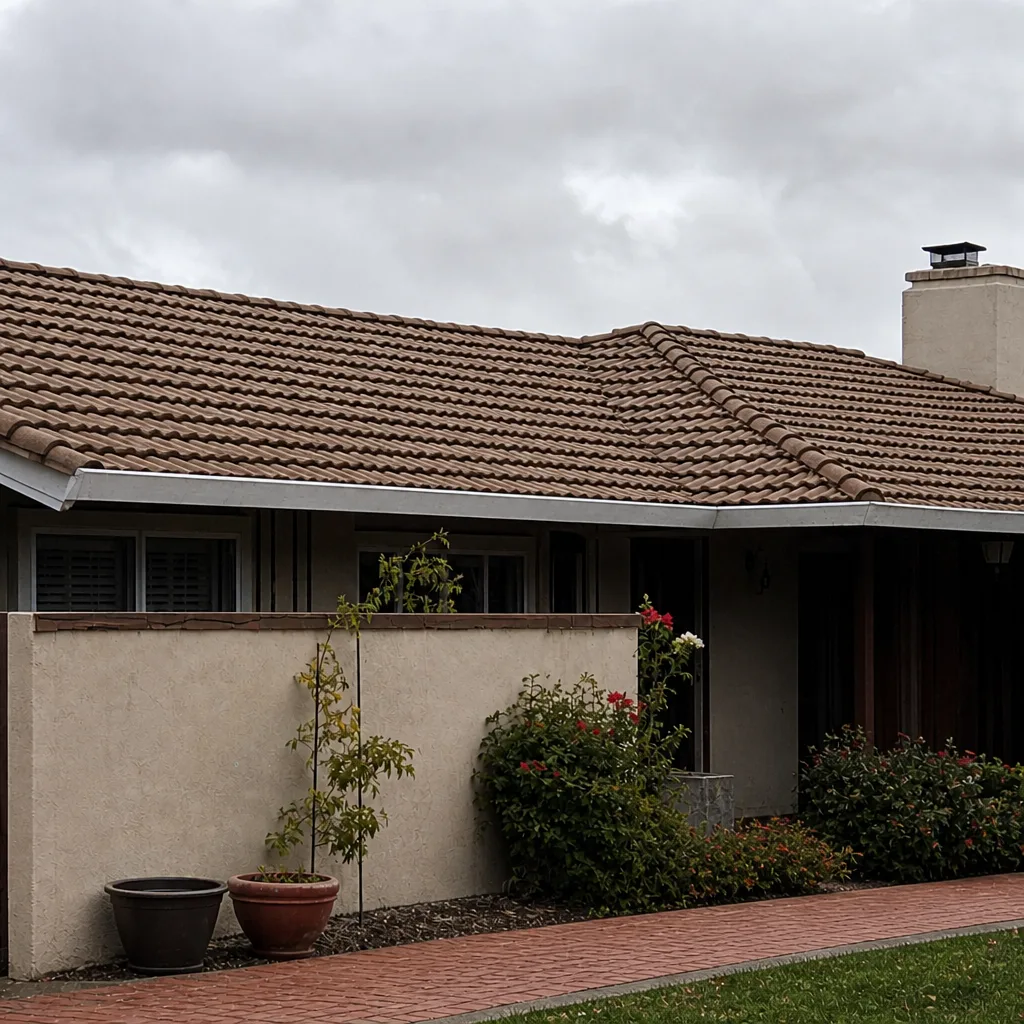 After
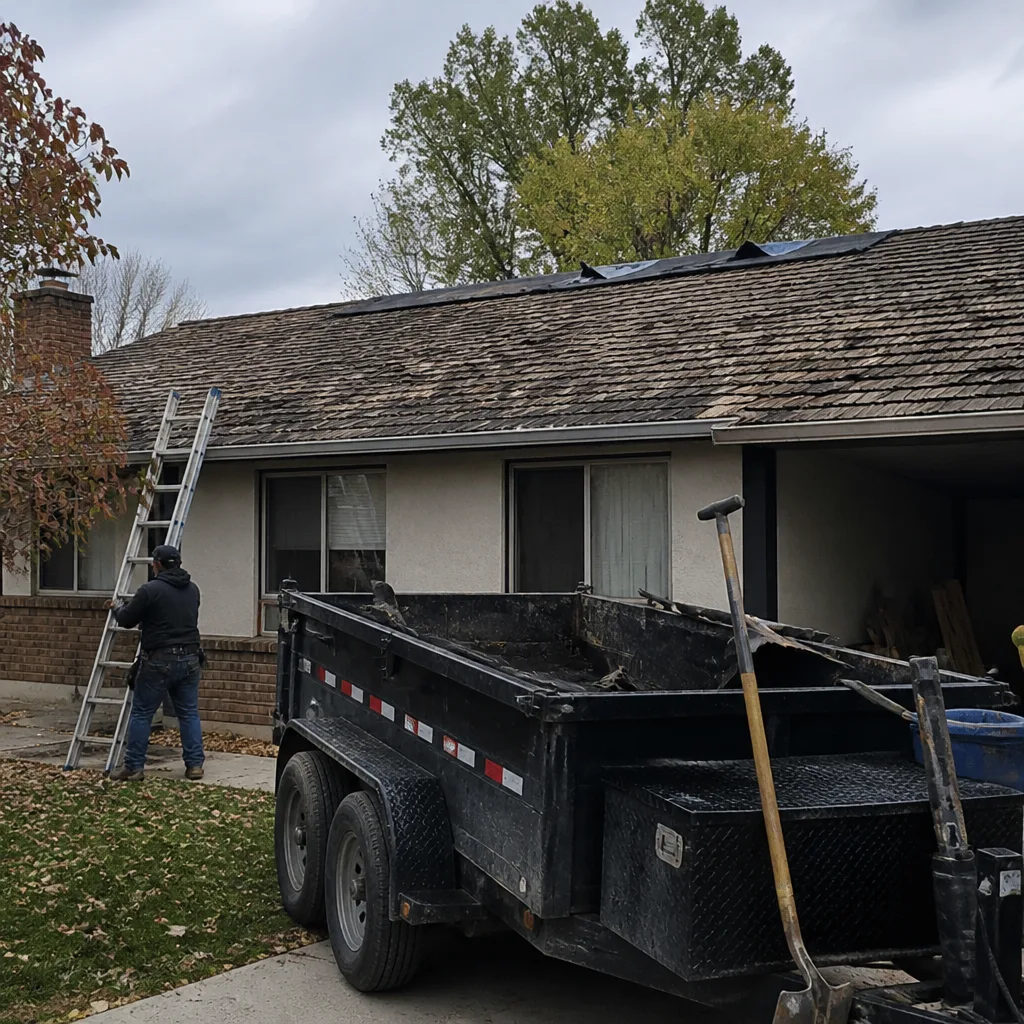 Before
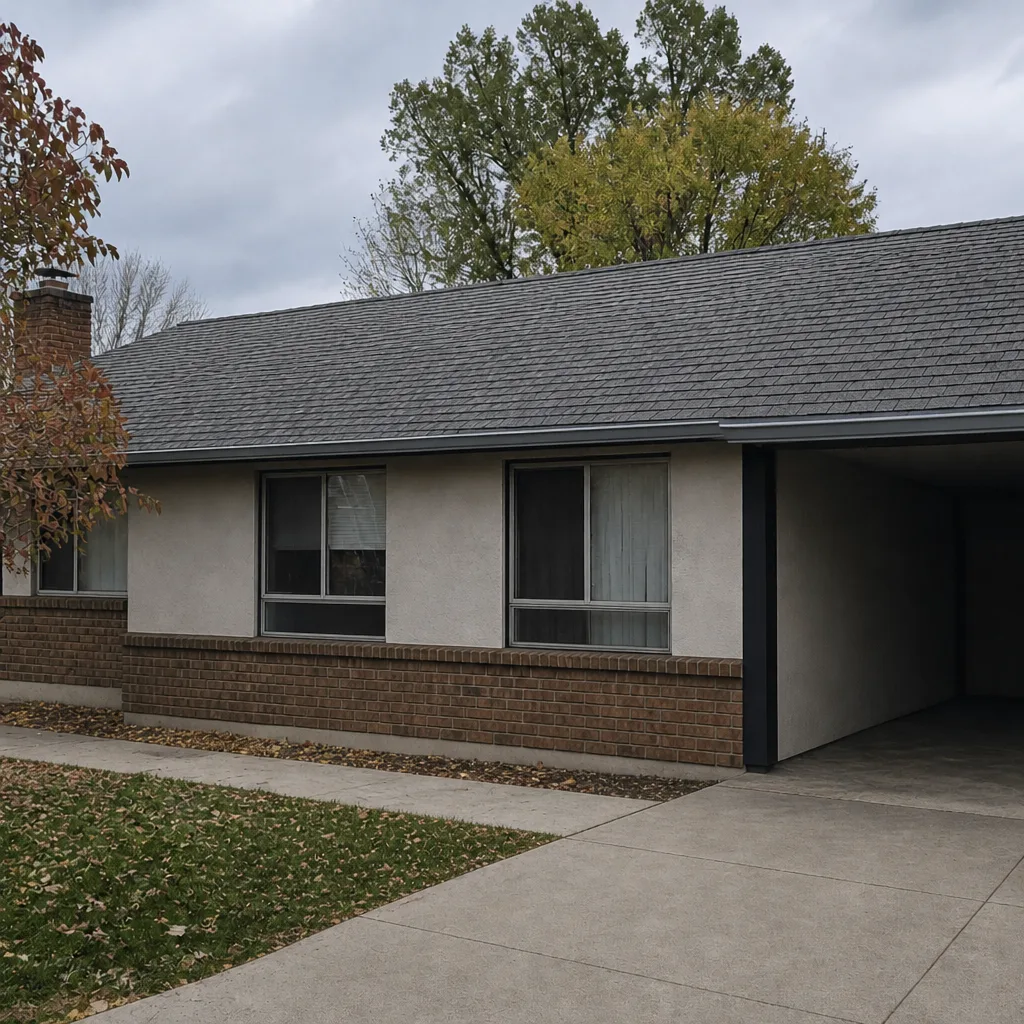 After
How to Find a Roof Leak in Winchester, NV: Trace It Backwards From the Stain
To find a roof leak on a Winchester home, start by assuming the entry point is not above the water stain. On this city’s 1980s and 1990s stucco tract homes, water that gets in through a wind-lifted shingle usually runs sideways along the wood framing for 4 to 8 feet before it soaks through a ceiling, so the real breach is often several feet away and months earlier than the drip. You find it by working backward from stucco cracks, pipe boots, and windward shingle zones, not by staring at the wet spot. If tracing it yourself feels like guesswork, call (844) 797-8167 and a live person picks up.
Here’s the picture most people in Winchester are looking at. A wet ring shows up on the ceiling in August during a monsoon blow. The roof didn’t fail that week. It failed in May, maybe during a 50 mph gust off the Sheep Range that peeled back a few tabs on the west slope. The water sat in dry wood and insulation for weeks, crept lateral through the wall cavity, and finally found a way inside two walls over from where it started.
Key Takeaways
- On Winchester stucco homes, leaks migrate horizontally 4 to 8 feet. “Above the stain” is a weak starting point.
- Hairline stucco cracks at roofline corners and parapets are often the leak’s exit point, not its entry.
- The three most likely entry points here, in order: west-slope wind-lifted shingles near the ridge, swamp cooler and pad-drain penetrations, then dried-out pipe boots on plumbing stacks.
- A garden-hose test works in a dry climate, but only one zone at a time. Wetting everything at once is why so many desert-home leaks stay a mystery.
Why Desert Leaks Don’t Fall Straight Down
In rainy climates, water enters and follows gravity. That gives a roofer a narrow search box. Winchester doesn’t work that way. Rain arrives on only a handful of days a year, often in fast monsoon bursts, and the rest of the time the roof is bone dry and hot. That long dry stretch lets a small wind breach sit unnoticed for months, and it lets water move at its own pace.
When a storm finally pushes water into a lifted shingle edge, that water hits wood framing that’s been baking at 140°F or more. It flashes to vapor, condenses against cooler surfaces, and pools in low spots. It can slide along a joist, wick through blown insulation, run down the inside face of stucco, and then, finally, show up on your ceiling. That’s why a stain near an interior hallway wall might trace back to a ridge vent on the opposite side of the house.
This desert migration is exactly why the Roof Repair work here starts with a leak path, not a patch. Patching the ceiling tells you nothing. Finding the route the water actually took is what stops it.
The Stucco-Crack Reverse-Trace Method
On the original 1990s stucco tract homes in the 89110 and 89142 zips, the wall itself often tells you where the water was heading. Stucco is brittle. When moisture gets behind it, or when the wood framing shifts from heat cycling, it cracks. Those cracks are frequently the exit point of water that entered the roof 2 to 4 feet higher. Find the crack, and you’ve narrowed the entry zone before it ever rains again.
Here’s the practical sequence for a dry-day search:
- Walk the interior first. Note every stain, then note its position relative to exterior walls. Leaks that crossed a wall cavity will often trace back toward an exterior corner or roofline junction.
- Stand back from the house and scan the stucco at roofline. Look for hairline cracks where the stucco meets the fascia, at the corners of parapet walls, and around any penetration where a pipe or cooler line enters.
- Match cracks to roof zones. A crack near a west-facing parapet corner points you to the west slope shingles and the ridge vent directly above and beyond it.
- Now go up on the roof. Check those suspect zones for lifted, missing, or cracked tabs, and check every pipe boot and cooler penetration in the same area.
- Look for a shadow line or tear. Wind-lifted shingles often leave a visible bend-line or a star-pattern crease near the fastener. That’s where the wind got a grip.
A couple of the homes near Winchester’s eastern edges are older 1960s ranch builds with original wood framing. Those tend to leak differently, closer to vertical, and are worth a separate look. But the majority of what we get called to are the original builder-grade 3-tab roofs, and on those, the crack-and-triangulate approach works more often than any other method.
The Three Most Likely Entry Points on a Winchester Home
Over a lot of years on Winchester roofs, the same top suspects keep showing up. If you have a home built between roughly 1987 and 1997, this order is where to start:
- West-slope wind-lifted shingles near the ridgeline. Spring and monsoon gusts funnel through the valley and hammer the windward sides. The shingles near the ridge take the worst of it. Look for lifted corners, missing tabs after a wind event, or creases where the shingle bent and didn’t flatten back.
- Swamp cooler flashing and pad-drain penetrations. Evaporative coolers are everywhere in Winchester, and each one means a roof penetration plus a pad drain line. That’s extra moisture cycling repeatedly through the same spot. The flashing around the cooler base and the drain line is a common weak point.
- Dried-out pipe boots on plumbing stacks. The rubber boot around a plumbing stack sun-bakes in the extreme heat here. It goes brittle, cracks, and then it’s a straight shot for water to get in during the next storm. Very common on homes that haven’t had their boots checked in a decade.
If you want the short list of what a specific leak might involve, the Roof Repair in Winchester page breaks down the repair categories and pricing ranges, but a leak source still has to be located before any of that applies.
The Garden Hose Test, Adapted for Dry Weather
The garden hose test is the standard way to find a leak without waiting for rain, and it works here. The way it’s usually done wrong is the reason it fails on stucco homes. People wet the whole roof, or three suspect zones at once, and then can’t tell which one caused the drip because the water from all of them ran together. That cross-contamination is exactly what makes these leaks so hard to pin down.
The way that actually works:
- Have one person inside watching the ceiling, with a dry towel and a phone camera. A second person is on the roof with the hose. Never the same person.
- Start at the lowest, most suspect penetration. Wet one zone for a full 5 minutes, then wait 15 minutes to see if the interior reacts. The extra time matters because the water has to traverse the same lateral path the storm water took.
- Only after a zone tests dry do you move up to the next one. Work from low to high, so you don’t send water back down through a zone you already cleared.
- Wet around shingle edges deliberately. Mimic a wind-driven rain by aiming slightly upward at the same angle as a gust. Don’t just hose the top.
- Keep a written map of what you tested and what happened. If you call someone in, that map saves hours.
One very practical note: this test involves getting on the roof and working around the same wind-lifted shingles you’re trying to find. A wet roof with loose tabs is a real fall hazard. If you’re not comfortable at height or the roof pitch is steep, this is the point to stop and call.
When You’ve Tried and Can’t Find It
If you’ve done the interior walk, scanned the stucco for cracks, checked the cooler flashing and the pipe boots, and still can’t trace it, that’s not a failure on your part. Horizontal migration through a wall cavity is a hard thing to solve with a hose and your eyes. This is where a trained set of eyes changes the outcome.
Our technicians have up to 30 years of experience, and finding a leak on a stucco-and-tile or stucco-and-shingle home is one of the most common calls we get in Winchester. The 90-Day Done Right Promise is in writing on every job, so if a fix doesn’t hold, one call brings us back. We work with roofing materials from CertainTeed, Owens Corning, and IKO, and we keep those and other name-brand materials we install front and center. But before any of that, a leak has to be located and the deck photographed, so you see what we see before we talk about any number.
One other thing worth mentioning, since Winchester’s roofing market has real quirks. Because tens of thousands of homes in the 89110 and 89142 zips were built in the same boom and hit the end of their shingle life around the same time, and because most of these neighborhoods sit inside HOAs, some jobs here involve HOA submittal packets and debris containment, not just the repair itself. A leak on top of that can feel like a lot. It’s usually a lot simpler once someone puts a ladder up and looks.
FAQs
Use the stucco-crack reverse-trace method and then the single-zone garden hose test. Scan for hairline cracks at roofline corners and parapets, match each crack to the likely roof entry zone above it, and then wet one suspect zone at a time for 5 minutes while someone inside watches. If you’d rather not crawl the roof, call (844) 797-8167 and we’ll come walk it. A free second opinion applies to any written leak diagnosis you’ve already paid another contractor to give you.
On a Winchester stucco home, the wet ceiling is usually the exit point of water that entered somewhere else entirely. Water that gets in through a wind-lifted shingle can run horizontally 4 to 8 feet before it shows up. The roof can look solid from the ground and still have a hidden wind breach near the ridge or a cracked boot on a plumbing stack. The wet spot is the ending, not the beginning.
Almost always, repairing a located leak is the cheaper move, especially on a home that’s still got years left on its shingles. Once the leak path is found, a repair for something like a cracked pipe boot or a failed cooler flashing is a small job. The trick is finding it. If the roof is genuinely past its life and you’re chasing multiple leaks, replacement math changes, but that’s a conversation to have after the leak source is confirmed, not before.
We take those calls, and a live person answers the phone at night, on weekends, and right after a storm, not a call center. If you’ve done the interior walk and the stucco check and still can’t trace the entry, call (844) 797-8167. We’ll set up a time to walk the roof. Same-day availability depends on the day, but we don’t leave leak calls sitting.
If you’d rather have it looked at than trace it yourself, Shepherd & Sons Roofing Winchester offers a no-pressure assessment in Winchester. We’ll walk the roof, show you photos of the deck and every suspect penetration, and give you an upfront price before anything gets touched. Call (844) 797-8167 for a free estimate.
Written by the team at Shepherd & Sons Roofing Winchester, serving Winchester, NV.